Detection of Gabapentin in Nakdong River Basin at GIST
Conversion to Nitrile Functional Group during Chlorine Water Treatment at Water Purification Plant
Potential Toxicity Present but Actual Toxicity Requires Further Study
 Autumn scenery viewed from Gyeongcheondae, boasting the best views along the Nakdonggang Trail in Sangju (unrelated to the article)
[Asia Economy Reporter Junho Hwang] Gabapentin, an antiepileptic drug, has been widely detected in wastewater effluents and Nakdong River water in the Nakdong River basin. This substance is discharged from domestic wastewater and flows along the Nakdong River to water treatment plants, where it is transformed into a potentially toxic compound during the chlorine disinfection process. Although the concentration of this substance decreases during subsequent water treatment steps and appears to be harmless to humans, there are calls for continuous monitoring and management.
A research team led by Professor Yunho Lee of the Department of Earth Environmental Engineering at Gwangju Institute of Science and Technology and the Busan Water Quality Research Institute recently introduced these findings in the international journal Water Research, specializing in environmental science and water resources, on the 20th.
Epilepsy Drug Found in Nakdong River Tap Water
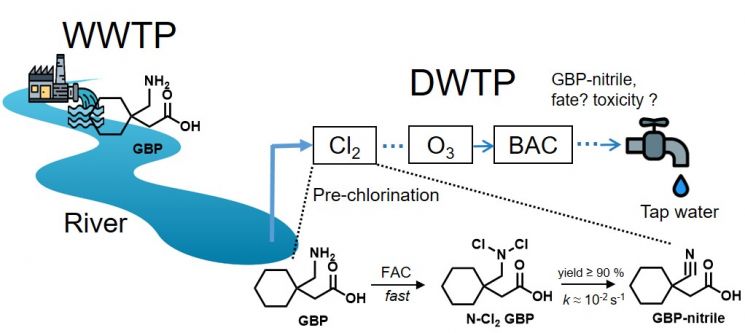 Overview of Gabapentin Excretion via Wastewater and Its Behavior and Transformation in River Water and Water Treatment Processes
The research team confirmed the hypothesis that gabapentin can be transformed into toxic byproducts during the water treatment process. Gabapentin is an antiepileptic drug frequently detected in domestic and international wastewater and source water. However, some gabapentin derivatives have been continuously suspected to transform into potentially toxic byproducts during water treatment, which may remain in tap water.
The team investigated the Nakdong River basin in South Korea and confirmed the presence of gabapentin and its byproducts. Gabapentin was widely detected in wastewater effluents and Nakdong River water. The concentration in wastewater effluents was about four times higher than in Nakdong River water. Gabapentin was also detected in raw water at water treatment plants located downstream of the Nakdong River. The research team identified domestic wastewater as the primary source of gabapentin discharge.
Continuous Management Needed for Gabapentin in Nakdong River Basin
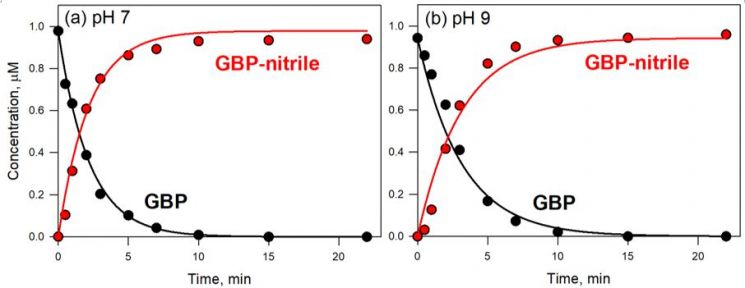
The research team revealed that gabapentin is converted into gabapentin-nitrile during the chlorinated water treatment process at water treatment plants. The amine functional group of gabapentin rapidly reacts with chlorine, transforming into a nitrile functional group. Regarding this, the team stated that most of the compound is removed in subsequent treatment steps, and its concentration decreases to a level considered harmless to humans.
In particular, the team explained that although the detected gabapentin-nitrile contains a nitrile functional group, it is unlikely to decompose into cyanide ions upon absorption in the body. The nitrile functional group is characterized by a triple chemical bond between carbon and nitrogen. When absorbed in the body, it can decompose into cyanide ions, with potassium cyanide being a representative example. Regarding this, the research team noted, "There is still insufficient information about the toxicity of the detected gabapentin-nitrile, so further research is needed," but emphasized that "continuous monitoring of gabapentin is necessary."
Professor Yunho Lee said, "The most significant implication of this research is that commonly used pharmaceuticals and synthetic compounds around us can be transformed during water treatment processes and affect drinking water quality." He added, "Even trace amounts of pollutants require follow-up studies on how they move and transform in the aquatic environment, and we hope that continuous management plans will be established."
© The Asia Business Daily(www.asiae.co.kr). All rights reserved.


















