[Asia Economy Reporter Jeong Hyunjin] Recently, there are conflicting analyses in the market regarding the sharp rise in copper prices. Since copper is widely used across all manufacturing sectors, some evaluations suggest that the global economy, which fell into a recession due to the COVID-19 pandemic, has entered a recovery phase. However, there is also analysis attributing the price increase to supply shortages. This implies that the COVID-19 situation and market uncertainties remain high, making it premature to view this as a full economic recovery.
According to Bloomberg on the 18th (local time), copper prices on the London Metal Exchange (LME) reached $6,448 per ton. After hitting a two-year high of $6,571 on the 13th, the highest since June 2008, prices have remained at elevated levels.
Copper prices are considered a leading economic indicator and are nicknamed "Dr. Copper." When the COVID-19 crisis began in mid-January, copper prices were around $6,000, then dropped to about $5,000 in early February. As signs of the COVID-19 situation easing in China appeared, prices recovered but then plummeted in March. Copper prices hit a recent low of $4,630 on March 24, but have since risen sharply, reaching $6,571 on the 13th.
The market offers differing interpretations of the copper price increase. The Wall Street Journal (WSJ) recently analyzed and reported that since copper is a key material used in manufacturing, the rise in demand in China?which accounts for half of global copper consumption?is driving the price increase. This suggests that the copper price surge reflects China's economic recovery. WSJ stated, "Although COVID-19 is spreading in the United States, the economic outlook remains hopeful," and analyzed that optimism about global economic growth has pushed copper prices higher.
However, some view that the ongoing COVID-19 spread in Latin America, where the outbreak started later than in the U.S. or Europe, could impact copper supply. In fact, copper inventories have decreased by more than 20% compared to the same period last year as of early this month. Since major producing countries like Chile and Peru have restricted operations to curb the spread of COVID-19, there is analysis that long-term supply shortages may occur.
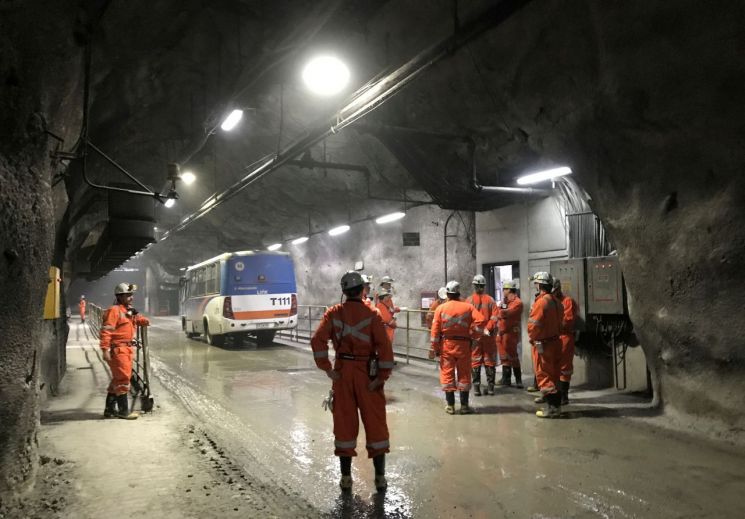
In Chile, the world's largest mining country, the COVID-19 spread has not stopped, and thousands of miners have tested positive. According to Bloomberg, as of the 5th, 2,843 employees of Codelco, Chile's state-owned copper mining company, showed COVID-19 symptoms, according to the Chilean Copper Workers Federation. Especially at El Teniente, the largest mine located in the Andes Mountains, over 1,000 confirmed cases have led to reduced operations and other measures.
WSJ explained that the market fundamentally views copper prices as rising too steeply compared to demand forecasts, and that the resurgence of COVID-19 in the U.S. and U.S.-China tensions could weaken international trade flows, potentially reducing future copper demand.
© The Asia Business Daily(www.asiae.co.kr). All rights reserved.

















