[Asia Economy Reporter Ji-hwan Park] Following last year's Lime scandal and the recent large-scale redemption suspension of Optimus, calls for a major overhaul of private equity fund-related regulations are growing. The National Assembly is also forming a special committee to devise measures to prevent recurrence.
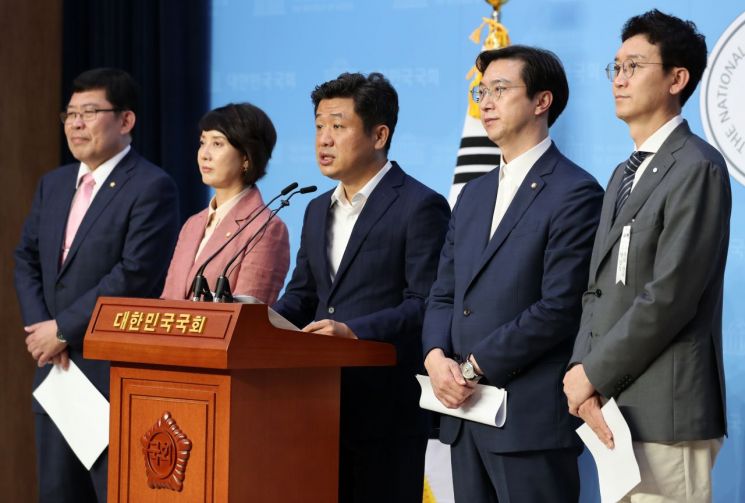
On the 14th, the United Future Party, which established the Special Committee for the Prevention of Private Equity Fund Corruption and Victim Relief, held a seminar titled "Is the Damage from Private Equity Funds Acceptable as It Is?" at the National Assembly Members' Office Building in Yeouido, Seoul, listening to opinions from experts and victims. Last week, the United Future Party launched the special committee for preventing private equity fund corruption and victim relief.
Professor Il-kwang Kim of Sungkyunkwan University, who presented at the seminar, stated that "private equity funds are fundamentally high-risk, complex financial products" and argued that "the only solution is to clearly punish those involved in illegal activities related to private equity funds and promptly compensate consumers."
Professor Sohyun Joo of Ewha Womans University’s Department of Consumer Studies urged the establishment of consumer protection measures that consider the unique characteristics of each financial product. She explained that trust goods like financial products inherently limit consumers' ability to evaluate them independently. Professor Joo proposed, "Due to the significant information asymmetry in financial products, consumers inevitably rely on information provided by financial companies, so clear guidelines on the duties of good faith and fiduciary responsibility of financial companies are necessary."
The responsibility of financial authorities, which have pursued excessive deregulation policies, was also highlighted. Professor Il-kwang Kim pointed out, "There is primary responsibility in financial policies that have continuously fostered the private equity fund market without investor protection measures," adding, "In the US and Europe, after financial crises, investor protection has been strengthened through laws like the Dodd-Frank Act and alternative fund operation guidelines, but since 2015, Korea has significantly eased regulations on private equity funds."
Even within the financial authorities, there is a sensed atmosphere that indiscriminate deregulation was the fundamental cause of the current private equity fund crisis. The Financial Supervisory Service labor union stated on the 25th of last month, "The private equity fund crisis was a foreseeable disaster due to the relaxation of investment requirements, easing of approval conditions, and abolition of fund screening systems." The Financial Services Commission lowered the minimum investment amount for private equity funds from 500 million won to 100 million won in 2015 and eased entry requirements for private fund operators from an approval system to a registration system, among other deregulation measures.
Yoo Ui-dong, the chairman of the Private Equity Fund Special Committee, emphasized, "The moral hazard, corruption, and illicit practices of private equity fund operators are recognized as cancerous elements destroying the sound ecosystem of the capital market," adding, "The damage is directly borne by financial consumers, so government measures and future plans are necessary." He stated, "We will prepare practical alternatives for financial consumers to resolve the grievances and economic losses of victims going forward."
© The Asia Business Daily(www.asiae.co.kr). All rights reserved.
![User Who Sold Erroneously Deposited Bitcoins to Repay Debt and Fund Entertainment... What Did the Supreme Court Decide in 2021? [Legal Issue Check]](https://cwcontent.asiae.co.kr/asiaresize/183/2026020910431234020_1770601391.png)















