Celebrating the 66th Anniversary in 2020 of a 'Regional Leading University'
The Only Aviation Specialized College in the Southeast Region
Generous Scholarships... 95.3% of Students Benefited in 2019
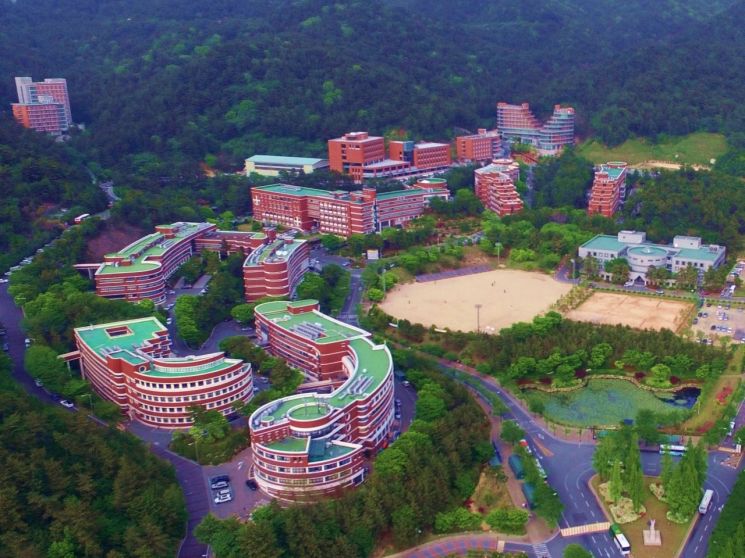 A view of the Silla University campus, which is writing a dynamic student success story as a regional strong university.
[Asia Economy Yeongnam Reporting Headquarters Reporter Kim Yong-woo] Silla University has made ‘student success’ the core task of university education. Over the 66 years since its founding as a ‘small but strong university’ and a leading small and medium-sized university in Busan, this motto of ‘student success’ has remained unchanged.
Through the university innovation project under the motto of ‘A Glocal University Leading Student Success in the 4th Industrial Revolution Era,’ it is advancing as a university centered on future promising industries.
Recently, it received the highest grade, A, in the first-year annual evaluation of the Ministry of Education’s University Innovation Support Project, and was selected as a ‘regional small and medium-sized university.’ Its innovative capabilities in education, research, and industry-academia cooperation were recognized, creating a foundation to enthusiastically promote future education for students.
Silla University views the shift in academic credentials from ‘past academic history (學歷)’ to ‘future learning ability (學力)’ as a key perspective, believing that equipping students with the competencies needed to live in today’s hyper-complex society is the shortcut to success. With this in mind, the university is changing the paradigm of education to help students develop these competencies.
The ‘student success’ pursued by Silla University is to help all students achieve their academic, career, and personal goals independently. To realize this task, it established a mid- to long-term university development plan called ‘Student Success Silla 2030.’
Efforts for student success are also actively promoted through government-supported talent development programs. Through projects such as the Leaders in Industry-University Cooperation (LINC+) and the IPP Work-Learning Dual System operation institution and university job centers, it is focusing on nurturing professional talents who will lead future industries.
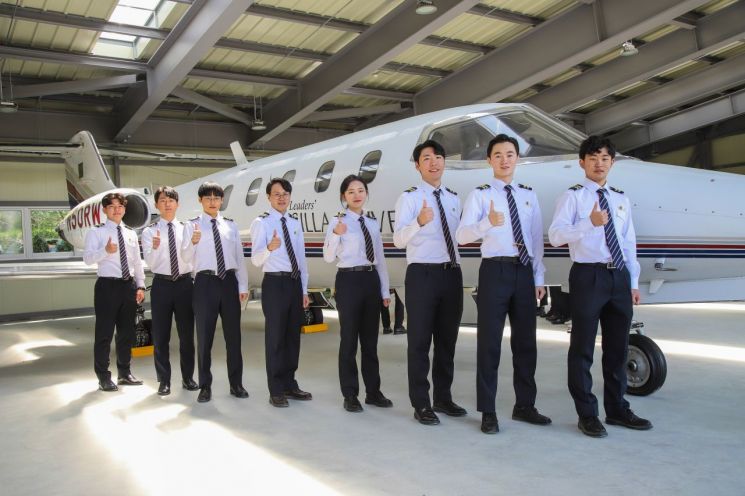
Silla University boasts the only aviation-specialized college in the southeastern region, a major source of pride for the university. Selected as an ‘Excellent University for Educational Specialization’ by the Korea University Newspaper at the end of 2017, Silla University is leading in specialization, internationalization, and overseas employment in future promising industry fields.
Among the specialized fields, aviation and drones are particularly noteworthy. Silla University, which established the Department of Aviation with the three core aviation majors?aviation, service, and maintenance?unique among southeastern universities and welcomed its first freshmen in 2019, has newly established the Department of Air Traffic Logistics. It has expanded and reorganized into an aviation-specialized college with four major departments: Aviation Operations, Aviation Maintenance, Aviation Service, and Air Traffic Logistics, recruiting freshmen from the 2021 academic year.
Combined with the drone field, which has built the nation’s top-level infrastructure, it is becoming an aviation and drone hub campus. In the drone sector, it operates an ‘IoT Demonstration Center’ equipped with advanced drone equipment and an integrated control center, supported by the Ministry of Industry, as well as a professional education institution and certified licensing test center authorized by the Ministry of Land, Infrastructure and Transport. It is the first ‘drone hub campus’ in Korea to establish a joint illegal drone response system in collaboration with SK Telecom and military authorities.
Situated on a 540,000-pyeong site and designated as a low-carbon green campus by the Ministry of Environment, Silla University is equipped with advanced educational facilities and digital educational equipment, including the International Education Hall, English caf?, internet caf?, the 60th Anniversary Memorial Hall, and various convenience facilities such as a food zone.
It operates a free shuttle bus connecting Sasang Subway Station, Deokpo Station, and the campus at all times. Free intercity commuter buses also run to Masan, Changwon, Jangyu, Ulsan, and Yangsan areas. It also houses three dormitories: Global Town, Baekyang Dormitory, and a female-only dormitory.
Scholarships are abundant and generous. Various scholarships, including special scholarships for freshmen and academic excellence scholarships, are available in large amounts, enabling students to attend university without financial burden. These scholarships have increased annually, with 95.3% of enrolled students receiving scholarship benefits in 2019, totaling approximately 28.79 billion KRW in various scholarships.
When selecting a major in the undergraduate program, 100% guarantee of major choice and 100% guarantee of transfer (for the Departments of Nursing, Physical Therapy, Dental Hygiene, and the College of Education when vacancies occur) are provided as considerations to offer students diverse major selection opportunities.
Double majors are allowed for outstanding students (excluding the Departments of Nursing, Physical Therapy, Dental Hygiene, Architecture Major - 5-year program, and the College of Aviation), and linked major programs have been established to enable students to obtain dual degrees alongside their main major, reflecting the ‘student success’ perspective.
As of the first semester of this year, Silla University has international exchanges with 264 universities and institutions in 24 countries, and 952 foreign students from 40 countries are enrolled.
It has been selected as a university certified for internationalization competency by the Ministry of Education and the National Research Foundation of Korea, and has consecutively secured the GKS (Global Korea Scholarship) project hosted by the Ministry of Education and the National Institute for International Education.
It has also been designated as a testing institution for the Korean Language Proficiency Test (TOPIK) by the National Institute for International Education. Korean language centers have been established and operated at Dong Nai University in Vietnam and UMN University in Indonesia, and a Korean Studies major for foreigners and overseas Koreans is offered at the Global Business College.
Silla University operates 2+2 dual degree programs with more than 20 universities, including Central Oklahoma University in the United States, University of International Business and Economics in China, Sunway University in Malaysia, and La Salle University in the Philippines. Additionally, various global competency enhancement programs such as 3+1 exchange student programs, one-semester overseas language training, and short-term summer overseas language training are in operation with universities in several countries.
The Silla Jangbogo Program, which provides a scholarship of 1.8 million KRW to selected students each semester, the global project ‘Sinnanda Overseas Exploration Program,’ and the Silla Hwarang Program, which offers scholarships and overseas exploration opportunities upon meeting completion criteria through on-campus English special lectures, are also attracting attention.
Leveraging its rich experience in global cooperation projects targeting China, Silla University is promoting the establishment of an international campus in Changyi City, Shandong Province, China. This international campus will be operated with Changyi City providing hardware such as land and buildings, and Silla University providing software such as academic operations, curriculum, and dispatch of faculty and staff.
Overseas employment is a trademark of Silla University. Since officially starting the overseas internship project in 2004, it has dispatched more than 2,000 interns to over 20 countries. This effort for overseas employment was recognized with the Prime Minister’s Commendation for Overseas Employment Merit in the 2017 Government Awards for Job Creation by the Ministry of Employment and Labor.
From 2014 to 2020, it consecutively secured the K-Move School project hosted by the Human Resources Development Service of Korea and has been conducting overseas employment education. It operates the Global Business Support Center, a dedicated overseas employment organization, and seven overseas employment centers in countries including the United States, China, and Japan.
This year, four K-Move School training courses are in operation: three courses for employment in the United States?‘Global Technical Practical Expert Training Course,’ ‘Global Business Practical Expert Training Course,’ and ‘Global Design Practical Expert Training Course’?and one course for employment in Japan, the ‘IT Practical Expert Training Course.’ Due to this customized employment education reflecting the demands of overseas industries, the success rate of overseas employment is relatively high.
Along with the activation of overseas employment, overseas alumni associations formed mainly by foreign alumni are also active. Overseas alumni associations are active in major cities such as Northeast China, Beijing, Qinhuangdao, Shanghai, Guangzhou, Qingdao, and Jakarta, Indonesia.
In 2016, Silla University was selected for the PRIME project and established the MICT Convergence College, which is currently operating. The MICT Convergence College consists of four departments: Intelligent Automotive Engineering, Computer Software Engineering, Smart Electrical and Electronic Engineering, and Convergence Mechanical Engineering.
The MICT Convergence College operates the Chang & Chang Factory, open 24 hours. The Chang & Chang Factory consists of an autonomous creation room, collaboration space, exhibition space, discussion space, and startup study room, equipped with cutting-edge equipment such as 3D printers and 3D scanners, nurturing creative engineering talents to lead the 4th Industrial Revolution era.
The university has also secured and operates numerous talent development projects supported by government agencies such as the Ministry of Employment and Labor and the Ministry of Industry, including the IPP Project Group and University Job Center. Selected for the LINC+ project (Leaders in Industry-University Cooperation), it operates five social customized departments: Fisheries and Processed Food Professional Training Major, Outdoor Sports Demers Talent Training Major, Smart Convergence Mechanical Design and Production Management Major, Artificial Intelligence Creative Convergence Talent Training Major, and Smart Healthcare Industry Talent Training Major.
In this year’s annual evaluation, the LINC+ project was included among the top six universities, receiving incentives and increased government support. This project involves related departments and partner companies working together to nurture professionals needed for regional strategic industries and enabling employment in participating companies, showing steady results.
According to university evaluations from an industry perspective conducted mainly by businesspeople, Silla University was selected as the best university in the environment field in 2014, food field in 2015, and advertising field in 2018. Additionally, through government-supported talent development programs such as the Ministry of Industry’s Engineering Education Innovation Support Project, Creative Industry Convergence Specialization Talent Training Project, and Regional Specialized Youth Trade Expert Training Project, it is producing core talents to lead future society. All these challenges and achievements have been part of the process of solving the task of ‘student success.’
© The Asia Business Daily(www.asiae.co.kr). All rights reserved.


















