Gene Infecting Cells with COVID-19
Found More Frequently in Elderly Dementia Patients
 The above photo is not related to the article content. Photo by Asia Economy DB
[Asia Economy Reporter Junho Hwang] A study has found that elderly patients with Alzheimer's disease (dementia) are more vulnerable to infection by the novel coronavirus (COVID-19) than the general elderly population. The gene that accepts the COVID-19 virus is found more abundantly in elderly dementia patients, increasing their likelihood of infection. In particular, since this enzyme is found more frequently as dementia symptoms worsen, there are calls for the establishment of a tailored quarantine system for these individuals.
Elderly Dementia Patients More Vulnerable to COVID-19
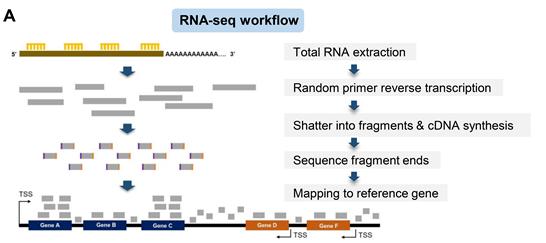
The research team led by Dr. Jae-Yeol Joo and Dr. Ki-Hwan Lim from the Korea Brain Research Institute recently published their findings in the international journal 'Infection Journal' on the 13th, revealing that elderly patients suffering from Alzheimer's dementia exhibit higher expression levels of angiotensin-converting enzyme 2 (Ace2), the receptor for COVID-19, compared to the general elderly population.
The team analyzed genetic information from brain tissue and blood of elderly patients with Alzheimer's disease using big data and transcriptome analysis techniques (RNA sequencing). The results confirmed that Ace2 expression levels were higher than those in the general elderly population. The same results were obtained through experiments on Alzheimer's model mice. Additionally, through genomic analysis of patient groups in early, mild, and severe stages of dementia, the team discovered that Ace2 expression progressively increases as dementia advances.
Need for COVID-19 Prevention Measures for Elderly Dementia Patients
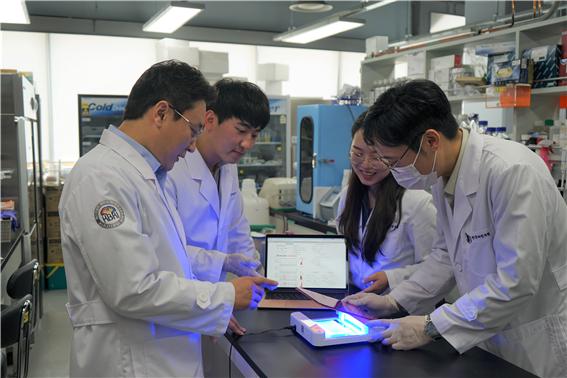
This study is noteworthy because the expression of Ace2 can increase the rate of COVID-19 infection. The research team explained, "Ace2 binds with COVID-19 and facilitates its entry into cells. The higher the level of Ace2 expression, the greater the risk of infection."
Dr. Jae-Yeol Joo stated, "This research highlights the need for elderly individuals with dementia symptoms to be especially cautious about COVID-19 prevention," and added, "Various sectors of our society should show warm concern for elderly dementia patients."
Meanwhile, earlier this year, the research team discovered a gene (Ube2h) that is specifically increased in Alzheimer's patients, and through follow-up studies, they plan to propose multifaceted approaches related to dementia diagnosis and COVID-19 prevention.
© The Asia Business Daily(www.asiae.co.kr). All rights reserved.


















