Investigation and Organization of Properties Registered Under Japanese Names Without Ownership Changes Until December After Liberation... Except for Land Nonexistence and Confirmed Owner Deletion Cases, Others Transferred to Public Procurement Service for Nationalization
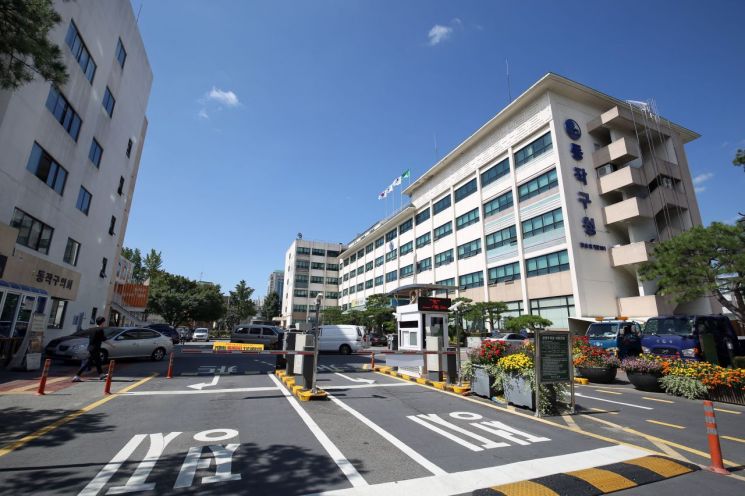
[Asia Economy Reporter Park Jong-il] Dongjak-gu (Mayor Lee Chang-woo) is promoting the "Erasing Japanese Names from Official Registers" project in collaboration with the Public Procurement Service to eliminate remnants of Japanese colonial rule by correcting Japanese-style names recorded in land and forest registers on the occasion of the 75th anniversary of Liberation Day.
This project involves restoring the original names of those who changed their names to Japanese-style names in official registers and identifying properties suspected to belong to Japanese individuals or Japanese companies as inherited assets, transferring them to state ownership.
The targets for correction include a total of 22 cases: 5 land and forest registers, 16 certified copies of registries, and 1 case that cannot be organized due to unknown lot numbers.
First, by September, the district will conduct a primary investigation by examining old land and forest registers with records of name changes to Japanese-style names, family registers, certified copies of registries, and cadastral registers to verify the existence of land, organize the registers, sort out name changes, and classify parcels corresponding to public property.
Through this, in cases where land does not exist in the cadastral register but only in the certified registry, the official registers will be unified by canceling the registry.
In particular, properties registered under Japanese-style names without ownership changes since Liberation Day will have their original names confirmed if possible, and after organizing and preparing the registers, owners will be notified. Otherwise, the properties will be transferred to the Public Procurement Service as state-owned assets, contributing to securing fiscal revenue.
Alongside this, by December, the district will assign detailed addresses ex officio to 123 multi-occupancy residences such as goshiwons (exam preparation rooms) around academies and university areas in Noryangjin-dong and Sangdo 1-dong, adding emergency exit locations, floors, and room numbers to the road name address individual registers and status maps.
Additionally, detailed address signboards made to allow nighttime identification of goshiwon floors, rooms, and emergency exit locations will be installed in conspicuous places such as stair entrances on each floor of the target buildings. This will enable fire stations, police stations, and 119 rescue teams to accurately identify locations and respond quickly in emergencies.
Lee Young-soo, Director of the Real Estate Information Division, said, “Through this project, we aim to eliminate the remnants of Japanese colonial rule that remain in daily life since Liberation Day and provide an opportunity to set history right.”
© The Asia Business Daily(www.asiae.co.kr). All rights reserved.

















