COVID-19 Central Disease Control Headquarters Regular Briefing
"Herd Immunity Response Impossible... Actual Patients Seem Similar to Current Confirmed Cases"
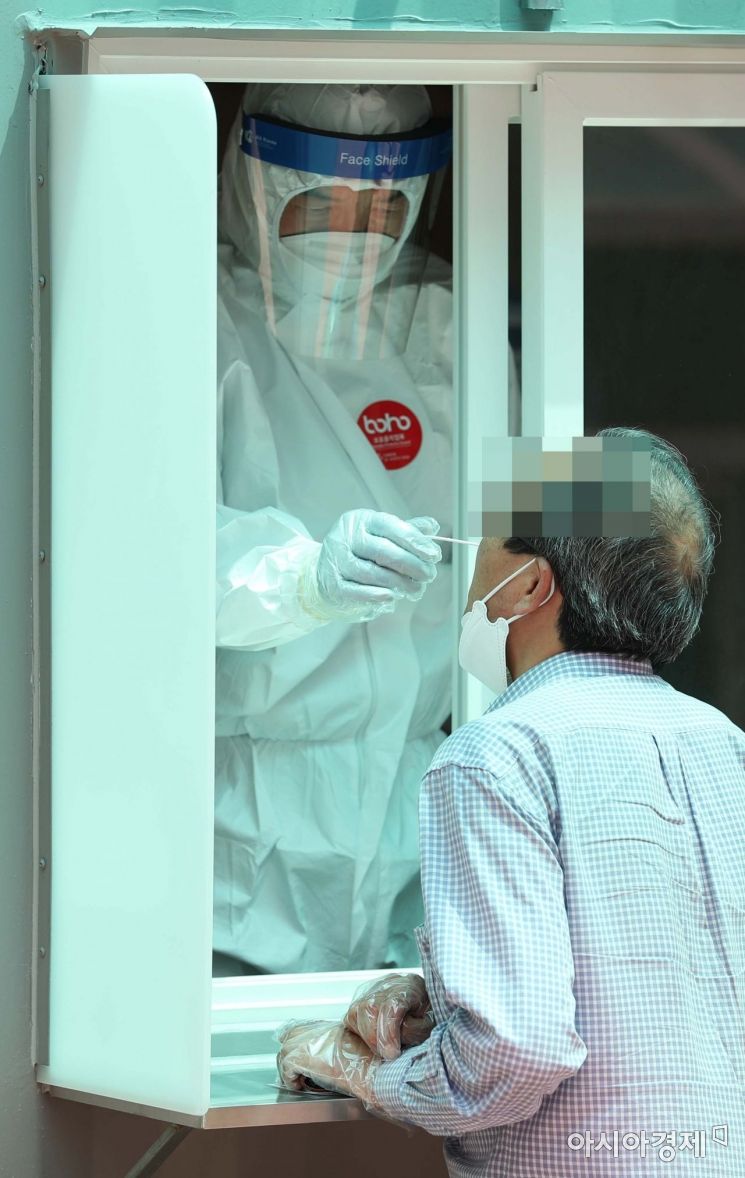 On the 8th, a citizen is receiving a test at an outdoor specimen collection booth installed in front of the COVID-19 screening clinic at Gwangjin-gu Public Health Center in Seoul. Photo by Mun Ho-nam munonam@
[Asia Economy Reporter Choi Dae-yeol] After recovering from the novel coronavirus infection (COVID-19), the health authorities examined whether antibodies had developed in 3,055 ordinary citizens, and it was found that only one person had antibodies. The authorities stated that the sample size is still too small to draw significant conclusions, but they believe that the active diagnostic testing from the early stages greatly contributed to identifying most of the actual patients.
On the 9th, the Central Disease Control Headquarters announced the interim results of the ongoing domestic COVID-19 antibody survey. These results were obtained by testing 1,555 residual serum samples collected over about two months since April from the Korea National Health and Nutrition Examination Survey, and 1,500 samples from outpatients visiting medical institutions in the southwestern area of Seoul, including Guro-gu, in late May.
The antibody test checks whether antibodies have developed in the body after recovering from COVID-19 infection. This antibody survey involved a screening test followed by a final neutralizing antibody test. Since there is no standardized method for antibody surveys domestically or globally, the two-step testing was conducted because screening tests alone cannot fully detect antibodies.
As a result, all samples from the Korea National Health and Nutrition Examination Survey tested negative, while one positive case was found in the southwestern Seoul area. Although testing methods vary slightly, these results are low compared to antibody survey results conducted in other countries. In New York State, USA, where rapid antibody diagnostic kits known to have somewhat lower accuracy were used, about 13.9% of 3,000 people tested positive. In London, UK, the rate was 17%, and in Scotland, where the neutralizing antibody test was also applied like in Korea, 0.6% of 1,000 people tested positive.
Authorities and Experts: "Interim Survey Limits Estimation of Total Infections"
The health authorities, after discussions with expert groups the previous day, judged that it is premature to estimate the total scale of infections based on this interim result. This is because Daegu, where a large-scale cluster infection occurred, was not included, and the selected subjects lack representativeness. However, given the extremely low number of people with antibodies revealed so far, the possibility of herd immunity is also considered slim.
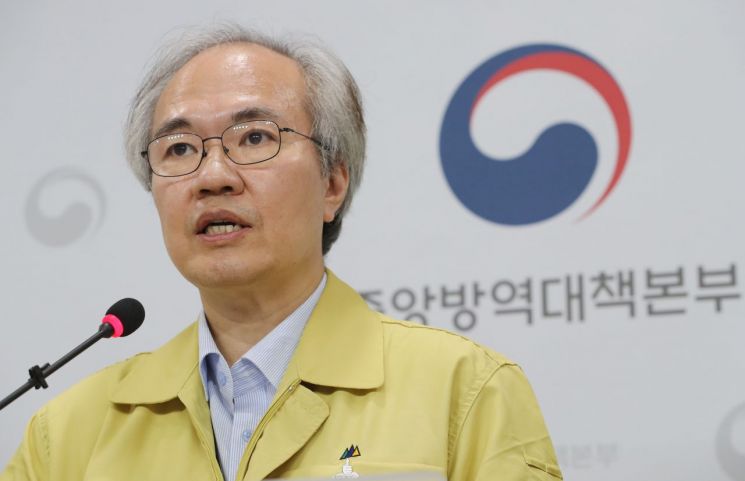
At a briefing, Kwon Jun-wook, Deputy Director of the Central Disease Control Headquarters, said, "It is highly likely that community immunity to COVID-19 in our country is extremely low," adding, "Responding to COVID-19 through herd immunity is impossible."
Although there are many asymptomatic confirmed cases of COVID-19, the authorities believe that due to widespread diagnostic testing, there are almost no infected individuals who have not been identified. This means that nearly all actually infected confirmed cases are managed within the quarantine network. The antibody survey results can be used to estimate patients who were infected but never confirmed. Deputy Director Kwon explained, "There may be little difference between the current number of confirmed cases and the actual number of infections."
© The Asia Business Daily(www.asiae.co.kr). All rights reserved.
![From Bar Hostess to Organ Seller to High Society... The Grotesque Con of a "Human Counterfeit" [Slate]](https://cwcontent.asiae.co.kr/asiaresize/183/2026021902243444107_1771435474.jpg)

















