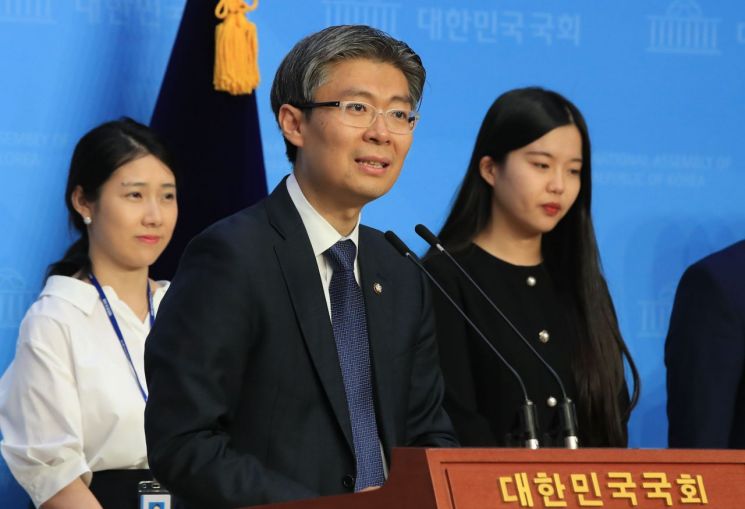
[Asia Economy Reporter Jeon Jinyoung] Assemblyman Jo Jeonghun of the Transition Era party distributed the 2020 World Bank report titled ‘Exploring Universal Basic Income’ on the 9th, urging the introduction of universal basic income (UBI). The World Bank stated in the report that “UBI can become a new form of social security system beyond specific countries or situations.” The World Bank has also joined the discussion on the introduction of UBI.
According to the report, the World Bank conducted UBI pilot experiments in 10 low- and middle-income countries including South Africa, Nepal, Russia, Mozambique, and Brazil. Typically, UBI experiments have been conducted mainly in high-income countries such as those in Northern Europe where social security systems are well established, but this expands the scope of discussion to countries with diverse income levels.
While preserving the original intent of UBI, which is unconditional cash payments to everyone, the World Bank conducted the experiments under a so-called ‘budget-neutral’ scenario without increasing or decreasing the budget. According to the report, in the samples from the 10 countries, 70% of the bottom 20% population and 92% of the total population benefited. On average, more people among the extremely poor receive benefits.
The report also emphasized that “UBI can be an alternative when tax progressivity is not high,” and “the Fourth Industrial Revolution and employment insecurity due to automation can be motivations for UBI.”
The World Bank proposed measures such as increasing taxation on the wealthy and reforming public expenditures to secure funding for UBI, while expressing concern that inflation fears caused by UBI are excessively exaggerated. Regarding claims that selective welfare is more effective than UBI in reducing poverty, it pointed out that “other factors related to poverty such as administrative costs, application costs, and stigma effects were not considered.”
Assemblyman Jo, who worked at the World Bank for 15 years, stated, “South Korea ranks 26th out of 27 OECD member countries in 2019 in terms of improvement in the Gini coefficient, which indicates income inequality, showing low progressivity, so it is feasible,” and added, “Now UBI has become a key agenda that the whole world must consider. South Korea should become a pioneer of UBI.”
© The Asia Business Daily(www.asiae.co.kr). All rights reserved.
![User Who Sold Erroneously Deposited Bitcoins to Repay Debt and Fund Entertainment... What Did the Supreme Court Decide in 2021? [Legal Issue Check]](https://cwcontent.asiae.co.kr/asiaresize/183/2026020910431234020_1770601391.png)
















