Public Outcry Over Refusal to Extradite 'Welcome to Video' Operator Son Jung-woo
Petition for Disclosure of Judge Who Denied India's Extradition Request
Civic Groups and Women's Organizations Say "Digital Sex Crime Punishments Are Too Lenient"
Legal Community Views Criticism of Court as Excessive
Ministry of Justice Considering Proposal to Introduce Appeal Procedures

[Asia Economy Reporters Seongpil Jo, Seungyoon Song] Public criticism continues unabated over the Seoul High Court's decision to deny the extradition of Son Jeong-woo (24), operator of the world's largest child sexual exploitation site "Welcome to Video," to the United States. The identities of presiding judges Kang Young-soo, Jung Moon-kyung, and Lee Jae-chan of the Criminal Division 20 at Seoul High Court, who made this ruling, have appeared on the website "Digital Prison," which discloses information about sex offenders. On the Blue House's national petition board, a petition to revoke Judge Kang's qualification as a Supreme Court justice candidate has surpassed 430,000 supporters as of 9 a.m. on the 9th. Influenced directly or indirectly by this wave of criticism, the Ministry of Justice is also considering introducing an appeal procedure for the 'criminal extradition review.' South Korea is practically the only country where extradition reviews are conducted as a single-instance process.
The intense criticism online stems from the perception that South Korea's punishment for child sexual exploitation materials is lenient. Son was sentenced to 1 year and 6 months in prison by the court for operating the dark web site "Welcome to Video," accessible only through a special browser, from July 2015 to March 2018, distributing child and adolescent sexual exploitation materials. He completed his sentence on April 27. In contrast, U.S. courts sentence their citizens to 70 months in prison even for downloading a single video from the Welcome to Video site, making Son's punishment grossly insufficient.
Similar voices are spreading like wildfire offline as well. The civic group "People Angry at the nth Room" held a press conference in front of the Seoul High Court in Seocho-dong, Seoul, the day before, condemning the judiciary for valuing its own prestige over punishing sex offenders. A day earlier, on the 7th, the civic group "eNd (End) Team Urging Strong Punishment for nth Room" also held a press conference at the Seoul High Court. The Korean Women Lawyers Association criticized in a statement, "The judiciary has tolerated lenient punishment for digital sex offenders under the guise of judicial sovereignty."
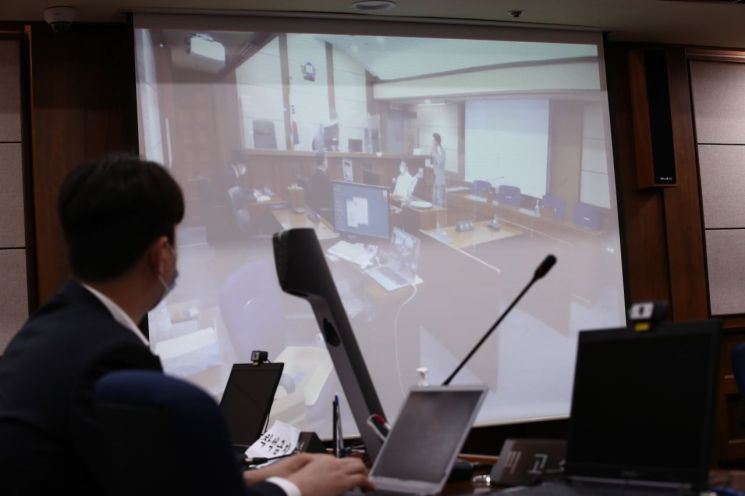
On the other hand, voices inside and outside the court say, "This extradition review was not a matter to be decided solely based on public opinion." There were valid reasons for the court's denial. The key basis for the court's refusal to extradite was that judicial sovereignty over this case lies with South Korea. The review was a procedure to determine whether to extradite Son for unpunished money laundering charges. Son operated the site, providing child pornography and other materials to about 4,000 paid members and received approximately 400 million won worth of cryptocurrency in return. The U.S. indicted Son on these charges and requested extradition, but the court ruled, "The sovereign state in this case is the Republic of Korea, and it can exercise primary authority over Son," thus denying the request.
In the legal community, considering the court's reasoning, there is a view that the current wave of criticism against the judiciary verges on a "witch hunt." A lawyer in Seocho-dong said, "Judges made their rulings within the framework of the law. They should not be criticized simply for making decisions contrary to public opinion."
Meanwhile, the Ministry of Justice believes it is necessary to give the criticized court an opportunity to reconsider its judgment and is currently reviewing a bill to introduce an appeal procedure for criminal extradition reviews through amendments to the "Criminal Extradition Act." According to the Ministry, among the 78 countries that have extradition treaties with South Korea, including the U.S. and Japan, South Korea is practically the only country where extradition reviews are conducted as a single-instance process. On the 7th, Song Young-gil, chairman of the National Assembly's Foreign Affairs and Unification Committee and member of the Democratic Party, proposed an amendment to the Criminal Extradition Act allowing appeals of extradition review decisions to the Supreme Court, but the Ministry of Justice plans to pursue its own amendment bill.
© The Asia Business Daily(www.asiae.co.kr). All rights reserved.


















