Far-Right Populism That Grew During Refugee Influx and Fiscal Crises Now in Decline
Merkel: "Populism Shows Its Limits in This Crisis"
"Problems Cannot Be Solved with Lies and Demagoguery"
Revival of 'Government Agencies and Bureaucrats,' Former Targets of Populism Mockery
Fukuyama: "COVID-19 Has Burst the Boil of Populism"
[Asia Economy Reporter Naju-seok] Right-wing populist parties in Europe are declining amid the novel coronavirus infection (COVID-19) crisis. European right-wing populist parties have repeatedly expanded their influence whenever facing major crises such as refugee influxes and soaring debt, but in this unprecedented crisis, they have instead been shunned by the public. The political landscape in Europe is facing a significant change.
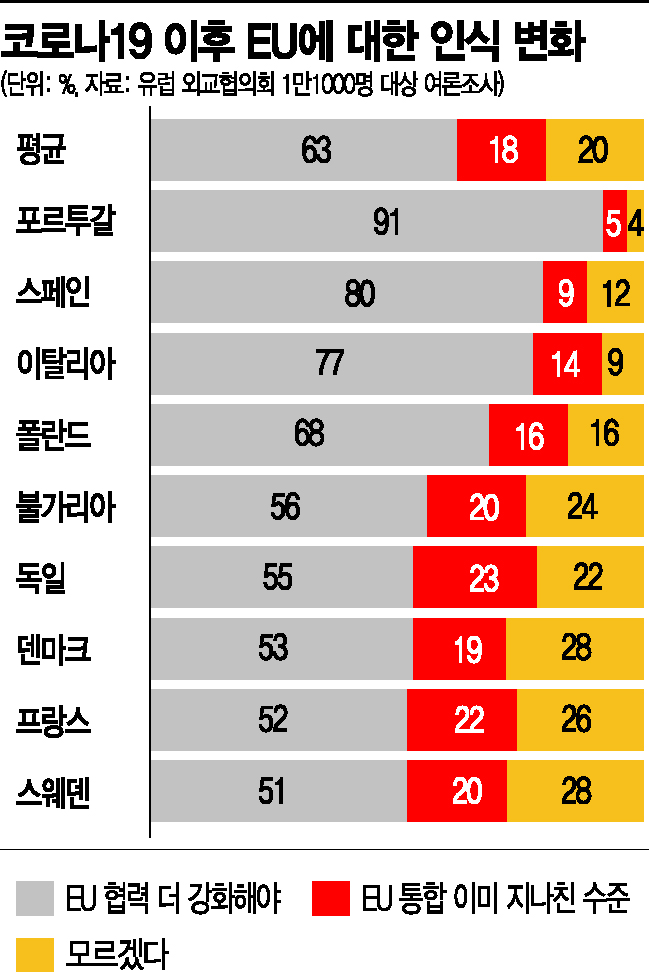
According to Politico and others on the 8th (local time), the support rate for Germany's right-wing party 'Alternative for Germany (AfD)' dropped from 14% earlier this year to 10% recently amid the COVID-19 situation. Even before experiencing COVID-19, the German political sphere was anxious about the rise of right-wing party members. Despite various disagreements, the Christian Democratic Union (CDU) and the Social Democratic Party (SPD) chose to form a coalition in response to AfD's rise, but the atmosphere changed significantly within just a few months. In Italy, the support rate for the right-wing populist party 'Lega' fell from 32% earlier this year to 26% recently.
Various explanations have been offered for the weakening of populist parties. First, the incompetence of populist parties was confirmed during this crisis. While populist parties hesitate to take actions that the public does not want in order to maintain support, established political parties took necessary measures and achieved results. Columnist Gideon Rachman pointed out, "Populism dislikes being unpopular," and "For this reason, they failed in responding to COVID-19." Even if unpopular with the public, necessary measures should be taken, but populist parties did not do so. Germany's AfD drew criticism for its inconsistent stance on COVID-19 response. Initially, it criticized the German government for responding too late, but later criticized the government's response as excessive, showing a zigzag approach.
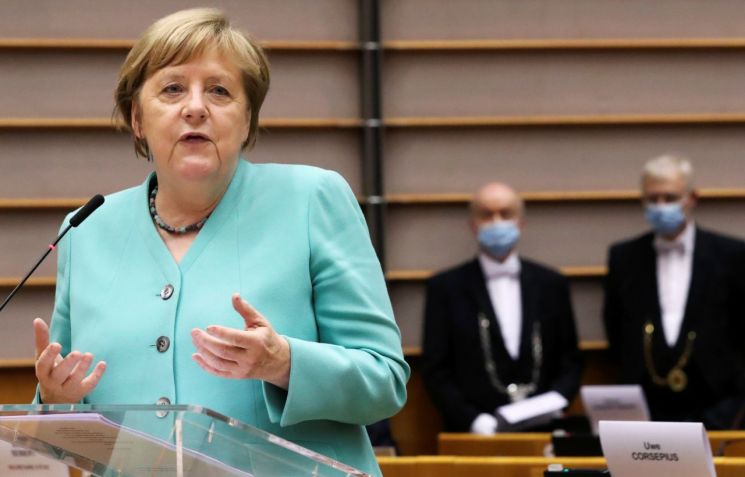
Angela Merkel, Chancellor of Germany, which holds the rotating presidency of the European Union (EU), said in her first European Parliament speech since the COVID-19 outbreak, "Populism that denies (objective) facts has shown its limits this time," and evaluated, "Democracy requires facts and transparency." Without naming any specific country, she targeted far-right political forces by saying, "We are witnessing that lies and misinformation cannot overcome the COVID-19 pandemic," and "There is nothing that can be achieved through hatred and agitation."
Additionally, the pandemic reaffirming the importance of government institutions and bureaucrats is also cited as a factor reducing the popularity of populist parties. Populist forces did not hesitate to mock government institutions to stimulate the catharsis of marginalized citizens. Greek Prime Minister Kyriakos Mitsotakis said in an interview with a media outlet, "Populist forces have shown a tendency to attack bureaucrats as soon as they gain power," and evaluated, "Through the COVID-19 crisis, trust in politics, government institutions, and bureaucrats has been established."
There is also an analysis that Europeans have awakened as right-wing populist claims such as border closures and trade restrictions materialized into lockdown policies. Former Italian Prime Minister Matteo Renzi argued, "As countries experienced lockdowns, a society governed by the fear that populist parties have advocated became a reality, and citizens realized that such a world is a very sad place."
Stanford University professor Francis Fukuyama also claimed, "The COVID-19 pandemic could be an opportunity to burst the boil of populism."
© The Asia Business Daily(www.asiae.co.kr). All rights reserved.


















