[Asia Economy Reporter Junho Hwang] Domestic researchers have discovered a protein that detects blood pressure and regulates blood flow. They identified a sensor protein that practically controls blood pressure in the aortic baroreceptors, which detect blood flow and regulate blood pressure. The research team evaluated this as a foundational discovery for treating hypertension caused by errors in cardiac blood pressure detection.
On the 9th, Dr. Woo Taek Oh's research team at the Brain Science Institute of the Korea Institute of Science and Technology (KIST) announced that Tentonin3, a mechanosensitive channel protein that regulates muscle contraction and relaxation, also acts as a precise sensor regulating cardiac blood pressure.
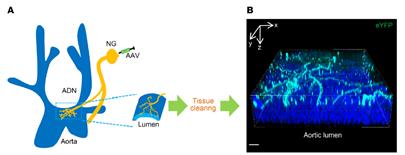
To identify the sensor regulating blood pressure, the research team observed nerve bundles near the heart and found a large amount of the gene for the mechanosensitive channel Tentonin3 at the nerve endings of the aortic baroreceptors. Notably, the nerves expressing Tentonin3 completely encircled the aorta.
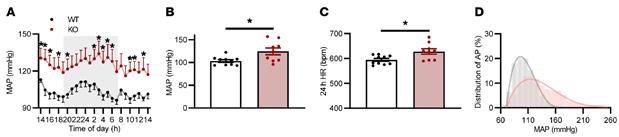
Based on these observations, the team conducted experiments using mice with the Tentonin3 gene removed. As a result, they confirmed that the blood pressure sensing ability of mice lacking the Tentonin3 gene was significantly impaired. When the Tentonin3 gene was re-expressed, the mice's blood pressure returned to normal.
Dr. Oh stated, "This research highlights the role of the Tentonin3 ion channel in detecting cardiac blood flow and regulating blood pressure, expanding the physiological understanding of the blood pressure sensing system in animals. We believe this study will play a significant role as a foundation for treating hypertension caused by errors in cardiac blood pressure detection."
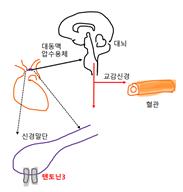 A schematic diagram of the mechanical channel and related molecular sensor that detect blood pressure from blood flow coming out of the heart (TTN3: Tentonin3).
© The Asia Business Daily(www.asiae.co.kr). All rights reserved.


















