Chair City Jongno-gu of the Korea Healthy Cities Association Announces Survey Results on COVID-19 Response
[Asia Economy Reporter Jongil Park] More than 70% of healthy cities in the Republic of Korea have been proactively implementing related policies beyond the central government's guidelines during the response to the novel coronavirus infection (COVID-19).
They also agreed on the need to expand mental health measures for residents and physical activity promotion projects due to the prolonged COVID-19 pandemic.
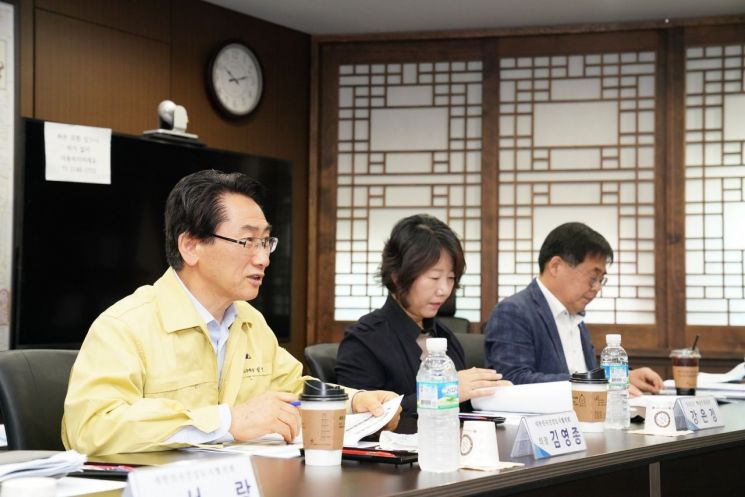
Jongno-gu (District Mayor Kim Young-jong), the chair city of the Korea Healthy Cities Association, conducted a survey to explore COVID-19 response strategies and announced the results.
The survey period was from June 1 to 12, targeting the heads and officials of 101 member cities of the Healthy Cities Association.
The survey included topics such as ‘Opinions on the direction of healthy cities after COVID-19,’ ‘Current status of COVID-19 response,’ and ‘Expectations for the Healthy Cities Association regarding future infectious disease responses.’
According to the survey results, more than 70% of healthy cities in Korea have proactively implemented related policies beyond the central government’s guidelines during the COVID-19 response process. Furthermore, they agreed on the necessity to expand mental health measures for residents and physical activity promotion projects due to the prolonged COVID-19 pandemic.
Additionally, 81% of healthy city officials reported experiencing physical and mental exhaustion, and 92% felt the need to establish a non-face-to-face system for health projects.
At this point, the greatest threats COVID-19 poses to our society were identified as ‘mental health’ and ‘economic contraction.’
In preparation for a second wave of COVID-19, healthy cities responded that improvements in the environment of screening clinics at public health centers, an increase in infectious disease response personnel, and unification of communication channels with the central government (establishment of a reporting system) are necessary.
In the post-COVID-19 era, they prioritized devising healthy city design plans and developing infectious disease response manuals, and identified ‘creating sustainable healthy cities to respond to the climate crisis’ as a future agenda.
Meanwhile, founded in 2006, the Korea Healthy Cities Association shares excellent healthy city policies domestically and internationally, strengthens the capabilities of member city officials, and seeks sustainable healthy city development plans through collaboration with international organizations such as WHO (World Health Organization) and AFHC (Alliance for Healthy Cities in the Western Pacific Region).
Jongno-gu, the chair city, operates an expert advisory group including Professor Ko Kwang-wook of Kosin University, Professor Kang Eun-jung of Soonchunhyang University, Professor Hong Yoon-chul of Seoul National University, Professor Kim Geon-yeop of Kyungpook National University, and Dr. Son Chang-woo of the Seoul Institute, providing full support for healthy city research to establish healthy city directions and enhance infectious disease response capabilities.
As part of this, on June 30, a training and discussion session for association officials was held at the district office’s Hanuri Hall to deepen understanding of healthy cities. The event featured special expert lectures and discussions under the theme ‘Thinking about Healthy Cities in the Era of the Civilizational Transformation Caused by COVID-19.’
In addition, the association is promoting the ‘Healthy City Legislation’ to ensure that healthy city policies comprehensively consider health, safety, urban planning, green environment, and resource environment, aiming to improve the quality of life of the public. A forum is scheduled for the second half of this year.
Kim Young-jong, Mayor of Jongno-gu, stated, “As the chair of the Healthy Cities Association, I plan to request the central government to prepare measures to respond to the second wave of COVID-19,” adding, “I will strive to establish a legal basis to implement comprehensive and sustainable healthy city policies.”
© The Asia Business Daily(www.asiae.co.kr). All rights reserved.

















