Technology Theft and Payment Guarantee Laws
One Side Says "Supports Growth Companies"
Other Side Says "Overlaps with Large Corporation Regulations"
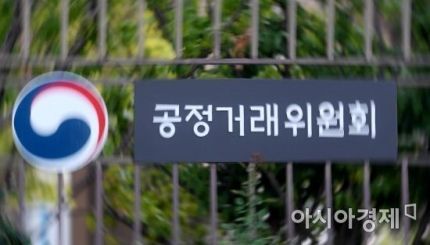 Bills premised on the idea that the government and the National Assembly must control large corporations, which are the dominant parties, for small and medium-sized enterprises (SMEs), the subordinate parties, to engage in creative management are pouring in. Some criticize these laws as "corporate straitjacket laws," arguing that they undermine the foundation of autonomous management philosophy in a free market economy. (Photo by Asia Economy DB)
[Asia Economy Reporter Moon Chaeseok] Following the announcement of the comprehensive revision of the Fair Trade Act, a flood of bills related to competition and coexistence laws are being proposed. Concerns are being raised that corporate management will be restrained as the Democratic Party of Korea has swept the standing committees of the National Assembly, leading to a surge in bills. On the other hand, there are voices welcoming these moves, arguing that in order for the subordinate party (Eul) to manage freely, the dominant party (Gap), which repeatedly engages in practices such as technology theft, must be controlled to some extent.
On the 1st, Democratic Party lawmaker Lee Seongman announced that he had proposed the "Partial Amendment to the Act on the Fair Transactions in Subcontracting" as the first bill.
The bill includes provisions to estimate the damages suffered by subcontractors who have been victims of technology theft.
It aims to accurately calculate damages for infringements on tangible and intangible technologies, know-how, technical data, etc., thereby guaranteeing fair compensation for subcontractors.
Lawmaker Lee believes this will increase the binding force against the technology theft actions of the primary contractors.
The current Subcontracting Act introduces a punitive damages system that allows compensation up to three times the amount of damages.
On the 2nd, fellow party member Kim Kyungman held a discussion forum on the amendment of the Win-Win Cooperation Act to create an environment for receiving fair payment for delivered goods.
This was to discuss the "Act on the Promotion of Win-Win Cooperation between Large and Small-Medium Enterprises," which was proposed on the 8th of last month.
The Korea Federation of SMEs has annually advocated that companies or SME cooperatives should be able to negotiate adjustments to delivery payments.
This movement aims to expand the authority of the subordinate party (Eul), going beyond pressure on the dominant party (Gap) such as abolishing the exclusive right to file complaints with the Fair Trade Commission and strengthening regulations on internal transactions.
Supporters believe that such bill proposals will contribute to the long-term growth of SMEs, stimulate startup entrepreneurship, and encourage the development of tangible and intangible assets.
They argue that to create innovative companies, SMEs should not be unfairly pressured by large corporations, and binding legislation will help prevent such issues.
Opponents say that as soon as the ruling party (Geoye) took office, "laws to tighten large corporations" are being rapidly and simultaneously introduced excessively.
They point out that it is problematic that laws targeting not only areas where SMEs unilaterally suffer damages, such as technology theft and compensation for delivery damages, but also laws openly targeting large corporations, such as multiple derivative lawsuits and separation of audit committees, are being proposed all at once.
There are critics who argue that this will stifle the growth of innovative companies and only suffocate existing large corporations.
However, opinions differ regarding the correlation between regulatory bills and the novel coronavirus disease (COVID-19).
Some argue that linking regulations with the management difficulties caused by COVID-19 is unreasonable, while others express concerns that regulations are piling on top of the challenges brought by COVID-19, making the situation even worse.
© The Asia Business Daily(www.asiae.co.kr). All rights reserved.

















