Announcement of Treasure Designation for Gongju Gapsa Polychrome Seated Buddha Triad, Four Bodhisattva Standing Statues, and Associated Relics and Scriptures
2.5m Tall Clay Polychrome Buddha Statues Evoke a Majestic and Dignified Presence
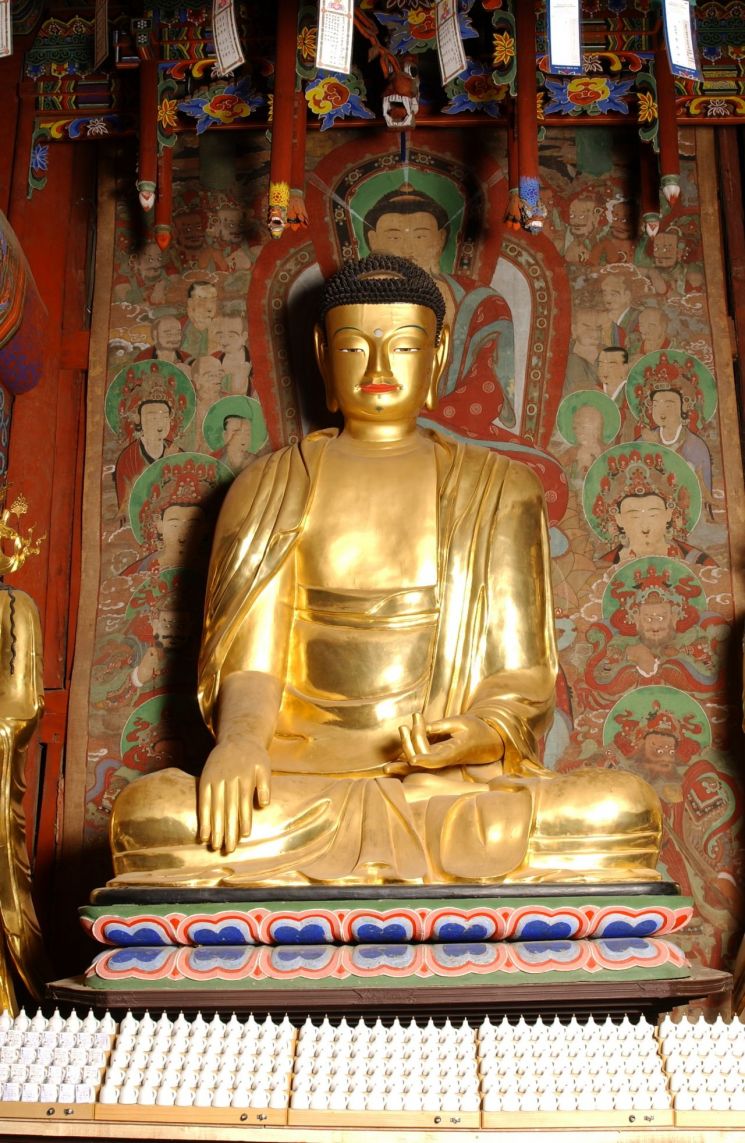
The Buddha statue, relics, and scriptures enshrined in the Daeungjeon Hall of Gapsa Temple in Gongju are designated as treasures. On the 1st, the Cultural Heritage Administration announced the preliminary designation of the ‘Gongju Gapsa Temple Polychrome Seated Sakyamuni Triad and Bodhisattva Statues and Relics’ and the ‘Gongju Gapsa Temple Polychrome Seated Sakyamuni Triad and Bodhisattva Statues Scriptures’ as treasures. Opinions from various sectors will be collected for one month, and the final designation will be confirmed after review by the Cultural Heritage Committee.
The polychrome seated Sakyamuni triad and Bodhisattva statues are large-scale works created by nine sculptor monks in the 9th year of King Gwanghaegun’s reign (1617). They are the largest and finest extant Buddha statues created after the Imjin War. The clay-made polychrome Buddha statue stands 2.5 meters tall. The Bodhisattva statue is also over 2 meters in height, exuding a dignified atmosphere. Similar statues of comparable scale and form include the ‘Hadong Ssanggyesa Temple Daeungjeon Hall Wooden Seated Sakyamuni Triad and Bodhisattva Statues (Treasure No. 1378, 1639)’ and the ‘Hwaeomsa Temple Gakhwangjeon Hall Wooden Seated Sakyamuni Triad and Bodhisattva Statues (1703).’
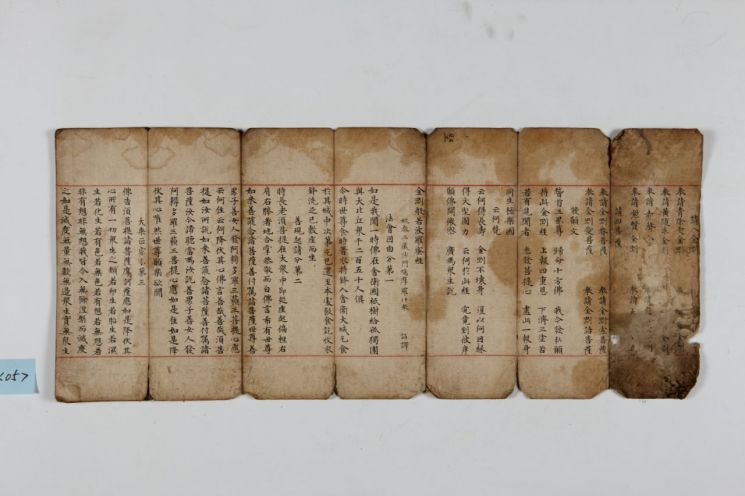 Gongju Gapsa Small Seated Buddha Triad and Four Bodhisattvas Standing Statues Sacred Texts (Blank Paper Manuscript)
The Buddha statue’s face is slender with an inverted triangular shape, and the nose ridge is a prominent triangular form. These are sculptural characteristics of Haengsa (Haengsi), who inherited the traditions of Seokjun (釋俊), Won-o (元悟), and Gakmin (覺敏). The tall and graceful posture, stable proportions, and vigorous expression also reflect the era’s characteristics of large Buddha statues created after the Imjin War.
The relics designated as treasures together include 263 items such as votive texts, reliquary containers, five treasure bottles, textiles, and dharani charms. They are evaluated as having high academic, historical, and artistic value because they remain intact without deformation. The scriptures were discovered inside the polychrome standing Avalokiteshvara Bodhisattva statue. They consist of one handwritten copy of the ‘Diamond Prajnaparamita Sutra’ written in ink on white paper and seven woodblock-printed sutra volumes. The publication date is confirmed to be before 1617, when the statue was created. A Cultural Heritage Administration official stated, “While important as editions, they also hold academic and bibliographic value in terms of the historical figures involved in carving and printing, as well as the binding techniques. They are also significant artifacts for understanding the types and characteristics of relic scriptures.”
© The Asia Business Daily(www.asiae.co.kr). All rights reserved.


















