7 out of 10 Adults Positive About 'Tattoos'
Some Still Negative... "You'll Regret Getting a Tattoo"
Cases of Disciplinary Action for Tattoos... Tattoo Public Committee "A Means of Self-Expression"
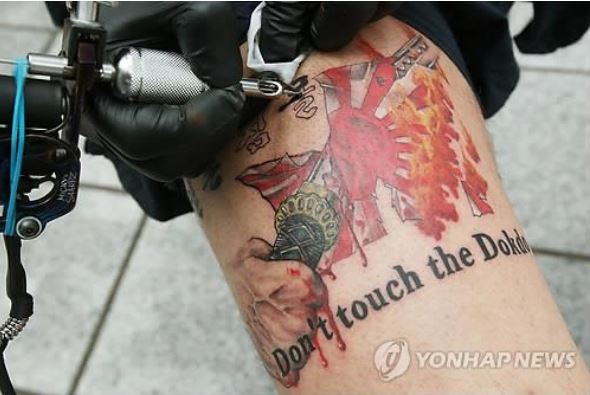
[Asia Economy Reporter Heo Midam] "Getting a tattoo is not a crime."
While perceptions of tattoos have become more tolerant compared to the past, some still view tattoos as part of an 'underground culture.' Especially in South Korea, the only country that legally classifies tattoos as illegal, voices are calling for institutional measures to be established. To change the negative perception of tattoos, some tattoo artists have launched a joint countermeasure committee to advocate for labor rights.
The number of people getting tattoos has recently increased. According to the Ministry of Food and Drug Safety (MFDS), as of 2019, there are about 30 manufacturers and importers of tattoo ink nationwide, with the market size estimated at 15 to 20 billion KRW annually. The number of tattoo users is also estimated to reach around one million.
Kim (25), a university student, got tattoos on both forearms the year he turned twenty. He said, "I got tattoos with my parents' baptismal names. It means always remembering the importance of my parents. Even after five years, I have never regretted getting the tattoos," adding, "I got tattoos for my own satisfaction. I don't really care what others say."
Social perceptions of tattoos have become more positive than before. According to a 2018 survey on tattoo awareness conducted by market research firm Embrain Trend Monitor with 1,000 men and women nationwide, 70.9% of respondents said, "Perceptions of tattoos have become much more tolerant than in the past."
By age group, 73.2% of people in their 20s, 73.6% in their 30s, 70.4% in their 40s, and 66.4% in their 50s responded positively. This means that 7 out of 10 people have a positive view of tattoos.
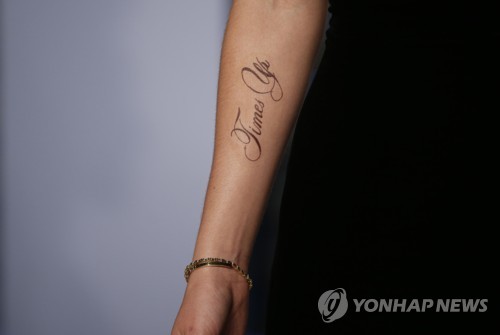
However, some still hold negative views, arguing that tattoos can cause discomfort and unease to others. Kim (27), an office worker with tattoos on both arms, said, "Prejudice against tattoos still exists," adding, "When I go out wearing clothes that show my tattoos, people always glance at me sideways at least once."
He continued, "The fact that tattoos are not legalized contributes to the negative perception. The label 'illegal' itself has helped form the idea that 'tattoos are part of an underground culture.' I think it's an outdated notion to believe that only people with bad behavior get tattoos," he added.
He said, "Prejudice against tattoos exists among both older and younger generations. My peers try not to show it, but some people still react by asking, 'Why do you get tattoos?'" He also mentioned, "When I got my tattoos, some friends told me I would regret it."
There have been cases where people faced disadvantages in employment or disciplinary actions simply because they had tattoos. In February, a public official A working at the Military Manpower Administration was disciplined with a three-month pay cut after getting tattoos and piercings on his face and neck.
In an interview with a media outlet at the time, A demanded the cancellation of the disciplinary action, arguing that "there is no legal basis prohibiting ordinary public officials from having tattoos, and the punishment is excessive." He claimed, "Before being a public official, I am a person. I just had some drawings inked on me."
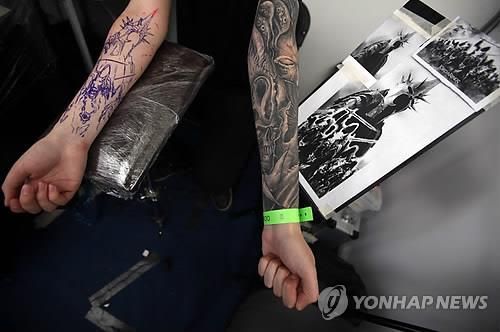
South Korea is practically the only country that legally defines tattoo procedures as illegal. Under current law, tattooing is legal only if performed by a licensed medical professional; all other cases are illegal.
Japan also classifies tattooing by non-medical personnel as illegal, but in 2018, the Osaka High Court acquitted a tattoo artist prosecuted for violating the Medical Practitioners Act, ruling that tattooing is not considered a medical act. This has made South Korea effectively the only 'tattoo illegal zone.'
As a result, tattoo artists continue to face penalties. Last month, the court sentenced B (40) to a fine of 7 million KRW for violating the Medical Service Act.
B was prosecuted for operating a tattoo shop in Seongsan-gu, Changwon-si, Gyeongnam Province, on May 20 last year, charging money from customers and tattooing them with specialized needles.
The court stated, "Unlicensed medical practice is a serious crime that can pose risks to public health," as the reason for the sentence.
Meanwhile, on the 9th of last month, the Joint Countermeasure Committee for Freedom and Rights to Tattooing (Tattoo Joint Committee) was launched. The committee was established to defend the rights of tattoo artists and the freedom of tattoo consumers.
At the launch ceremony held in front of the Jeon Tae-il Memorial Hall in Jongno-gu, Seoul, the Tattoo Joint Committee stated, "Tattooing is a creative art of drawing and a means of self-expression," and urged, "We must restore public awareness and laws and systems to a common-sense level that meets global standards."
© The Asia Business Daily(www.asiae.co.kr). All rights reserved.



















