Choi Im-wi, 4th Full Meeting... First Labor-Management Proposals Presented
Business Sector "Reflect Economic Conditions... Minimum Wage Must Stabilize"
Labor Sector "Not a Place to Prepare Support Measures for Self-Employed"
No Disruptions but... Labor Sector Press Conference "Criticizes Reduction Proposal"
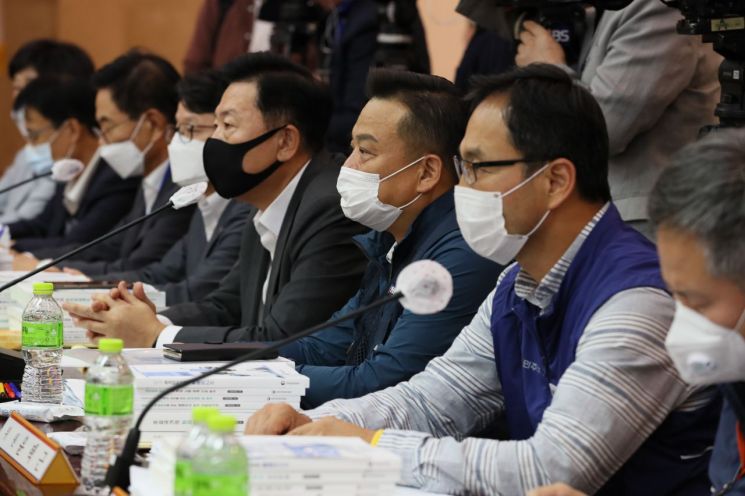
[Asia Economy Reporter Kim Bo-kyung] The business sector proposed an initial minimum wage demand for next year at 8,410 won, which is 2.1% lower than this year's 8,590 won. The labor sector once again demanded 10,000 won. Although the positions of both sides were sharply divided, there was no disruption such as a meeting 'boycott.' As the novel coronavirus disease (COVID-19) issue emerged as a key point, the role of the public interest commissioners holding the 'casting vote' is drawing more attention.
The Minimum Wage Commission held its 4th plenary meeting from 10 a.m. on the 1st at the Government Seoul Office to discuss the initial minimum wage proposals submitted by the worker and employer representatives. The initial proposals can be seen as symbolic figures reflecting the ideological stances of both labor and management camps. On that day, both sides revealed their cards simultaneously and engaged in intense debates over the appropriate minimum wage level.
Labor: "This is not a place to prepare measures for self-employed businesses" vs Management: "Minimum wage must be stabilized"
From the beginning, labor and management engaged in a power struggle. The business sector called for freezing or lowering the minimum wage considering the worsened business conditions due to the COVID-19 pandemic, while the labor sector insisted on raising the minimum wage to support the livelihoods of low-wage workers.
Ryu Ki-jung, Executive Director of the Korea Employers Federation and an employer representative, said in his opening remarks, "Both business owners and workers affected by the minimum wage strongly demand a freeze or reduction," adding, "If saving companies and protecting jobs is a national task, discussions should reflect economic and business conditions sufficiently to stabilize the minimum wage."
Lee Tae-hee, Head of the Smart Jobs Division at the Korea Federation of SMEs, emphasized, "Next year's minimum wage level should be decided at a level that can save small and medium-sized enterprises and protect workers' jobs."
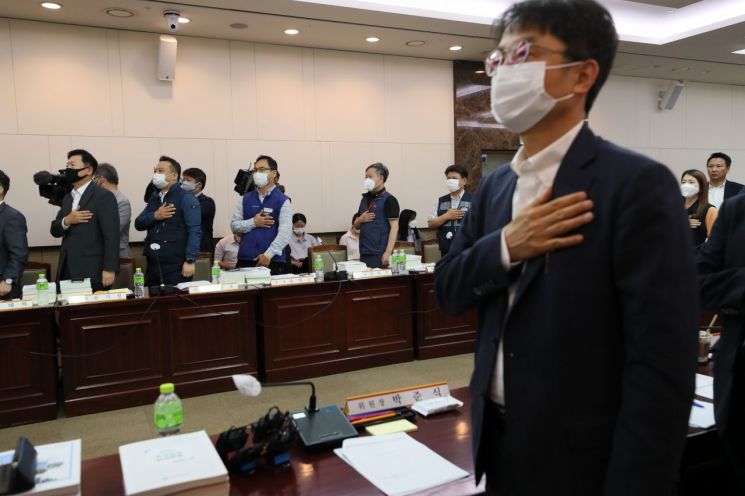
The labor sector immediately reacted strongly. Yoon Taek-geun, Vice Chairman of the Korean Confederation of Trade Unions (KCTU) and a worker representative, raised his voice, saying, "The Minimum Wage Commission is an institution that decides the minimum wage level," and "This is not a place to resolve difficulties of small and micro self-employed businesses or to prepare support measures," criticizing the management's stance.
Lee Dong-ho, Secretary General of the Federation of Korean Trade Unions (FKTU), said, "Even during past IMF economic crises and financial crises, the minimum wage was decided with a minimum increase rate in the high 2% range," adding, "Wage increases in large corporations far exceed this level." He further expressed concern, "If the minimum wage, which is the lifeline for low-wage workers, is raised less than this, their lives will become more difficult and income polarization will widen."
Management proposes a 180 won cut from this year... Labor submits 10,000 won
On that day, the worker representatives proposed 10,000 won, a 16.4% (1,410 won) increase from this year's minimum wage, during a closed meeting. This is the same level as last year's initial demand. It was set lower than the demand previously announced by the KCTU (10,770 won) through negotiations between the two major trade unions. The labor sector cited the following reasons for submitting 10,000 won: ▲ stabilizing the livelihoods of low-wage workers and resolving polarization ▲ the inevitability of continuous minimum wage increases to reduce gaps between classes ▲ Korea's minimum wage being at a mid-level among OECD countries.
The employer representatives submitted 8,410 won, 2.1% (180 won) lower than this year's minimum wage, citing the COVID-19 situation as the reason for the reduction proposal. The reasons given for the reduction proposal included ▲ the economic recession becoming visible this year due to the COVID-19 economic crisis ▲ the rapid pace and relatively high level of minimum wage increases ▲ worsening business conditions and employment situations for SMEs and small business owners.
Last year, the employer representatives submitted an initial proposal of 8,000 won, a 4.2% reduction from that year's minimum wage (8,350 won), which led to extreme clashes with the labor sector. This year, the gap between the initial demands of labor and management remained. However, the meeting proceeded relatively smoothly without collective backlash or disruption and ended around noon. A public interest commissioner reported after the meeting, "Unlike previous years, the meeting is continuing in a calm atmosphere." The next plenary meeting is scheduled for 3 p.m. on the 7th at the Government Sejong Office.
Park Jun-sik, Chairman of the Minimum Wage Commission, said, "We will continue discussions on the minimum wage level at the next meeting," and requested, "Please submit the first revised proposals at a level that both sides can accept."
Labor holds press conference condemning 'minimum wage reduction proposal'... Management "Not concerned"
The KCTU and FKTU held a joint press conference immediately after the Minimum Wage Commission meeting in front of the main gate of the government office, condemning the reduction proposal submitted by the employer representatives. Lee Eun-ho, spokesperson for the FKTU, criticized at the press conference, "The reduction proposal submitted by the employer representatives today is an act that tramples on workers' human rights." He added, "Even the public interest commissioners were baffled and dumbfounded by the proposal," and stated, "The minimum wage should be viewed not as an economic issue but as a matter of workers' rights to live with dignity, that is, human rights." The press conference by the two major trade unions can be seen as a public opinion campaign to pressure the business sector, which proposed the minimum wage reduction.
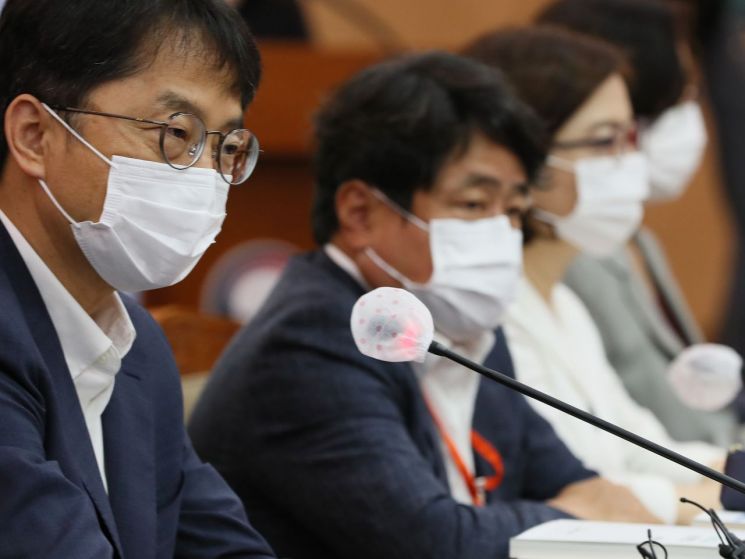
In response, an employer representative dismissed the criticism in a phone interview with Asia Economy, saying, "We are not concerned." He said, "I understand the rationale that the newly appointed worker representatives recommended by the KCTU must fulfill their roles to meet internal demands," but emphasized, "Right now, we must look at the entire national economy."
He urged the labor sector, "I hope they face reality. Even workers are worried about losing their jobs," raising his voice, "Jobs must exist for the minimum wage to exist. What use is discussing the minimum wage when jobs are disappearing?" He added, "Even if the minimum wage is lowered now, the situation is not easy," and criticized, "The labor sector's claims are not receiving public support. We can only conclude that their empathy is lacking."
Public interest commissioners focus on 'overcoming COVID-19'... Casting vote role draws attention
As the minimum wage discussions approach the final stages, attention is turning to the role of the public interest commissioners. Most public interest commissioners supported the 8,590 won final proposal submitted by the employer representatives last year. This resulted in a low increase rate of 2.87%, the lowest since the IMF foreign exchange crisis and financial crisis periods. They emphasized 'speed control' considering the side effects of rapid minimum wage increases and the economic situation.
So far, the public interest commissioners have focused on overcoming the COVID-19 crisis. While urging concessions and cooperation from both labor and management, they agree that the minimum wage should not become an obstacle to overcoming the COVID-19 situation.
Professor Kwon Soon-won of Sookmyung Women's University said, "There are many cases worldwide where various crises were overcome through the efforts of stakeholders," adding, "If labor and management act as agents of crisis resolution, public interest commissioners will do their best to assist so that the process can be smoothly concluded."
© The Asia Business Daily(www.asiae.co.kr). All rights reserved.
![User Who Sold Erroneously Deposited Bitcoins to Repay Debt and Fund Entertainment... What Did the Supreme Court Decide in 2021? [Legal Issue Check]](https://cwcontent.asiae.co.kr/asiaresize/183/2026020910431234020_1770601391.png)

















