"2009 New Flu Similar to 1918 Spanish Flu"
WHO "Carefully Review the Paper"
Chinese Research Team Reveals New Virus Discovery Results on 29th Last Month
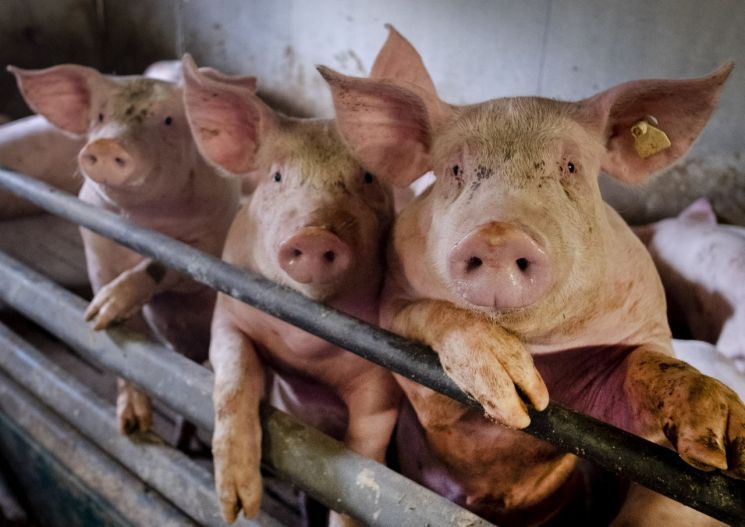
[Asia Economy Intern Reporter Lim Juhyung] Concerns are growing over a newly discovered swine flu virus in China. While some claim that the virus could potentially spread into a global pandemic, the U.S. government and the World Health Organization (WHO) have stated their intention to closely monitor the situation.
According to the U.S. media outlet CNBC on the 30th of last month (local time), Dr. Anthony Fauci, director of the U.S. National Institute of Allergy and Infectious Diseases, testified at a U.S. Senate hearing that day, saying, "We are keeping an eye on the swine flu virus emerging in China," and added, "This virus is similar to the 2009 novel flu and the 1918 Spanish flu virus."
Dr. Fauci emphasized, "This virus, named 'G4 EA H1N1,' has not yet been shown to infect humans, but it exhibits significant mutation capabilities," and added, "It is not an immediate threat, but it is something to watch closely."
On the same day, WHO also announced that it is carefully examining the virus. WHO spokesperson Christian Lindmeier said at a briefing held in Geneva, Switzerland, "We will carefully review the research papers to understand the new virus."
He further stated, "Cooperation for research and surveillance of animal populations is important," and emphasized, "This research shows that even amid the COVID-19 pandemic, vigilance must not be relaxed, and other viruses also need to be monitored."
Earlier, on the 29th, a research team from China Agricultural University under the Chinese Academy of Agricultural Sciences and the Chinese Center for Disease Control and Prevention published a study titled 'A novel influenza virus found in Chinese pigs' in the U.S. scientific journal Proceedings of the National Academy of Sciences (PNAS).
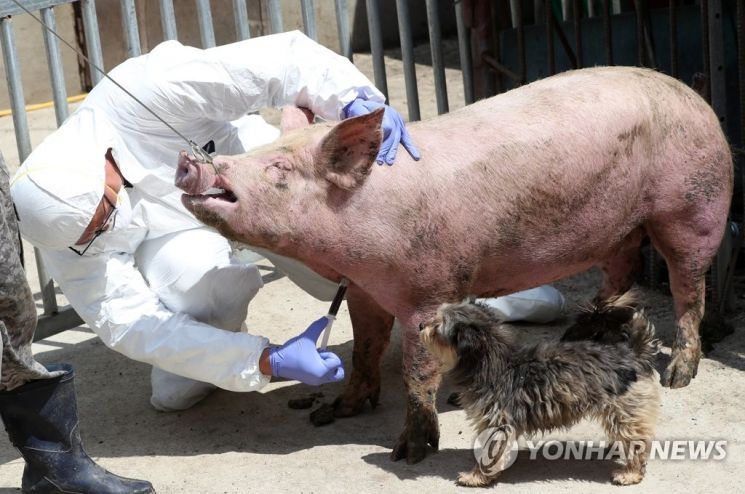
In the paper, the research team stated that from 2011 to 2018, they collected over 30,000 samples from pigs at Chinese livestock farms and analyzed them, discovering a total of 179 influenza viruses. Most of the viruses found were of the type called 'G4.'
The team explained about the G4 virus, "Since 2016, it has been rapidly increasing, and currently, it constitutes the majority of swine flu gene types found in 10 regions of China," adding, "G4 contains the H1N1 virus gene that caused the 2009 novel flu pandemic."
The researchers expressed concern that while the virus is unlikely to cause human-to-human transmission, it may have undergone mutation processes enabling transmission to humans after past pandemics. They pointed out that since this virus is newly discovered, humans have almost no immunity against it.
The team noted, "'G4 EA H1N1' virus is becoming a major problem in Chinese livestock farms," and warned, "If this virus increases among pigs, humans will inevitably be exposed."
They continued, "If more infections occur, the virus could adapt to new environments and potentially spread into a pandemic," emphasizing, "Monitoring systems for farms and farmers must be strengthened."
© The Asia Business Daily(www.asiae.co.kr). All rights reserved.


















