Democratic Party Discusses 'Working National Assembly Act' at Policy Meeting
Push to Abolish Legislation and Judiciary Committee's Systematic and Substantive Review Authority
Opposition's Backlash Over Weakening of Legislation and Judiciary Committee Expected
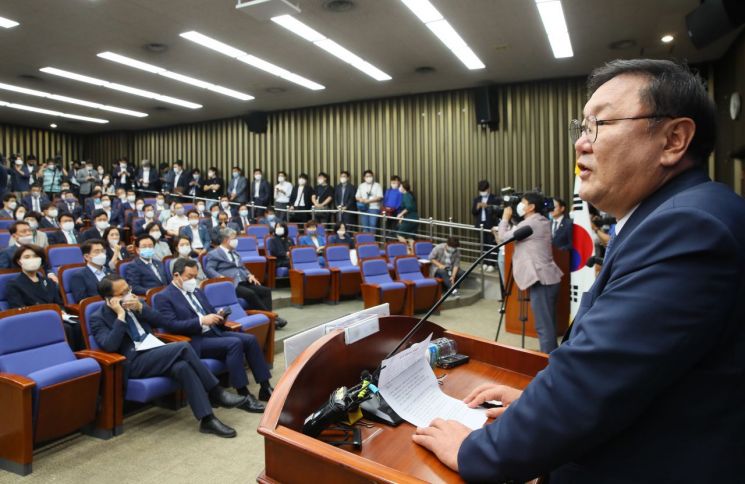
[Asia Economy Reporter Kang Nahum] The Democratic Party of Korea, which swept the chairmanships of the standing committees in the first half of the 21st National Assembly, has launched a strong drive for parliamentary reform. The party plans to weaken the power of the Legislation and Judiciary Committee through the "Working National Assembly Act," which centers on creating a separate body for systematic and textual review of bills.
On the morning of the 1st, the Democratic Party held a policy caucus at the National Assembly to discuss the party's stance on pushing forward the "Working National Assembly Act." The final draft prepared by the party's "Working National Assembly Task Force" was unveiled to the lawmakers on that day.
Floor leader Kim Tae-nyeon emphasized at the caucus, "We must break and reform the structure and customs where bills, which have been fiercely debated and agreed upon in standing committees, are obstructed by the Legislation and Judiciary Committee," adding, "We need to establish a system where non-working National Assemblies and political parties naturally become obsolete."
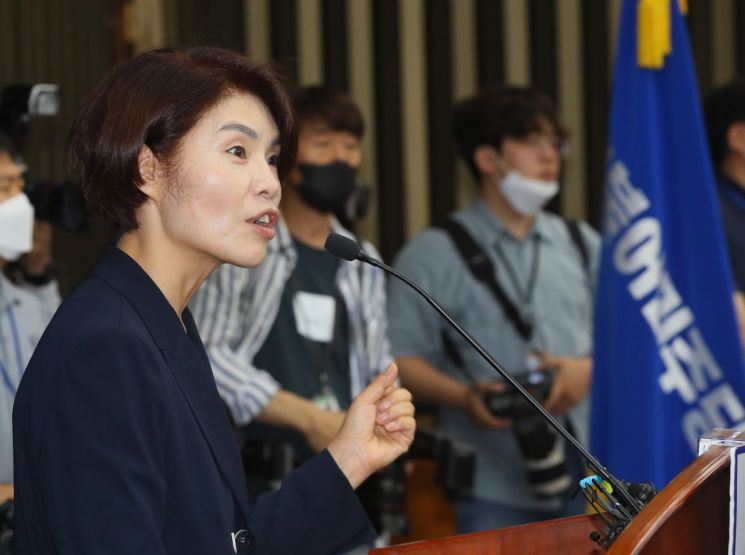
Task force leader Rep. Han Jeong-ae also pointed out, "The reason why the National Assembly's hard work does not shine is that standing committees and bill subcommittees have not convened," and added, "Even though bills are diligently created, the structure does not allow for proper discussion."
The core of the Democratic Party's proposed "Working National Assembly Act" is undoubtedly the abolition of the Legislation and Judiciary Committee's authority for systematic and textual review. The Legislation and Judiciary Committee has long been called the "upper house" because bills passed by other standing committees had to go through it for legal system and textual review. The Democratic Party believes that the opposition party has used this authority to obstruct the passage of bills.
Accordingly, the Democratic Party included in the "Working National Assembly Act" a plan to establish a systematic and textual review body under the Speaker of the National Assembly to take charge of this review authority. The "legislation" function would be removed, leaving the committee as a "Judiciary Committee" overseeing institutions such as the prosecution and courts. The Democratic Party is also considering merging the Judiciary Committee with the Ethics Special Committee, which was a non-permanent special committee, to reorganize it as the "Ethics and Judiciary Committee."
Additionally, to enable continuous operation of the National Assembly, the Democratic Party proposed not to set separate opening periods for regular and extraordinary sessions but to specify recess periods. Other measures include applying the majority rule instead of unanimous consent in standing committee decisions, applying the first-in, first-out principle to bills submitted, conducting audits before the regular session, and forming budget subcommittees by sector during budget review.
The Democratic Party plans to adopt the "Working National Assembly Act" as party policy and push it as the "No. 1 party bill" in the July extraordinary session. However, there is a high possibility of opposition from the United Future Party during the bill's promotion process. The abolition of the Legislation and Judiciary Committee's authority for systematic and textual review, which is the only "weapon" to check the ruling party, is unlikely to be accepted by the United Future Party. Moreover, if the bill is pushed forward excluding the United Future Party again without resolving the ongoing conflict over the Legislation and Judiciary Committee during the organizational process, the National Assembly could continue to operate in a deadlock without the opposition party.
Meanwhile, Democratic Party leader Lee Hae-chan said at the Supreme Council meeting that "I understand the United Future Party's position, but it is excessive," and urged, "Since the July extraordinary session will be convened, I strongly urge them to participate now and approach it sincerely."
Floor leader Kim also pressured the United Future Party, saying, "If you intend to work for the people, come to the National Assembly immediately today and attend the Special Committee on Budget and Accounts." He added, "This is an emergency situation comparable to wartime, and we cannot delay the review of the third supplementary budget any longer because of the United Future Party," urging, "Before complaining about your circumstances, please consider the difficult situation of the people first."
© The Asia Business Daily(www.asiae.co.kr). All rights reserved.
![User Who Sold Erroneously Deposited Bitcoins to Repay Debt and Fund Entertainment... What Did the Supreme Court Decide in 2021? [Legal Issue Check]](https://cwcontent.asiae.co.kr/asiaresize/183/2026020910431234020_1770601391.png)

















