Death Row Inmates Convicted of Heinous or Crimes Against Humanity, Proposal for Execution
South Korea Has Had No Executions for Over 23 Years...Effectively an Abolitionist Country
"Death Penalty Execution," "Human Rights of Criminals Including Trial Errors" Citizens Divided
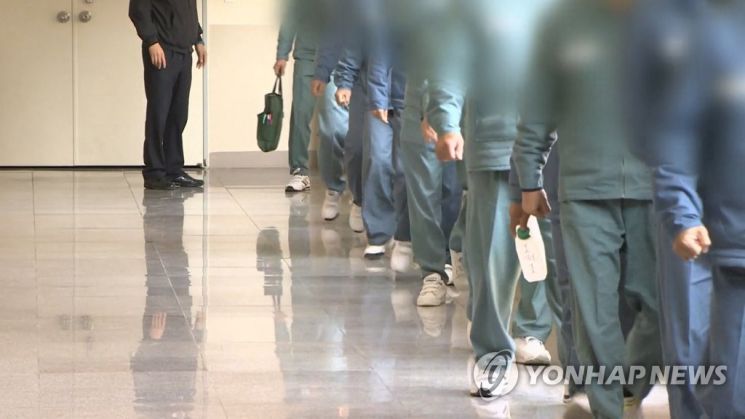
[Asia Economy Reporter Han Seung-gon] On the 30th, Hong Joon-pyo, an independent lawmaker, along with 10 other lawmakers, proposed an amendment to the Criminal Procedure Act that mandates the priority execution of the death penalty within six months for those convicted of heinous or crimes against humanity, reigniting the debate over the retention or abolition of the death penalty.
While some support the bill's intent, arguing that the death penalty should be applied to heinous criminals, others oppose it, citing the possibility of judicial errors during trials and the global trend toward abolishing the death penalty.
In a press release, Representative Hong stated, "Prioritizing the execution of heinous and crimes against humanity among all death penalty cases is to maintain community and social safety and to specially protect vulnerable groups such as women and children," explaining the reason for proposing the amendment to the Criminal Procedure Act.
The amendment centers on the provision that "the Minister of Justice shall be obligated to prioritize the execution of the death penalty within six months for those convicted of heinous crimes or crimes against humanity."
Representative Hong explained, "Considering the urgent need for permanent social isolation, the priority execution targets are those sentenced to death for crimes such as killing a family member, abduction or luring resulting in murder or injury, rape of children or adolescents resulting in murder or injury, and hostage killing or injury."
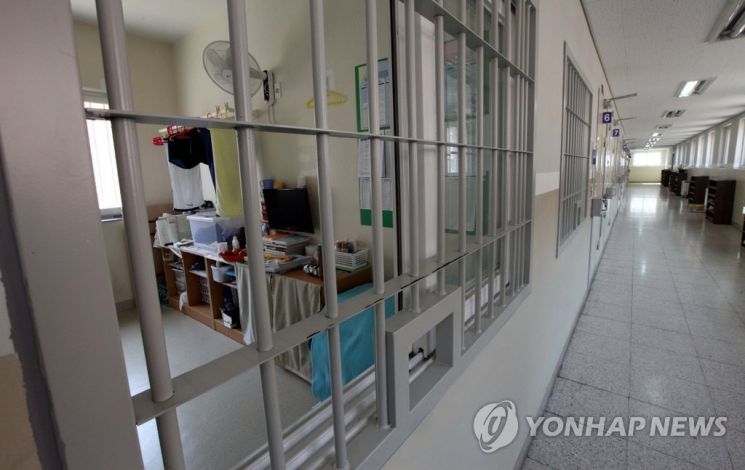 A four-person room inside Seoul Nambu Correctional Center in Cheonwang-dong, Guro-gu, Seoul. The photo is unrelated to specific expressions in the article. [Image source=Yonhap News]
The current Criminal Procedure Act separately stipulates that the death penalty must be executed within six months from the date the death sentence is finalized. However, no executions have been carried out for over 23 years since December 30, 1997, effectively classifying the country as one that has abolished the death penalty in practice.
Abolition of the death penalty is a global trend. For the European Union, abolishing the death penalty is one of the conditions for membership, and internationally, it is considered a criterion for evaluating human rights states. According to the international human rights organization Amnesty, as of 2016, 110 countries do not implement the death penalty. There are also 32 countries, including South Korea, that have the death penalty but have not executed it for over 10 years, effectively making them abolitionist in practice. Only 59 countries still carry out executions.
Public opinion on the retention or abolition of the death penalty is divided. A man in his 30s, Kim, who supports executions, said, "We cannot execute all death row inmates, but for criminals who have caused great public outrage, I think it is acceptable," emphasizing, "For example, someone like 'Ugly Tooth Dad' Lee Young-hak."
Another man in his 40s, also named Kim, shared the same view, stating, "Although Go Yoo-jeong's trial is still ongoing, the crime details are unimaginably horrific," and argued, "I believe criminals who commit such crimes deserve the death penalty."
There are also opinions that the views of victims' families should be considered in deciding whether to carry out executions. A company employee in his 30s, A, said, "Victims suffer from severe trauma and cannot live normal lives," adding, "There seems to be a lot of pressure from those around them to forgive." He continued, "In that context, there are situations where executions are not carried out," emphasizing, "Ultimately, I hope the actual victims can decide whether to execute the death penalty."
On the other hand, some argue that discussions about the death penalty, which has become a dormant law, are meaningless. A man in his 40s, B, said, "Looking back, there have been many cases of judicial errors," expressing opposition to the death penalty by asking, "Who can compensate for lives already lost in such cases?"
Another company employee in his 40s, Park, said, "I don't think taking a person's life is a punishment suitable for a civilized country," emphasizing, "Life imprisonment should be sufficient."
The judiciary's anguish over actual executions can also be seen in court rulings. In a ruling (Daejeon District Court 2008GoHap 68), the court pointed out, "The defendants' acts of recklessly ending others' lives are an attempt to usurp divine power that humans cannot exercise and are absolutely unacceptable."
However, the court sentenced the defendants to life imprisonment, stating, "Although the law grants judges the authority to impose the death penalty, which permanently deprives human life, judges cannot recklessly judge the defendants, and the victims' families request life imprisonment, saying that evil cannot be repaid with evil."
In 2008, a similar ruling (Busan District Court 2008GoHap 143) was made for a defendant who committed robbery, murder, and rape. The court acknowledged the necessity of the death penalty, questioning, "If the defendant's life is important and the death penalty cannot be imposed, what about the lives of victims lost due to the defendant's reckless and brutal crimes?"
However, the court lamented, "It is bitter and disheartening to see a human's weak and pathetic struggle to survive, harming others' lives while valuing their own," and concluded by urging the defendant to reform, acknowledge his mistakes, comfort the souls of the deceased, and start a new life even while imprisoned, sentencing him to life imprisonment.
Meanwhile, according to a public opinion survey conducted by the National Human Rights Commission in October 2018 on the World Day Against the Death Penalty, targeting 1,000 people aged 20 and over, about 7 out of 10 respondents supported abolishing the death penalty if life imprisonment were introduced.
The most common opinion was "maintain the death penalty but be cautious in execution" at 59.8%, followed by "abolish the death penalty immediately" at 4.4%, "abolish it in the future" at 15.9%, and "strengthen the death penalty" at 19.9%.
Reasons for supporting the retention of the death penalty included "increase in heinous crimes if abolished" (23.5%), "deterrent effect on other criminals due to fear of criminal punishment" (23.3%), "severe punishment for causing pain to victims and their families" (22.7%), and "lack of alternative punishments to the death penalty" (15.6%).
Regarding the controversy over the execution of the death penalty, a citizen in their 50s said, "When thinking of victims and families affected by horrific crimes, anger and sorrow may not disappear even with executions," adding, "I hope there will be sufficient social discussion."
© The Asia Business Daily(www.asiae.co.kr). All rights reserved.
![User Who Sold Erroneously Deposited Bitcoins to Repay Debt and Fund Entertainment... What Did the Supreme Court Decide in 2021? [Legal Issue Check]](https://cwcontent.asiae.co.kr/asiaresize/183/2026020910431234020_1770601391.png)


















