Professor Yum Myung-soon of Seoul National University and Gyeonggi Province Surveyed Over 1,500 Confirmed and Contacted Cases
"More Fearful of Social Criticism and Harm Than Reinfection or Incurability"
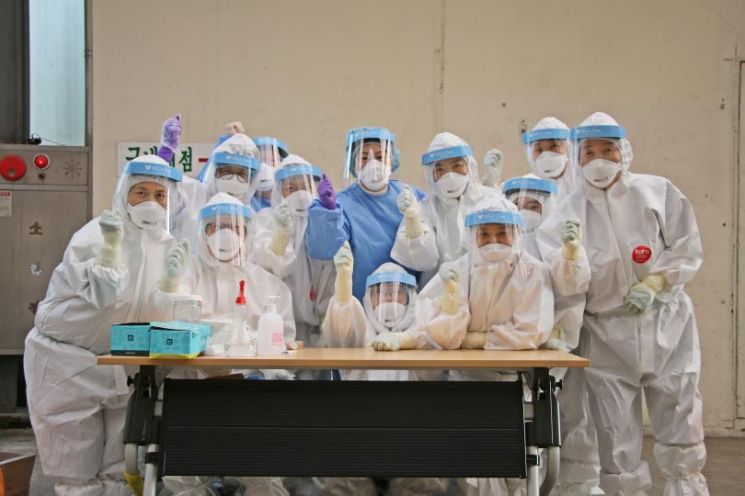 Medical staff at Incheon Medical Center treating patients with the novel coronavirus infection (COVID-19)
 [Asia Economy Reporter Choi Dae-yeol] A survey revealed that patients infected with the novel coronavirus (COVID-19) fear the criticism they may receive from those around them more than the disease itself. As the COVID-19 situation in Korea has prolonged beyond five months, this suggests that members of society need to be more mindful to reduce discrimination and exclusion.
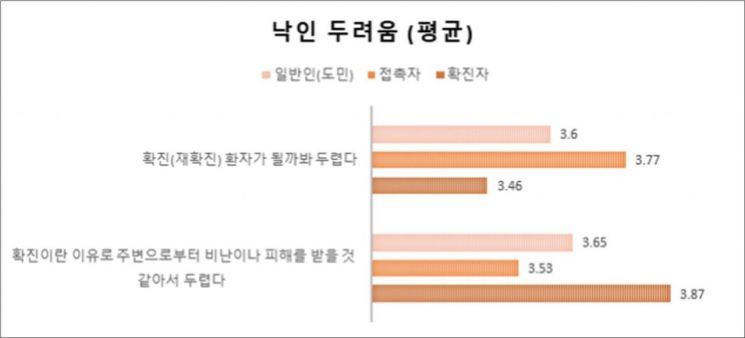
According to a survey conducted on confirmed COVID-19 patients and their contacts by Professor Yoo Myung-soon’s team at Seoul National University Graduate School of Public Health and the Gyeonggi-do Public Health Medical Support Group on the 1st, the fear of criticism and harm from others after confirmation scored the highest at 3.87 points. This was higher than the fear of being reinfected after recovery (3.46 points) or the fear of not fully recovering (2.75 points). Among contacts, the greatest fear was being confirmed positive at 3.77 points, followed by fear of criticism and harm from others due to being a contact at 3.53 points.
Regarding responsibility for infection, 60% of confirmed patients believed that the infection was not their fault, whereas only 46.8% of contacts and 34.6% of the general public shared this view, showing a noticeable difference. Conversely, the proportion who believed the patient was personally responsible for the infection was 9.1% among confirmed patients, 18.1% among contacts, and 30.7% among the general public.
Professor Yoo stated, "We need to understand that excessively blaming individuals for infectious disease responsibility and dividing people into 'perpetrators and victims' does not help the recovery of infectious disease patients nor the voluntary and proactive participation in testing, which is crucial for infectious disease response."
A significant number of confirmed patients were found to be under extreme stress. Using trauma stress measurement tools, it was found that only about 1 in 10 confirmed patients did not require follow-up monitoring, while approximately 62% needed re-monitoring. About 27.3% were in a state of severe stress requiring immediate assistance. The primary concern among confirmed patients was the fear of transmitting the infection to others. Both confirmed patients and contacts reported the highest average response for "worrying about the safety of others." This indicates that concerns about causing inconvenience or harm to others outweighed feelings such as sadness, fear, frustration, or helplessness.
Regarding improvements desired in the authorities’ response process, protection of confirmed patients’ human rights scored highest at 4.43 points, followed by mental and psychological support (4.23 points) and economic support (4.15 points). Among contacts, many responded that economic support for those in quarantine and earlier identification of quarantine subjects were necessary. This survey was conducted with 110 confirmed patients, 1,388 contacts, and 2,589 general public respondents, and it is the first time a survey has been directly conducted with a large number of confirmed patients and contacts.
© The Asia Business Daily(www.asiae.co.kr). All rights reserved.


















