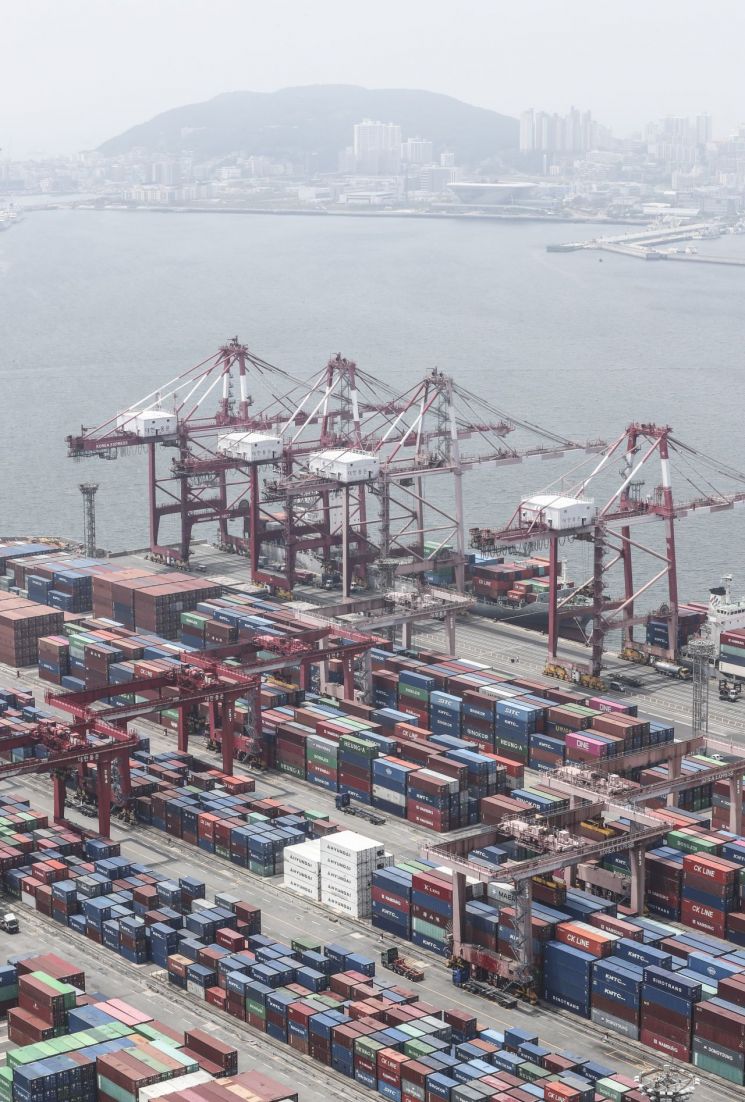
[Asia Economy Reporter Yu Je-hoon] Major indicators of the shipping market, such as the Baltic Dry Index (BDI) and the Shanghai Containerized Freight Index (SCFI), have recovered to levels seen before the outbreak of the novel coronavirus disease (COVID-19).
According to the shipping industry on the 28th, the BDI, an index for dry bulk shipping rates, recorded 1749 as of the 26th, up 0.63% from the previous trading day. This is the highest level of the year, recovering to the level of October last year, before the COVID-19 outbreak began in Wuhan, China.
This upward trend is interpreted as being due to Brazil, a major iron ore exporting country, experiencing disruptions in supply due to the COVID-19 crisis, while China, entering a phase of COVID-19 containment, is increasing crude steel production and thus boosting demand.
In a recent report related to this, Eugene Investment & Securities noted, "China showed a solid trend with crude steel production increasing by 3.6% year-on-year in May," adding, "China’s iron ore port inventories have also sharply dropped to levels seen at the end of 2016, so a short-term rebound in freight rates can continue."
The SCFI, an index for container shipping rates, has also been rising sharply recently. As of the 24th, the SCFI recorded 1001.33, up about 1.2% from the previous week (988.82). This is also a freight rate level similar to late January when the COVID-19 crisis was intensifying. In particular, freight rates on the Asia-West Coast of the United States route reached $2,692 per FEU (a unit referring to one 20-foot container), soaring about 60% compared to the beginning of the year. This route accounts for about 30-50% of the sales of Korean shipping companies such as HMM and SM Shipping, so an improvement in performance is also expected.
The reason container shipping rates continue to soar is interpreted as shipping companies proactively reducing supply in response to the COVID-19 impact, while the spread in major countries such as the United States has passed its peak, causing some increase in cargo demand and resulting in supply-demand mismatches. In fact, The Alliance, a shipping alliance to which HMM belongs, reportedly reduced supply by nearly 20%.
However, the industry is cautious despite the recent sharp rise in freight indices. Sporadic cluster infections continue in countries that have lifted lockdown measures, and if a second wave of COVID-19 fully emerges in the second half of the year, demand that has entered a recovery phase may decline again. The US-China trade dispute entering its second round is also a burdensome factor.
© The Asia Business Daily(www.asiae.co.kr). All rights reserved.

















