[Asia Economy Reporter Su-yeon Woo] As the production cliff in the finished car industry becomes a reality due to the novel coronavirus infection (COVID-19), the management difficulties of the automotive parts industry, which is a partner company, are intensifying day by day. Companies on the brink, starting with low-credit parts suppliers who have failed to overcome liquidity crises, are voluntarily choosing to close their business sites by giving up their partner status and shutting down factories.
According to the automotive industry on the 28th, Korea Gates, a parts company that produces power transmission rubber belts for automobiles, decided to close its manufacturing plant located in Daegu Metropolitan City as of the 26th and leave the Korean market. Korea Gates headquarters said, "We have continuously reviewed our global business environment to improve efficiency in the market, and the schedule was inevitably accelerated due to the global pandemic of COVID-19."
Korea Gates is a company established in Korea in 1989 as a joint venture between the American Gates Corporation and the Japanese Nitta Corporation, which lead the power transmission rubber belt market. Thus, the company is undergoing business restructuring about 30 years after entering the Korean market. As the foreign company Korea Gates faced worsening management difficulties due to COVID-19, it started by first reorganizing its Korean business, which has low profitability and structurally weak recovery capability.
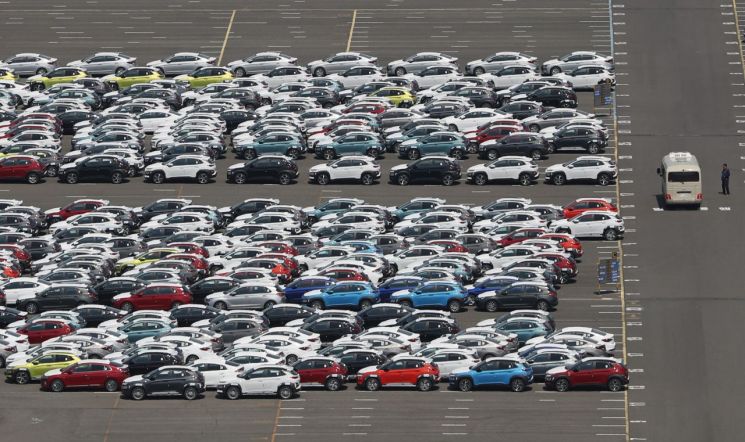
This situation is the same not only for foreign companies but also among domestic parts suppliers. Myungbo Industry, a secondary supplier for Hyundai Kia Motors, sent an official letter on the 17th stating that it would stop supplying to the primary supplier due to management difficulties caused by COVID-19. Myungbo Industry produces crash pads and fuse boxes used in Hyundai vehicles such as the Palisade, Santa Fe, Tucson, and Nexo. The company's declaration to give up business once caused production disruptions in Hyundai's main car models.
Before the COVID-19 crisis, the domestic automotive parts industry had already raised concerns about bankruptcy due to deteriorating profitability. The fragile profit structure combined with this year's liquidity crisis caused by COVID-19 has recently made such business site closures a reality.
Although the government prepared a third supplementary budget to save the industrial ecosystem and promised liquidity supply to the parts industry, the budget bill's passage has been delayed in the National Assembly, causing the financial lifeline of the parts industry to dry up. In April, the Korea Automobile Manufacturers Association requested a large-scale liquidity supply expansion amounting to 33 trillion won across the entire automotive industry through a government proposal.
In response, the government announced financial policy support including support for the automotive parts industry four times. Subsequently, the third supplementary budget bill for securing the budget was submitted to the National Assembly, but it seems more time is needed for its passage. The association appealed, "Since the policy can be implemented only after the budget is secured through quick processing in the National Assembly, it is important to execute policies without missing the 'golden time.'"
© The Asia Business Daily(www.asiae.co.kr). All rights reserved.

















