[Interview] Lim Jeong-woon, Director of Seoul Startup Center
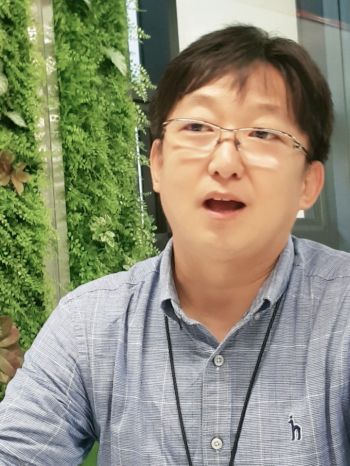
[Asia Economy Reporter Kim Jong-hwa] "In the past, if we needed technology or wanted to find startups to invest in, we visited Silicon Valley first, but now it is no exaggeration to say that we visit Seoul Startup Hub first."
In an interview with Asia Economy on the 25th, Lim Jeong-woon, head of Seoul Startup Hub (photo), mentioned the changing landscape of startups, saying, "Our unique incubating system, which directly connects startups with global governments and companies through the network built by Seoul Startup Hub, is achieving great results."
Seoul Startup Hub has incubated 300 startups in just three years since its opening. About 130 resident companies have attracted 53.5 billion KRW in investment and recorded 74.3 billion KRW in sales. The achievements in global expansion are also remarkable. Over the past three years, the government has successfully supported 65 companies in their global expansion through various assistance programs.
Last year alone, Seoul Startup Hub helped 17 companies succeed globally, and this year it is supporting the global expansion of 30 companies. Most of them have a high chance of success. Generally, a company's success in global expansion is measured by establishing a local corporation or succeeding in a joint venture.
The secret to these outstanding results can be found in Seoul Startup Hub's incubating system. Traditional startup institutions usually select promising startups first and then promote global expansion together with the selected startups.
In contrast, Seoul Startup Hub first builds a global network and, through this network, identifies the technology and investment demands of governments and major companies worldwide, then searches for suitable startups and directly connects them, incubating in this way.
Director Lim explained, "From the selection stage, private investors (VCs) and accelerators (ACs) jointly review, recommend, and select startups, and provide incubating programs tailored to each company. We also nurture startups in collaboration with global companies and match suitable companies by understanding their demands."
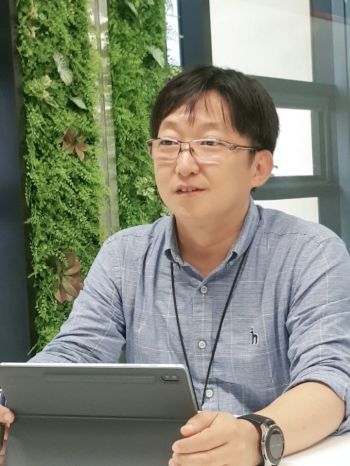
Global companies like Mercedes-Benz and domestic conglomerates such as S-Oil and OB Beer reside at Seoul Startup Hub and directly support startups. They assist in developing new technologies and nurture companies through direct investment.
He stated, "There are companies that have been residents for over seven years and are still receiving support. These companies make up about 15%, and it can take more than seven years for a company to stand out. There are not many companies that can achieve results with just about two years of short-term support."
Typically, companies under seven years old are called startups, but he argued that it is not desirable to overlook companies that do not achieve results within that period. In fact, blockchain-related startups have recently emerged over the past two to three years, but these companies have been steadily working for six to seven years since their founding before standing out.
By next year, Seoul Startup Hub will become a major player managing 1.231 trillion KRW. The 'Future Innovation Growth Fund,' which Seoul City is promoting with a goal of raising 1.2 trillion KRW by next year to support startups, exceeded 800 billion KRW last year, and as of June, more than 100 billion KRW has been raised, so it is expected to reach the target this year. The global fund also manages 49 billion KRW. In short, there is no case where startups cannot be supported due to lack of funds.
Moreover, the residency cost is extremely low. They charge only 4,512 KRW per square meter as a usage fee without rent, meaning companies pay an average annual usage fee of about 500,000 KRW. As a result, competition for residency is fierce. This year, 263 companies applied for 10 spots. Eventually, the residency limit was increased to accept 17 companies. As the resident companies grow in size, there are now about 130 companies residing.
About 90% of the funds operated by Seoul Startup Hub are private capital. Seoul City's share is only 10%. This is why it is recognized as a future-oriented incubating system that produces clear results without criticism of pouring in excessive budgets.
Director Lim comforted companies struggling due to COVID-19, saying, "Many startups have succeeded by turning the pandemic into an opportunity to demonstrate creativity and change industries. If you endure and overcome without losing the initial spirit of entrepreneurship, good days will surely come."
© The Asia Business Daily(www.asiae.co.kr). All rights reserved.


















