Bank of Korea 'June 2020 Consumer Sentiment Survey'
[Asia Economy Reporter Kim Eunbyeol] As the spread of the novel coronavirus infection (COVID-19) slowed down domestically, consumer sentiment rose for the second consecutive month. Just before the announcement of the June 17 real estate measures, apartment sales volume increased, causing the housing price sentiment to surge at the largest rate in 21 months.
According to the 'June 2020 Consumer Sentiment Survey' released by the Bank of Korea on the 26th, the Consumer Confidence Index (CCSI) for this month was recorded at 81.8, up 4.2 points from May.
The CCSI is an indicator calculated using six of the 15 indices that make up the Consumer Sentiment Index (CSI), including current living conditions, living conditions outlook, household income outlook, consumption expenditure outlook, current economic conditions assessment, and future economic outlook. A value below 100 indicates pessimism in consumer sentiment compared to the long-term average (2003?2019). Although the absolute CCSI is still below 100 and thus pessimistic, consumer sentiment has improved for two consecutive months.
As people felt that the economy, which had been contracted due to COVID-19, was improving, the Current Economic Conditions CSI (44) rose 8 points from the previous month. The Current Living Conditions CSI, compared to six months ago, also increased by 5 points from 79 last month to 84.
The other indices used to calculate the CCSI?Living Conditions Outlook CSI (87, +2), Household Income Outlook CSI (88, +1), Consumption Expenditure Outlook CSI (93, +2), and Future Economic Outlook CSI (70, +3)?also rose simultaneously.
Outside of the CCSI items, the Employment Opportunities Outlook CSI also increased by 2 points to 65. The Interest Rate Level Outlook CSI (82) remained at the previous month's level.
A Bank of Korea official explained, "With the COVID-19 spread not being severe, active policy responses and stock market rises have led to improvements in indices related to the economy and household financial conditions, causing the CCSI to rise compared to the previous month." They anticipated that the future CCSI would be influenced by the development of COVID-19 and related policy responses.
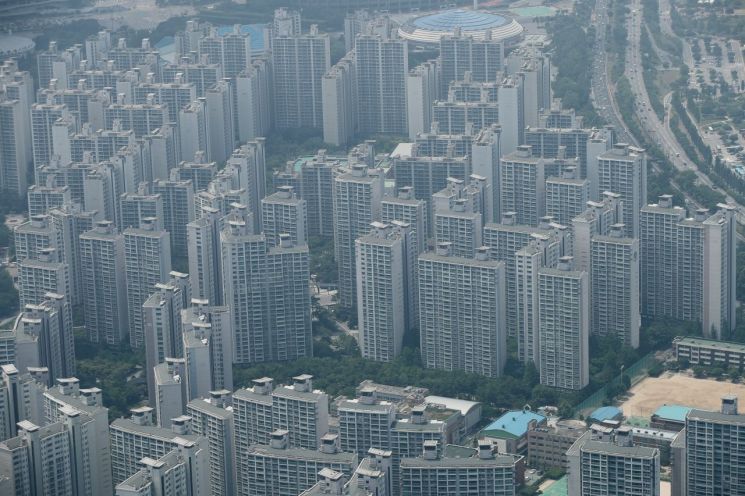
Ahead of the high-intensity June 17 real estate measures aimed at curbing gap investments, the nationwide apartment sales prices rose, pushing the Housing Price Outlook CSI up by 16 points from the previous month to 112. This is the largest increase in 21 months since September 2018 (+19 points). The rise was influenced by the turnaround in apartment sales prices in Seoul and the continued upward trend in apartment sales prices nationwide, especially in the metropolitan area and other non-regulated regions.
The Wage Level Outlook CSI and Price Level Outlook CSI rose by 1 point each to 105 and 132, respectively.
As the COVID-19 situation improved, the burden of household debt was expected to gradually ease. The Current Household Debt CSI remained steady at 102, while the Household Debt Outlook CSI fell by 1 point from the previous month to 99. The Current Household Savings CSI (88) and Household Savings Outlook CSI (91) rose by 2 points and 3 points, respectively, compared to the previous month.
The perceived inflation rate, which reflects the consumer price increase rate over the past year, remained at 1.7%, the same as the previous month. The expected inflation rate, which corresponds to the forecasted consumer price increase rate for the next year, was also unchanged at 1.6%.
Regarding major items expected to affect consumer price increases over the next year, 38.5% cited agricultural, livestock, and fishery products. This was followed by public utility charges (36.5%) and petroleum products (28.8%).
This survey was conducted from the 10th to the 17th of this month, targeting 2,500 urban households nationwide. The number of responding households was 2,368.
© The Asia Business Daily(www.asiae.co.kr). All rights reserved.

![Clutching a Stolen Dior Bag, Saying "I Hate Being Poor but Real"... The Grotesque Con of a "Human Knockoff" [Slate]](https://cwcontent.asiae.co.kr/asiaresize/183/2026021902243444107_1771435474.jpg)














