
[Asia Economy Reporter Junho Hwang] The principle behind metabolically healthy obesity has been uncovered. The research team led by Kyuyoung Ko, head of the Vascular Research Division at the Institute for Basic Science, identified that the protein angiopoietin-2, which promotes blood vessel formation, is a key factor in the accumulation of healthy fat. They announced their findings in the international academic journal Nature Communications on the 24th.
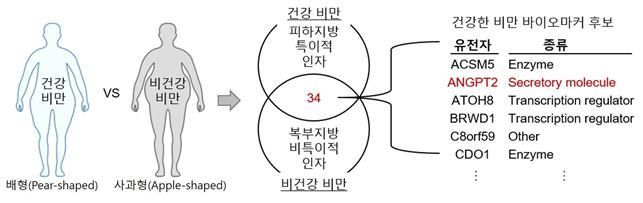
The team elucidated the mechanism behind metabolically healthy obesity. To find substances expressed only in the subcutaneous fat of metabolically healthy obese patients, they compared and analyzed groups of metabolically healthy obese patients and typical obese patients. As a result, they discovered that angiopoietin-2 is the only secreted substance expressed exclusively in the subcutaneous fat of metabolically healthy obese patients.
In fact, in a mouse model where angiopoietin-2 was inactivated in fat cells, the accumulation of blood lipids in subcutaneous fat decreased. Conversely, abnormal subcutaneous fat formation was observed in the liver, skeletal muscle, and brown fat, leading to insulin dysfunction and metabolic abnormalities.
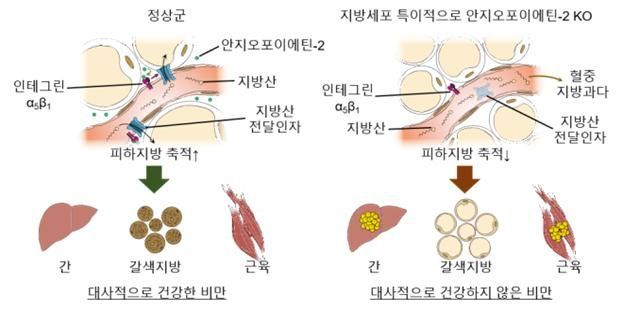
In particular, the research team confirmed that the integrin receptor binding to angiopoietin-2 is expressed only in the blood vessels of subcutaneous fat. Furthermore, activating the receptor in vascular endothelial cells significantly increased fatty acid transport mediated by angiopoietin-2. They confirmed that angiopoietin-2 binds to the integrin receptor to regulate fatty acid transporters, selectively delivering and accumulating fat in subcutaneous fat (metabolically healthy obesity).
Metabolically healthy obesity is characterized by less visceral fat accumulation compared to typical obesity. It also shows lower levels of insulin resistance, blood pressure, and risk of cardiovascular disease. This is because blood lipids are primarily stored in subcutaneous fat in metabolically healthy obesity. In contrast, in typical obesity, abnormal fat accumulation occurs in organs involved in glucose metabolism such as the liver and muscles, increasing the likelihood of metabolic complications.
Senior researcher Hoseong Bae stated, "We have demonstrated that by regulating the metabolic function of blood vessels, blood lipids can be selectively accumulated in subcutaneous fat," adding, "This could provide a new approach for treating metabolic diseases such as obesity and diabetes."
© The Asia Business Daily(www.asiae.co.kr). All rights reserved.



















