[Asia Economy Reporter Jeong Dong-hoon] The global pandemic of the novel coronavirus infection (COVID-19) and the resulting issues of discrimination and hatred have heightened the sensitivity of our citizens toward discrimination, according to a recent survey.
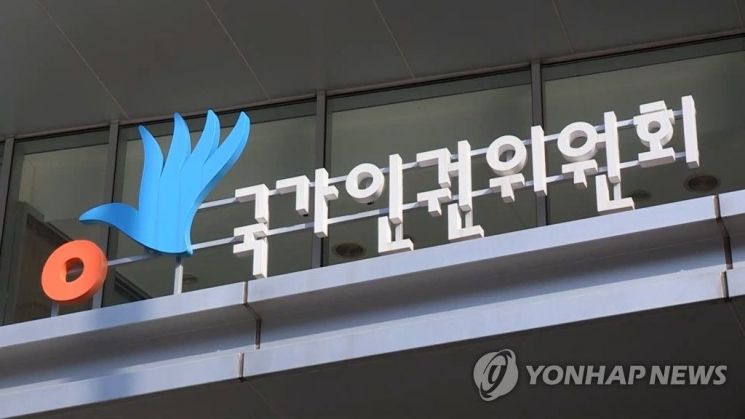
On the 23rd, the National Human Rights Commission conducted a perception survey examining the overall public awareness of discrimination. The results showed that 90.8% of respondents agreed that "no one is free from discrimination, and I too could either discriminate against others or be discriminated against someday."
In particular, after encountering cases of hatred and discrimination occurring in various countries amid the spread of COVID-19, 9 out of 10 citizens (91.1%) expressed the perception that "I have thought that I could become a target of discrimination or a minority at any time." COVID-19 has thus served as a catalyst for increasing the public's "discrimination sensitivity."
Nonetheless, the current level of discrimination in our society is perceived as serious. Eight out of 10 citizens (82.0%) responded that "discrimination in our society is serious." When asked whether discrimination has intensified compared to the past, 4 out of 10 (40.0%) answered "yes," and the most frequently cited reason for the intensification of discrimination was "economic inequality" (78.0%). The most serious types of discrimination were ranked as gender (40.1%), employment type (36.0%), educational background and alma mater (32.5%), disability (30.6%), and wealth gap (26.2%). If our society continues to respond to discrimination as it currently does, 72.4% of respondents believed that "discriminatory phenomena will structurally become entrenched and social conflicts will worsen," which was more than twice the 32.1% who thought it would "naturally ease or be resolved."
As corrective policies for discrimination, respondents suggested ▲ strengthening public awareness improvement education and campaigns (91.5%) ▲ expanding human rights and diversity respect education in schools (90.5%) ▲ enacting laws to guarantee equality rights (88.5%) ▲ regulating discriminatory and hateful expressions by politicians, the media, and online media (87.4%) ▲ and establishing comprehensive government-level measures (87.2%). This survey was conducted by the National Human Rights Commission through Realmeter from April 22 to 27, targeting 1,000 men and women aged 19 and older nationwide via a mobile survey method.
© The Asia Business Daily(www.asiae.co.kr). All rights reserved.
![Clutching a Stolen Dior Bag, Saying "I Hate Being Poor but Real"... The Grotesque Con of a "Human Knockoff" [Slate]](https://cwcontent.asiae.co.kr/asiaresize/183/2026021902243444107_1771435474.jpg)
















