One in Three 2030 Generation Workers Say 'No Need for Children'
Experts Call for Government's Active Birth and Childcare Policies
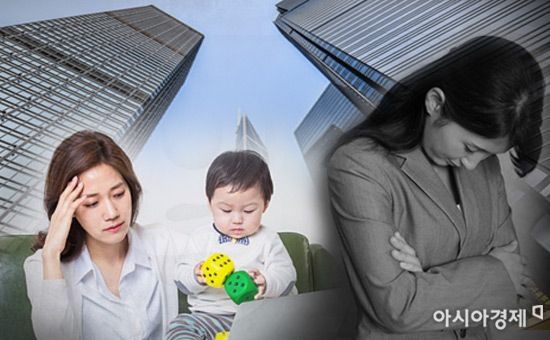 Photo by Asia Economy DB
[Asia Economy Reporter Kim Suwan] "I am open to marriage, but I have no intention of having children," "Who even has kids these days?"
A(27), an office worker who has been dating her boyfriend for three years, recently faced a dilemma. She had a major argument with her boyfriend while planning their marriage. A said, "Honestly, I told him I don't want to have children because I want to continue working even after marriage. When he heard that, he got furious, saying it was unacceptable," adding, "It's such an important issue that I'm even prepared to break up with him."
Recently, among unmarried men and women in their 20s and 30s, the number of 'DINK' (Double Income, No Kids) couples?who plan to both work after marriage without having children?has been increasing. Economic reasons were found to be a major factor behind their decision not to have children.
Experts analyze this trend as closely related to economic issues. They point out that money is an unavoidable concern when raising children.
According to a survey, one in three workers in their 20s and 30s has no intention of having children. On the 15th, Saramin conducted a survey of 712 childless workers in their 20s and 30s, and 33.7% of respondents answered that they had no plans to have children.
The reasons for not wanting children included "wanting to live a life for myself" (57.9%, multiple responses allowed), "economic burden of childcare" (52.9%), "difficulty balancing work and childcare" (41.3%), and "lack of confidence in being able to care well for a child" (34.6%).
The perception of not having children after marriage is spreading not only among people in their 20s and 30s but also among teenagers. According to the '2019 Korea Social Indicators' released by Statistics Korea on the 18th, 53.6% of teenagers (ages 13?19) responded that they do not need children.
As a result, the birth rate is hitting record lows. The total fertility rate, which was 1.17 children per woman of childbearing age until 2016, dropped to 0.98 in 2018 and further to 0.92 last year.
By age group, fertility rates decreased across all age groups under 30. The birth rate among women in their late 20s (ages 25?29) fell by 5.3 per 1,000 compared to the previous year. In 2000, the birth rate for women in this age group was 150.3 per 1,000, but in less than 20 years, it has dropped to a quarter of that.
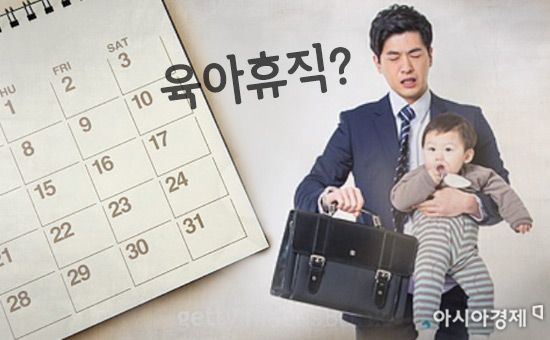 Photo by Asia Economy DB
The economic reasons behind this perception among the younger generation are significant. They feel that the costs of raising children are unaffordable with their current income. The difficulty of balancing work and childcare is also pointed out as a problem.
B, a worker in their 20s, said, "I earn a meager salary, so it's ridiculous to be told to have kids," adding, "If I have a child, I would have to take time off work, and there aren't many companies that would accommodate that. Who these days gives up everything to focus solely on one child?"
Some also criticize the low effectiveness of policies related to childbirth and childcare. Although the government has introduced various systems, many people who used these systems have faced disadvantages.
In fact, the Human Rights Commission commissioned the Korea Women's Development Institute to conduct a 'Survey on Discrimination in Pregnancy, Childbirth, and Parental Leave' targeting 800 wage workers at workplaces with fewer than 100 regular employees who have experienced pregnancy or childbirth (or whose spouses have). The results showed that among 245 women who took maternity leave, 171 (69.8%) experienced discrimination in job placement and promotion, and 173 (70.6%) faced discrimination in compensation and evaluation.
Among 180 women who reported discrimination or disadvantages due to pregnancy or childbirth, 134 (74.4%) said they just endured it. Overall, 549 out of 800 respondents (68.6%) said they experienced discrimination when taking maternity or spouse's parental leave.
Experts advise that the government needs to implement more proactive childbirth and childcare policies. Professor Kwak Geumju of Seoul National University's Department of Psychology explained, "Nowadays, individualism is strong, and many young people want to enjoy their personal lives. They have the cost of enjoying their own lives, and having children makes it unaffordable," adding, "There is a fear of dedicating money and time to children."
Professor Kwak suggested that the government should prepare various childbirth encouragement policies. He analyzed, "Even if people have children, there is still the problem of not having proper places to leave their children. This is because the government has not properly established systems," and added, "Unless the government comes up with groundbreaking measures, this phenomenon will continue."
© The Asia Business Daily(www.asiae.co.kr). All rights reserved.
















