Lee Tae-ho 2nd Vice Minister Expresses Strong Regret to Ambassador Domita
Likely to Urge Fulfillment of Promises Made During World Cultural Heritage Registration
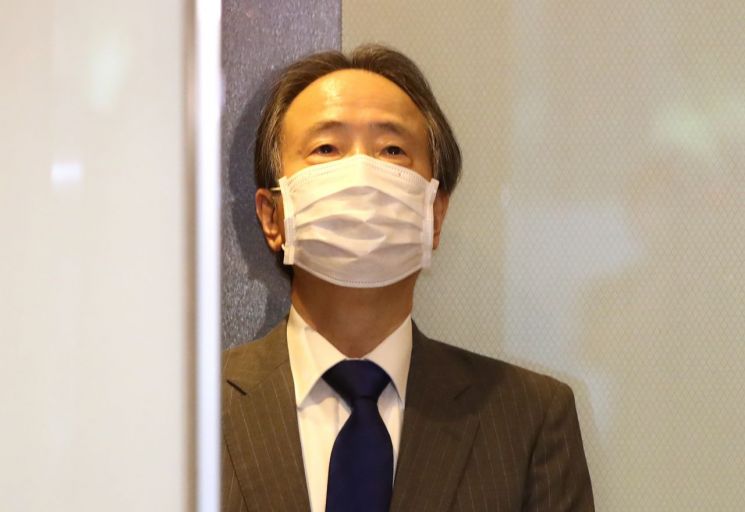
[Asia Economy Reporter Lim Cheol-young] The Ministry of Foreign Affairs strongly protested by summoning Koji Domita, the Japanese Ambassador to Korea, regarding the opening of the Japanese Industrial Heritage Information Center, which contains distorted content about the history of forced labor under Japanese colonial rule.
On the afternoon of the 15th, Lee Tae-ho, the 2nd Vice Minister of Foreign Affairs, summoned Koji Domita to the Ministry of Foreign Affairs building in Doryeom-dong, Seoul. Vice Minister Lee expressed strong regret over the inclusion of distorted forced labor history in the Industrial Heritage Information Center, which was recently opened to the public.
In 2015, Japan registered 23 Meiji-era industrial heritage sites, including seven forced labor facilities for Koreans such as Hashima (Gunkanjima), as UNESCO World Cultural Heritage sites. Japan promised to take appropriate measures to honor the victims by disclosing the fact that Koreans were forced into labor, but it has not fulfilled this promise.
In fact, the Industrial Heritage Information Center, established by the Japanese government at the Ministry of Internal Affairs and Communications’ 2nd Government Building annex in Shinjuku, Tokyo, and opened to the public from 10:30 a.m. on the same day, did not include the promised content. Instead, it released videos containing testimonies denying forced labor. The center was inaugurated on March 31 but its public opening was delayed due to the spread of COVID-19.
Previously, the Korean government supported the UNESCO registration on the condition that Japan would fulfill its promises. However, it was confirmed that the only acknowledgment in the Industrial Heritage Information Center, which was opened to the public on this day, was a statement by Sato Kuni, then Japanese Ambassador to UNESCO, admitting that “in the 1940s, numerous Koreans and other nationals were mobilized against their will and forced to work at some facilities.”
Meanwhile, approximately 33,400 Koreans were forcibly mobilized to sites including Gunkanjima, Yahata Steelworks, Nagasaki Shipyard, and Takashima Coal Mine. In particular, between 1943 and 1945, 500 to 800 Koreans were forced to work on Gunkanjima, with 122 reported deaths.
© The Asia Business Daily(www.asiae.co.kr). All rights reserved.

















