Pukyong National University Yeongnam Sea Grant Center Releases Artificial Seeds into Busan Hongchi Village Fishing Grounds on the 18th
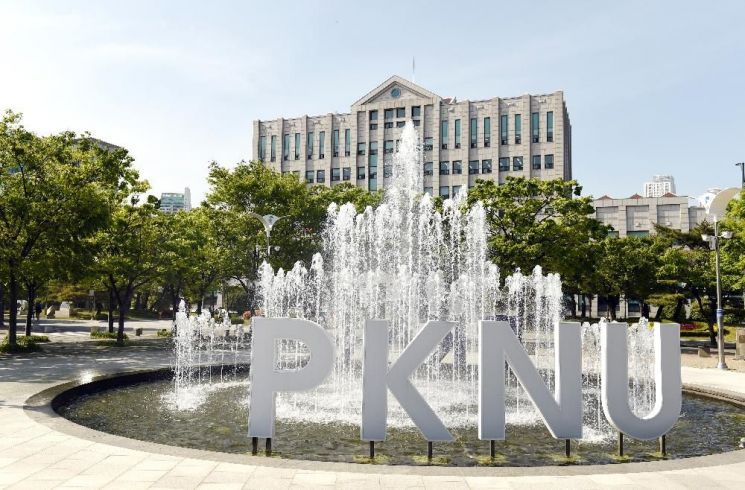
[Asia Economy Yeongnam Reporting Headquarters Reporter Kim Yong-woo] The cultivation of the sea delicacy Saejo-gae (razor clam) is being attempted.
The Yeongnam Sea Grant Center at Pukyong National University has taken on the challenge of cultivating Saejo-gae, a clam species with high added value but whose recent catch volume has sharply declined, making it as valuable as gold.
The Sea Grant Center announced on the 15th that on the 18th, they will release artificial Saejo-gae seeds into the fishing grounds of Hongchi Village at the Nakdong River estuary in Dadae-dong, Busan.
Saejo-gae, mainly caught along the west and south coasts of Korea, is named for its shape resembling a bird’s beak. It is recognized as a delicacy for its chewy texture and umami flavor, but its catch volume has recently plummeted.
On that day, the Sea Grant Center will depart from Hongchi Village harbor in the morning and release 5 million artificial Saejo-gae seeds using divers and onboard dispersal devices, initiating Saejo-gae cultivation.
The fishing grounds of Hongchi Village at the Nakdong River estuary were once a region with high Saejo-gae production. Even now, a small number of Saejo-gae habitats are confirmed, and many other useful bivalve species also inhabit the area, leading to the judgment that the survival potential of Saejo-gae seeds is high, making it a selected site for artificial seed release.
Following this artificial seed release, the center plans to deploy divers monthly to observe the growth status of Saejo-gae. In the second half of this year, they will conduct training for Hongchi Village fishermen on Saejo-gae harvesting, aiming to enable harvesting from next year.
The attempt to cultivate Saejo-gae is part of the Ministry of Oceans and Fisheries-supported project titled “Increasing income for local fishermen through resource development and resource volume increase of useful bivalves in the Busan, Ulsan, and Gyeongnam sea areas.”
Since 2017, the center, together with the Marine Ecology Technology Institute, has selected Saejo-gae as a suitable bivalve for increasing fishermen’s income and has been conducting research on artificial seed production. The artificial Saejo-gae seeds released on this day were grown to 3?5 mm in size from eggs collected from mother Saejo-gae in Yeosu, Jeollanam-do.
Research on suitable sites for Saejo-gae cultivation revealed that the Nakdong River estuary, with its sandy mud bottom mixed with sand and mud, abundant phytoplankton, and low predator distribution, is suitable for Saejo-gae farming.
Lee Seok-mo, director of the Yeongnam Sea Grant Center, stated, “We plan to investigate whether fishermen’s actual income increases through Saejo-gae cultivation and support the establishment of policy measures for resource management by fishing communities and local governments.”
© The Asia Business Daily(www.asiae.co.kr). All rights reserved.
![Clutching a Stolen Dior Bag, Saying "I Hate Being Poor but Real"... The Grotesque Con of a "Human Knockoff" [Slate]](https://cwcontent.asiae.co.kr/asiaresize/183/2026021902243444107_1771435474.jpg)
















