[Asia Economy Reporter Junho Hwang] Our body's genome (DNA) stores genetic information. However, DNA is continuously exposed to various external stimuli such as ultraviolet rays, chemicals, and radiation, leading to ongoing damage. Our body attempts DNA repair to fix the damaged DNA, but if problems occur during the repair process, various mutation signatures arise, such as changes in base sequences or loss of some sequences. When mutations accumulate within cells, they can cause cancer. However, the mechanisms causing these mutation signatures have not been fully understood until recently, when new research provided clues. The research team led by Anton Gartner, Deputy Director of the Genome Homeostasis Research Group at the Institute for Basic Science, revealed that DNA damage caused by carcinogens and the DNA repair mechanisms together determine the pattern of mutation occurrence.
Mechanisms Behind Mutation Signature Appearance
The Institute for Basic Science introduced the results of a joint study with the University of Dundee, the European Molecular Biology Laboratory, and the Wellcome Sanger Institute in the UK on the 8th. The collaborative research team uncovered the mechanisms that determine the patterns of mutation signatures.
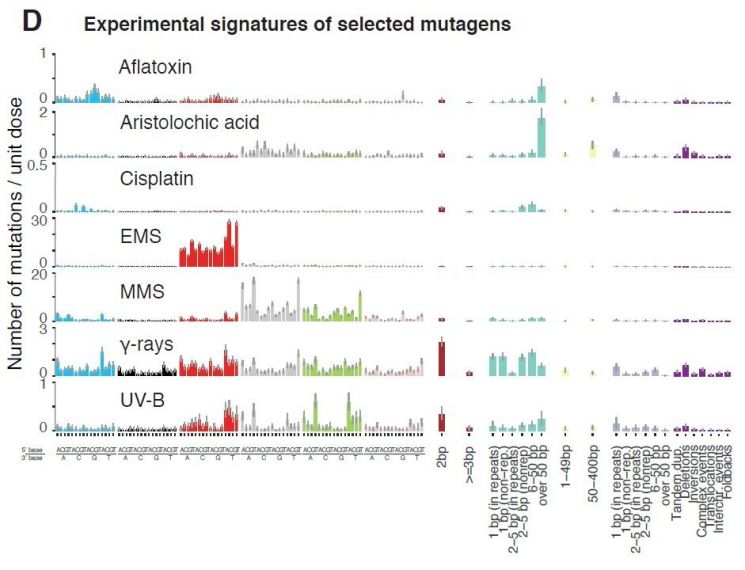
The team analyzed the genomes of over 2,700 insects (Caenorhabditis elegans) and created 150 combinations of 12 different DNA toxic substances, then exposed various C. elegans strains with defects in different DNA repair functions to these combinations. Through this, they confirmed that both the type of DNA damaging agent and the DNA repair function determine the pattern of mutation signatures.
For example, when the experimental insects were exposed to aflatoxin, the base cytosine (C) was substituted with thymine (T), but when exposed to gamma rays, thymine (T) was substituted with adenine (A) or cytosine (C), resulting in various mutations. Furthermore, even when exposed to the same damaging agent, if the DNA repair function was defective, the occurrence of mutation signatures increased sharply compared to normal cases.
A New Milestone in Cancer Diagnosis and Treatment Development
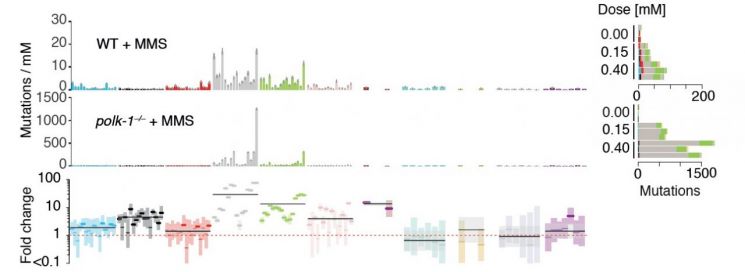 As a result of comparing normal Caenorhabditis elegans and Caenorhabditis elegans with damaged DNA repair function exposed to DNA toxic substances
Anton Gartner, Deputy Director of the research group, stated, "This study revealed the principles determining the types of mutations that are the fundamental causes of cancer," adding, "It is expected to become a new milestone in the development of cancer diagnosis and treatment methods."
Mutation signatures can provide clues to understanding the fundamental processes of cancer development and to developing personalized cancer therapies. By analyzing mutation signatures, it is possible to identify which substances caused the cancer and which DNA repair functions were impaired.
Meanwhile, this research achievement was published in Nature Communications.
© The Asia Business Daily(www.asiae.co.kr). All rights reserved.



















