Inspection of 'Customer Verification Procedure Support System' to Prevent Sanction Violations in Trade Process
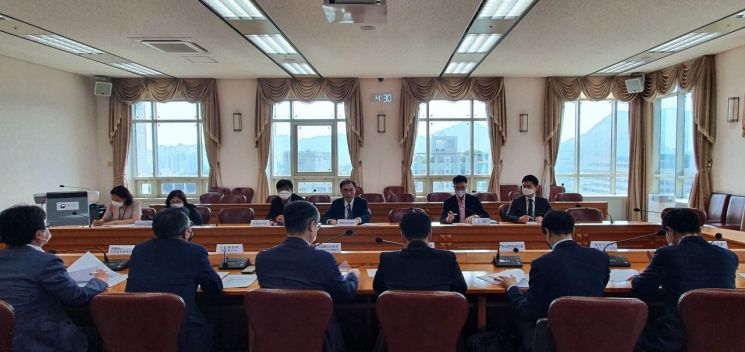
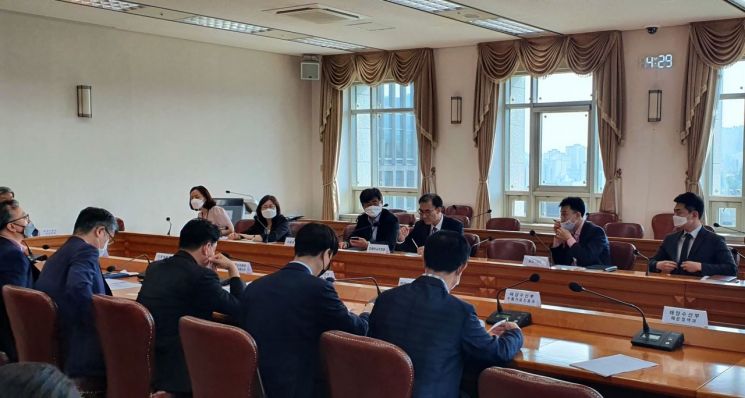
[Asia Economy Reporter Lim Cheol-young] On the afternoon of the 5th, the Ministry of Foreign Affairs launched a task force (TF) involving related ministries such as the Ministry of Economy and Finance, Ministry of Trade, Industry and Energy, Ministry of Agriculture, Food and Rural Affairs, Ministry of Oceans and Fisheries, and KOTRA, chaired by Lee Seong-ho, Director General for Economic Diplomacy Coordination, to expand humanitarian trade with Iran, and held its first meeting.
Trade with Iran had been conducted using Korean won funds deposited in the Central Bank of Iran (CBI) held by domestic banks, but was suspended last September due to the U.S. tightening sanctions on the bank. However, the government resumed trade procedures with Iran limited to humanitarian items such as pharmaceuticals and medical devices in April after consultations with the U.S. and Iran. On the 29th of last month, $500,000 worth of treatments for genetic diseases were exported, and follow-up exports including COVID-19 test kits worth $2 million are being pursued in June.
Accordingly, to systematically support the expansion of humanitarian trade with Iran by Korean companies at the whole-of-government level, the government launched the related ministries’ TF for expanding humanitarian trade with Iran and discussed at the first meeting △ current status of humanitarian trade, △ review of expanding the scope of humanitarian items to include agricultural products and food, △ resolving corporate difficulties, and △ facilitating business matching between Korean and Iranian companies. So far, two corporate briefings have been held, diplomatic channel consultations through the Embassy of Iran in Korea and the Korean Embassy in Iran, export consultations and buyer discovery through KOTRA have been conducted.
The government also reviewed the strengthened customer due diligence (Enhanced Due Diligence, EDD) support system through the Korean Embassy in Iran, KOTRA Tehran Trade Center, and the Strategic Materials Management Institute to ensure that Korean exporters and financial institutions are not exposed to sanction risks due to violations during the trade process.
Director General Lee Seong-ho emphasized, “Humanitarian trade with Iran provides opportunities for our exporters to open new markets amid the contraction of international trade due to the COVID-19 pandemic and contributes to resolving Iran’s public health crisis, with which we have maintained a long-standing friendly cooperative relationship. Therefore, it is necessary to actively expand it,” and urged joint efforts at the whole-of-government level to lead to actual trade increases.
Participants from related ministries agreed that Iran is a country with high potential for economic cooperation, with bilateral trade volume reaching $12 billion in 2017 before the restoration of U.S. sanctions, and decided to strengthen government support to further increase actual exports through industry promotion and guidance, and business matching with Iranian import companies.
The government plans to hold TF meetings regularly in the future to closely monitor the efficiency of the support system and trade performance so that Korean companies can conduct humanitarian trade stably without sanction concerns, while also continuing consultations with relevant countries such as the U.S. and Iran.
© The Asia Business Daily(www.asiae.co.kr). All rights reserved.


















