Nanox, a Core Technology Company, Becomes Second Largest Shareholder
Secures Exclusive Domestic and International Business Rights... Establishes Production Plant in Korea
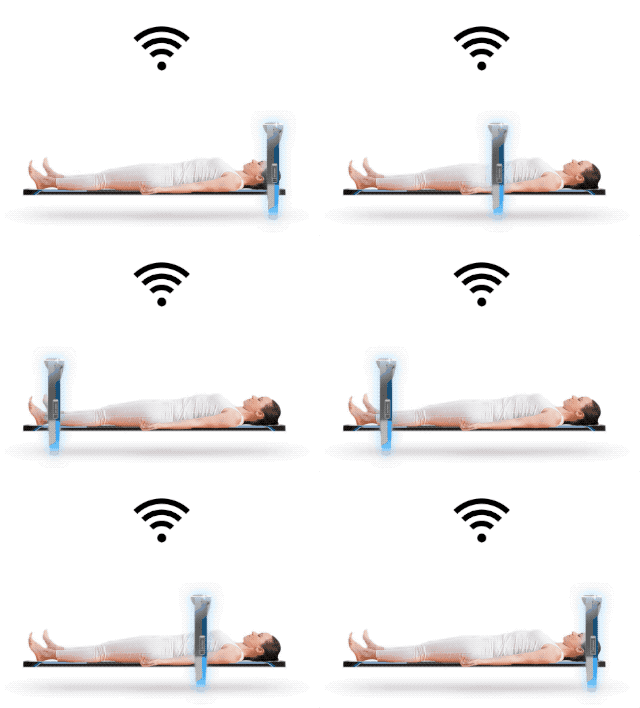
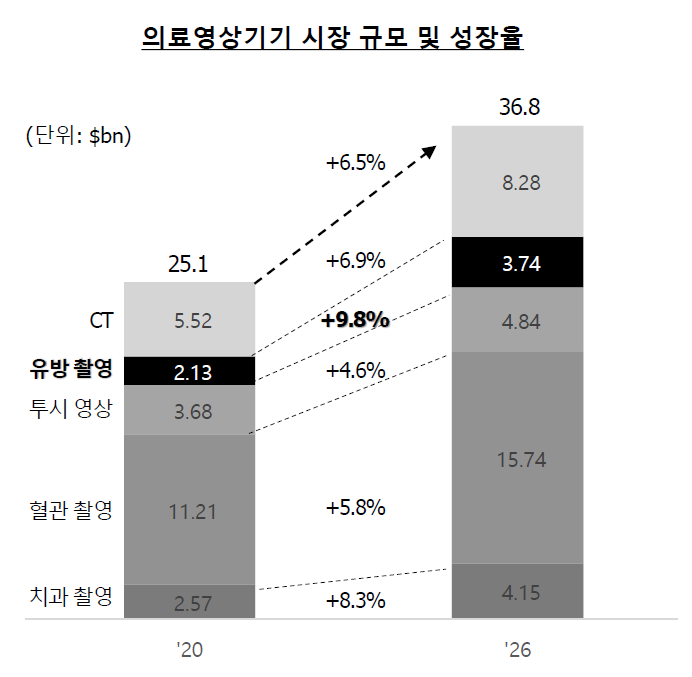
[Asia Economy Reporter Seulgina Jo] SK Telecom has entered the next-generation video medical equipment market, a blue ocean expected to grow to a scale of 45 trillion won by 2026. Leveraging this opportunity, the company plans to lead innovation by integrating 5G, artificial intelligence (AI), and next-generation medical technologies. Synergies with semiconductor and bio affiliates within the group are also anticipated.
On the 5th, SK Telecom announced that it has become the second-largest shareholder of Nano-X, a medical equipment core technology company preparing for a Nasdaq listing in the United States. SK Telecom's investment amounts to 23 million dollars (approximately 28.2 billion won).
Headquartered in Israel, Nano-X is highly regarded for its competitive edge in next-generation medical equipment technologies such as semiconductor-based digital X-ray. SK Telecom has secured exclusive business rights in South Korea and Vietnam for next-generation imaging devices, including digital X-rays, from Nano-X. Once the approval process is completed in South Korea and Vietnam, sales will be conducted targeting medical institutions.
Nano-X’s digital X-ray imaging device, currently preparing for mass production, uses a silicon semiconductor the size of a fingernail to capture images 30 times faster than conventional analog X-rays. As a result, radiation exposure time is reduced to one-thirtieth. The cost per scan is also only about 10% of the traditional cost. Without the need for large cooling equipment, the weight has been reduced from 1 ton to approximately 200 kg. SK Telecom explained, "This is a revolutionary technology that solves many of the problems associated with analog X-rays," adding, "It has been praised overseas as an 'invisible light innovation.'"
Building on its collaboration with Nano-X, SK Telecom plans to independently pursue the medical equipment business while also developing next-generation medical, security, and industrial services in partnership with affiliates such as SK Hynix, ADT Caps, and Invites Healthcare. For example, equipping ambulances with this device and linking it with 5G and cloud technology would enable medical teams and specialists to exchange high-quality X-ray imaging videos in real time during emergency patient transport. This is expected to improve survival rates for stroke patients, for whom emergency imaging within the golden hour is critical. The technology can also be utilized for quality inspections in semiconductor and battery manufacturing plants.
SK Telecom and Nano-X are also discussing making South Korea a global production base for next-generation equipment. This is due to the ease of collaboration not only with semiconductor companies like SK Hynix but also with advanced bio companies within Korea. If Nano-X’s semiconductor production facility (FAB) is built in Korea, it will open the door to next-generation medical business opportunities while also creating high-quality jobs.
Park Jung-ho, CEO of SK Telecom, emphasized, "The philosophy of both companies aligns in creating better social value through ICT and advanced technologies," adding, "This will be a representative innovation case in the post-COVID era." Ran Poliakine, CEO of Nano-X, said, "We are pleased to have gained a strong partner as we approach the commercialization of technology we have researched for years," and added, "Together with SK Telecom, we will realize the vision of creating an environment where everyone can easily access medical equipment and reduce diseases."
© The Asia Business Daily(www.asiae.co.kr). All rights reserved.


















