3.309 Billion KRW to Overcome COVID-19 Crisis, 1.703 Billion KRW for Local Issues
Support for Taxi and Charter Bus Workers, Manufacturing and Tourism Industries
Investment in New Public Job Creation and Strengthening Infectious Disease Response Capabilities
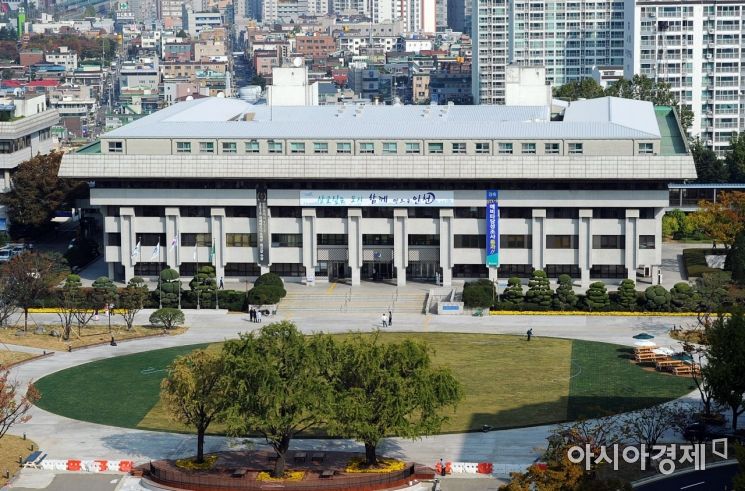
[Asia Economy Reporter Park Hyesook] Incheon City has prepared additional support measures worth 500 billion KRW through the second supplementary budget to overcome the COVID-19 crisis and resolve local issues.
According to the city on the 4th, the 2020 second supplementary budget proposal increased by 372.6 billion KRW (3.21%) from the original budget to 11.9901 trillion KRW, and the total budget for projects directly supporting citizens is 501.2 billion KRW. Of this, 330.9 billion KRW will be invested to overcome the COVID-19 crisis, and 170.3 billion KRW to resolve local issues.
The support measures focus on four main goals: boosting consumption vitality and livelihood support, employment stability, job creation, and resolving local issues.
As a project related to overcoming the COVID-19 crisis, the city will first spend 100 billion KRW to extend until August the policy of providing up to 10% cashback on Incheon e-eum, the local currency. The city plans to analyze usage trends and decide whether to extend it further after September.
Previously, in the first supplementary budget, the city secured 197.6 billion KRW for Incheon e-eum cashback. The average monthly users of Incheon e-eum number about 742,000, and it is expected that each person will receive an annual consumption support amount (cashback) of 266,000 KRW.
The city will also allocate 2.5 billion KRW in loans for small business owners and vulnerable groups affected by COVID-19, 1.4 billion KRW in support funds for facilities subject to closure orders, and 3.5 billion KRW for additional meal support projects for children at risk of food insecurity.
Furthermore, support will be strengthened for transportation, port, export, and tourism sectors hit by COVID-19, including 5.5 billion KRW for taxi and charter bus drivers, 22.6 billion KRW in financial support for the bus industry, 4.7 billion KRW for the transportation corporation, 1.4 billion KRW to enhance port industry competitiveness, 1.1 billion KRW for export small and medium enterprises, and 2.4 billion KRW to revitalize manufacturing and tourism industries.
The city plans to support 130.9 billion KRW to create new public jobs and maintain existing ones. It will invest 90.3 billion KRW to provide 17,000 public jobs to vulnerable groups and support 30 billion KRW in special funds linked to employment guarantees for manufacturing companies whose sales have decreased by more than 10%.
Additionally, 31.1 billion KRW has been allocated for projects to strengthen the city's infectious disease response capabilities in preparation for the prolonged COVID-19 situation. In particular, 23 billion KRW will be reserved in the disaster management fund to secure resources for disaster situations in the second half of the year.
Previously, the city has prepared and is implementing support measures worth a total of 1.2854 trillion KRW in three phases to overcome the COVID-19 crisis.
This second supplementary budget also includes project funds to resolve local issues.
The city plans to invest a total of 97.5 billion KRW in projects to strengthen the competitiveness of the old downtown area by creating urban ecological and rest spaces, alleviating parking difficulties, and improving road maintenance and management, thereby enhancing basic urban functions.
It also allocates 7.1 billion KRW for projects to strengthen prevention-centered public safety, 25.2 billion KRW for eco-friendly policies such as reducing household waste and ending the metropolitan landfill site, and 14.1 billion KRW to revitalize the local economy, including support for shared infrastructure such as joint equipment rooms and exhibition sales halls for small manufacturers.
To secure funds for the supplementary budget, the city will pursue high-intensity expenditure restructuring worth 106.7 billion KRW, utilize surplus funds of 105.6 billion KRW from special accounts and funds, and issue new local bonds worth 40.6 billion KRW. Of the local bonds issued, 23 billion KRW will be reserved in the disaster management fund to prepare for the prolonged COVID-19 situation.
Mayor Park Namchun stated, "I hope this supplementary budget will be an opportunity not only to stabilize the livelihood economy and maintain employment but also to enhance the competitiveness of our city. Incheon City will do its best to ensure that citizens' daily lives are not disrupted and that the local economy recovers quickly."
© The Asia Business Daily(www.asiae.co.kr). All rights reserved.

















