Only 26% of Acknowledged Errors
Result in Disciplinary Actions or Warnings
Others End with Internal Training
Police: "Notify Audit Functions of All Review Results for Improvement"
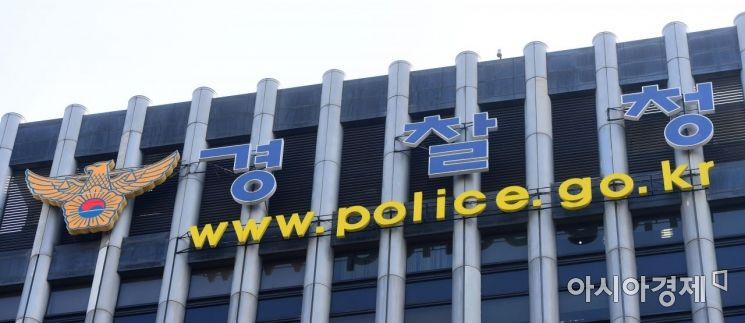
[Asia Economy Reporter Lee Gwan-joo] As the amendment to the Criminal Procedure Act regarding the adjustment of investigative authority between the police and prosecution is expected to be implemented as early as August, the Board of Audit and Inspection has pointed out that follow-up measures were insufficient during the operation of the "Investigation Review Committee (Investigation Review Board)" which corrects police investigative errors.
According to the Board of Audit and Inspection and the National Police Agency on the 4th, the Board recently confirmed improper operation of the investigation objection system through an audit of the National Police Agency's institutional operations and requested caution. The investigation objection system is a self-regulatory device for police investigations, where if a party involved in a case files an objection, the local police agency’s Investigation Review Board, composed of external members, examines whether errors occurred and determines the need for investigator replacement or reinvestigation. From 2016 to June of last year, a total of 4,861 cases were filed, and through the Investigation Review Board’s resolution, police investigative errors were recognized in 186 cases (3.8%).
However, the audit results revealed that disciplinary or status-related actions such as warnings or cautions were taken in only 48 cases (25.8%) out of those where investigative errors were recognized, while the remaining 138 cases were closed with internal training without separate status-related measures. In particular, when investigative errors were recognized, local police agencies are supposed to conduct a detailed evaluation of the extent of the error and notify the head of the relevant police station to consider status-related measures, but there were cases where the process of evaluation and status measures were completely omitted and the issue was closed with internal training. The Board of Audit and Inspection identified nine such cases in four local police agencies including Seoul, Gyeonggi Nambu, Incheon, and Daegu. Most of these cases occurred between 2016 and 2018, but there was also a case from May of last year when the adjustment of investigative authority between the police and prosecution was gaining momentum.
Additionally, there were cases where the level of error was evaluated but appropriate follow-up measures such as warnings or cautions were not taken and the case was closed with internal training. This can be interpreted as the police protecting their own members. The Board of Audit and Inspection cautioned the police, saying, "We hope that management and supervision of the operation of the investigation objection system will be thorough to prevent such cases." The police accepted the audit results and completed improvements to the system. A National Police Agency official explained, "Regardless of whether the Investigation Review Board recognizes investigative errors or not, the results are now reported to the audit function," adding, "This is to ensure objectivity and fairness by having the audit function make a secondary judgment."
© The Asia Business Daily(www.asiae.co.kr). All rights reserved.
![User Who Sold Erroneously Deposited Bitcoins to Repay Debt and Fund Entertainment... What Did the Supreme Court Decide in 2021? [Legal Issue Check]](https://cwcontent.asiae.co.kr/asiaresize/183/2026020910431234020_1770601391.png)
















