3rd Meeting of the 'Pan-Government Support Group' for COVID-19 Therapeutics and Vaccine Development
"Domestic production of therapeutics this year, vaccines next year... Import also pursued"
Stable supply of medical devices such as ventilators and ECMO
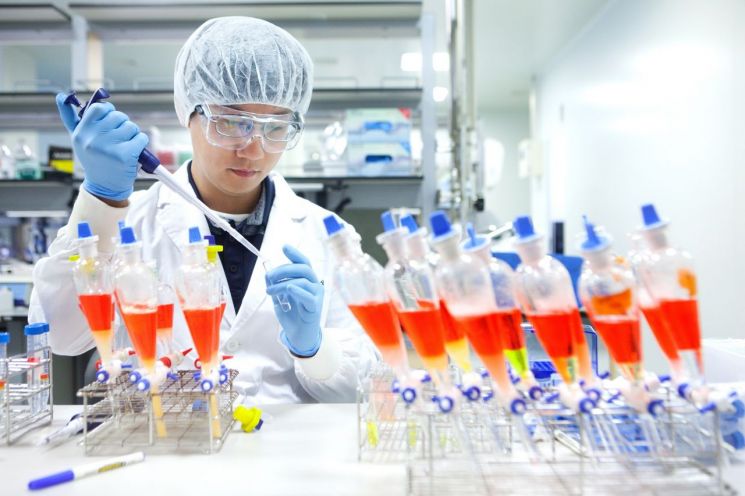
[Asia Economy Reporter Cho Hyun-ui] The government has decided to focus support on three strategic items among COVID-19 therapeutics being developed domestically that are close to clinical trial stages: plasma therapy, antibody therapy, and drug repositioning research.
In the vaccine sector, synthetic antigen vaccines and DNA vaccines have been selected as three core vaccine items, with focused support aimed at development completion by the second half of next year.
The Pan-Government Support Group for COVID-19 Therapeutics and Vaccine Development held its 3rd meeting on the 3rd at the Westin Chosun Hotel in Jung-gu, Seoul, to discuss support measures for the development of therapeutics and vaccines aimed at complete overcoming of COVID-19.
The government aims to secure domestically produced therapeutics within this year and vaccines by next year. First, in the therapeutics sector, it will focus support on three strategic items close to clinical trial stages: plasma therapy, antibody therapy, and drug repositioning research.
Plasma therapy, which collects and concentrates plasma from recovered patients to create a therapeutic agent, is supported through improvements in plasma collection systems and securing plasma from recovered patients. Currently, the government is recruiting recovered patients in collaboration with the Red Cross in Ansan City, Gyeonggi Province, and Daegu City. Clinical trial costs will be supported in the second half of the year to promote development within the year.
Antibody therapy based on blood from recovered patients is supported through animal experiments (mice, primates) conducted by the National Institute of Health and the Korea Research Institute of Bioscience and Biotechnology. Clinical trials will be promoted in the second half of the year with the goal of completing development next year. For drug repositioning, clinical trials are underway domestically for some drugs such as Nafamostat, approved by the Ministry of Food and Drug Safety.
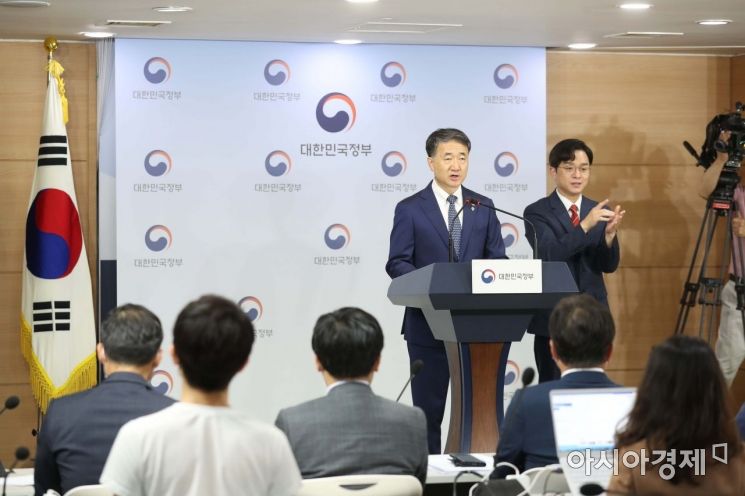 Minister of Health and Welfare Park Neung-hoo is speaking at a briefing on the results of the 3rd meeting of the Pan-Government Support Group for COVID-19 Therapeutics and Vaccine Development, held on the 3rd at the Government Seoul Office in Jongno-gu, Seoul. / Photo by Moon Ho-nam munonam@
In the vaccine sector, three core vaccine items including one synthetic antigen vaccine and two DNA vaccines will be supported with a development goal set for the second half of next year. Synthetic antigen vaccines are vaccines manufactured by synthesizing only parts of the pathogen’s proteins (antigens) that can induce an immune response using genetic recombination technology. DNA vaccines are vaccines in which genes expressing parts of the pathogen’s antigens are inserted into DNA, producing antigens inside cells after administration to induce an immune response.
The government plans to expand national stockpiling of vaccines developed in the future to reduce the burden on companies and prepare public and private facilities to enable mass domestic production of vaccines if necessary.
Support will also be provided to secure supply of therapeutics and vaccines developed overseas. The government will comprehensively review trends in overseas therapeutic and vaccine development and domestic clinical trial results to identify urgent import targets and quantities, and will promptly pursue imports if necessary. For overseas therapeutics and vaccines with expired patents and high domestic demand, direct production by domestic companies will be supported through securing production technology.
The domestic supply of essential quarantine supplies and medical devices will also be stabilized. In preparation for a resurgence of COVID-19, the government will proactively secure and stockpile core medical devices for severe patient treatment such as ventilators and ECMO, as well as personal protective equipment, and support functional improvements of domestically produced quarantine supplies like goggles. The government will support the localization of 11 core medical devices with strong global market competitiveness. The 11 strategic items include ▲ventilators ▲nucleic acid extractors ▲diagnostic kits ▲specimen collection kits ▲mobile CT scanners ▲untact monitoring systems ▲AI imaging diagnostics ▲automatic chest compression devices ▲ECMO ▲PCR equipment ▲CRRT (artificial kidney).
The government will provide tailored support considering the technological level and field difficulties for each item. For domestically developed products that require user trust building (ventilators, nucleic acid extractors, etc.) or demonstration support (mobile CT, AI imaging diagnostics, etc.), comparative evaluations and expanded introduction into medical sites will be supported. For items with significant technological gaps domestically and high dependence on overseas core components (ECMO, CRRT, etc.), key technologies and components requiring localization will be selected and concentrated national R&D support will be provided.
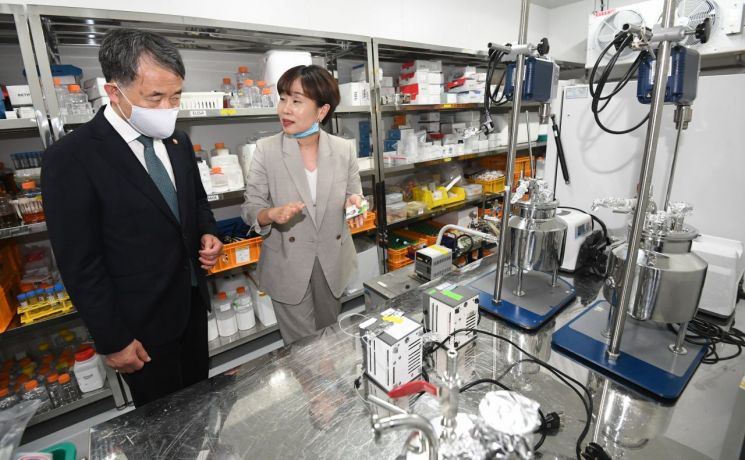 Minister of Health and Welfare Park Neung-hoo visited GC Green Cross in Yongin, Gyeonggi Province last month, which is developing a plasma treatment for COVID-19, to inspect the research facilities.
 Along with rapid development and securing of therapeutics and vaccines, the government will strengthen the mid- to long-term infectious disease response research infrastructure. To this end, it plans to establish a National Virus and Infectious Disease Research Institute as a control tower for infectious disease R&D and promote the establishment of the Korea Virus Basic Research Institute to strengthen basic and fundamental research in the virus field.
The government will expand training of pharmaceutical and bio-sector personnel such as clinical trial experts and strengthen infectious disease response capabilities through fostering promising startups and venture companies. Additionally, to prepare for future similar infectious disease crises, the government will promote the enactment of a provisional 'COVID-19 Special Act' to strengthen legal grounds for rapid funding support, focused support for promising companies, and expedited approvals.
The government plans to combine the capabilities of domestic companies, universities, research institutes, and hospitals to develop therapeutics and vaccines as quickly as possible. To this end, it will urgently support over 100 billion KRW through supplementary budgets, especially for clinical trials of therapeutics and vaccines in the second half of this year.
Park Neung-hoo, Minister of Health and Welfare, stated, "Through the support measures established today, we will unite government and private sector capabilities to secure domestically produced therapeutics within this year, domestically produced vaccines by 2021, and sequentially complete securing global market competitiveness of quarantine devices by 2022, providing full support until the end."
Choi Ki-young, Minister of Science and ICT, emphasized, "We will support so that the support measures prepared today not only lead to the development of COVID-19 therapeutics and vaccines but also serve as an opportunity to elevate Korea’s bio R&D capabilities and industry to the next level."
© The Asia Business Daily(www.asiae.co.kr). All rights reserved.



















