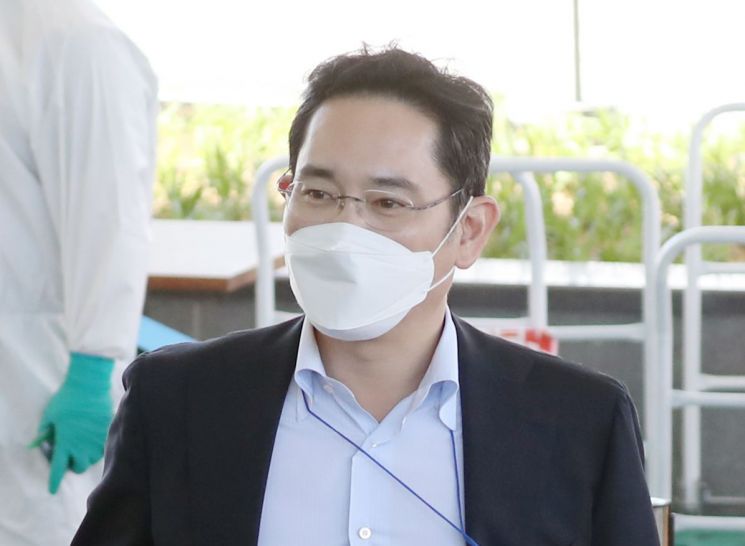
[Asia Economy Reporters Kim Hyewon and Choi Seokjin] Samsung Electronics Vice Chairman Lee Jae-yong’s side applied to the prosecution on the 3rd to convene the Prosecution Investigation Deliberation Committee, which strongly reflects a last-ditch effort amid the imminent situation of the prosecution’s decision on his custody in the investigation surrounding the Samsung C&T-Cheil Industries merger and management succession allegations.
Since the Prosecution Investigation Deliberation Committee was introduced as a separate judgment procedure to examine whether the prosecution’s investigation process was appropriate, the intention is to have external experts, not the prosecution, assess the validity of the indictment against Vice Chairman Lee. Minister of Justice Choo Mi-ae also sent an official letter to 66 prosecution offices nationwide in January, instructing them to actively utilize internal and external consultative bodies such as the Prosecution Investigation Deliberation Committee in handling important cases.
Within legal and business circles, there is an analysis that Lee’s side pulling out the “Prosecution Investigation Deliberation Committee card” is linked to the controversy over the prosecution’s “excessive investigation” raised by some. Vice Chairman Lee, who was summoned twice on the 26th and 29th of last month as a suspect, strongly denies the charges, saying, “I have never received reports or given instructions,” but the prosecution, which has been investigating for five years, is likely to conclude with an excessive indictment. As the prosecution is already considering judicial action against Lee and the top executives of the group at the time of the Samsung C&T-Cheil Industries merger and reviewing his custody, this move is interpreted as seeking an evaluation of the validity of the indictment itself from outside the prosecution. Unlike the prosecution’s investigation, which focuses solely on whether the legal elements are met, the Prosecution Investigation Deliberation Committee, composed of external experts, is expected to reflect perspectives beyond the law, such as the domestic economic situation.
Professor Hong Kiyong of the Department of Business Administration at Incheon National University said in a phone interview with Asia Economy, “The history started around 2015, and it seems the prosecution has thought a lot about linking the Cheil Industries-Samsung C&T merger issue with the Samsung BioLogics accounting fraud allegations,” adding, “It is the government’s minimum duty to promptly conclude the prosecution’s investigation and achieve legal stabilization for the private sector.”
The prosecution’s investigation into Vice Chairman Lee began in 2016 and has entered its fifth year. Lee was first investigated by the Special Investigation Headquarters (SIH) of the prosecution in November 2016 and was subsequently questioned seven times by the special prosecutor for the 2017 political scandal. Even last month, more than three years later, he was summoned by the prosecution and underwent intensive investigations related to management succession for 14 hours and 17 hours over two days. During this process, Lee was detained for about a year, causing a leadership vacuum at Samsung. The allegations regarding the Cheil Industries-Samsung C&T merger have been repeatedly investigated for four and a half years. Since the end of 2018 until now, about 30 Samsung executives have been summoned by the prosecution, with over 100 interrogation sessions.
Attorney Lee Heon of Hongik Law Firm said, “If Samsung did something wrong, it is right to be punished, but the prosecution should not wield the investigation like a sword or a warning,” adding, “Investigations into large corporations’ corruption should be swift like surgery, so it is questionable why it is taking so long without a conclusion.” Professor Hong pointed out, “It is not about defending illegal acts but about quickly concluding the prosecution’s investigation to determine whether it is legal or illegal so that the company can respond. If the investigation continues like this, it will be difficult for the company to realize its future vision.”
Following Vice Chairman Lee’s application to convene the Investigation Deliberation Committee, the Seoul Central District Prosecutors’ Office’s Prosecution Citizen Committee will form a subcommittee and review whether to refer the case to the Investigation Deliberation Committee based on written opinions submitted by the lead prosecutor and the suspect and other related parties. If referred, the current affairs committee, composed of 15 members, will deliberate the matter with at least 10 members and prepare a deliberation opinion report to be sent to the lead prosecutor (current investigation team). However, related guidelines state that “the lead prosecutor shall respect the deliberation opinion of the current affairs committee,” so the opinion is not binding. Nevertheless, it can pose a significant burden when making decisions that differ from the committee’s opinion.
According to prosecution statistics, since the system was implemented in 2018, the Investigation Deliberation Committee has been convened in eight cases involving bribery, abuse of authority, and others up to this year. With Vice Chairman Lee’s application to convene the committee, the direction of custody and indictment decisions regarding those involved in the “Samsung merger and succession allegations,” which have dragged on for one and a half years, is likely to be determined by external experts outside the prosecution.
© The Asia Business Daily(www.asiae.co.kr). All rights reserved.

















