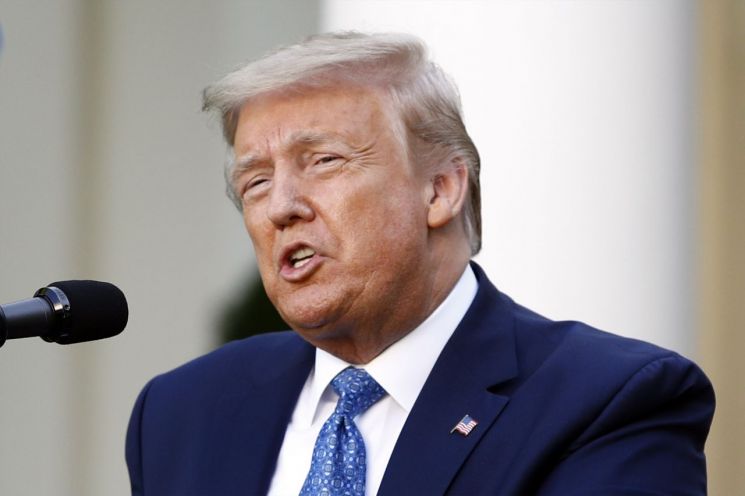
[Asia Economy Reporter Jeong Hyunjin] The Donald Trump administration in the United States has threatened to impose large-scale retaliatory tariffs on countries that have introduced or are considering introducing digital taxes. This signals a determination not to stand by while major domestic IT companies suffer damage, indicating that President Trump's trade war is expanding its front beyond China.
According to Bloomberg and others on the 2nd (local time), Robert Lighthizer, U.S. Trade Representative (USTR), announced that investigations have begun into the digital tax policies of 10 countries, including European nations such as the United Kingdom, Italy, Spain, Austria, the European Union (EU), India, Indonesia, Brazil, Turkey, and the Czech Republic.
Lighthizer stated, "President Trump is concerned that many of America's trading partners are adopting tax policies designed to target our companies," adding, "We are prepared to take all appropriate actions to protect American companies and workers from discriminatory measures."
The U.S. investigation is expected to be based on Section 301 of the Trade Act, which provides grounds for imposing retaliatory tariffs on unfair trade practices. This provision, known as the "Super 301," was also used in response to France's digital tax introduction policy last year.
In July last year, when France passed a bill to impose a digital tax and began pushing for its implementation, the U.S. threatened to impose tariffs of up to 100% on $2.4 billion worth of French imports, including wine, cheese, handbags, and ceramics, if the digital tax materialized. Ultimately, in January, France postponed the collection of the digital tax through an agreement with the U.S., and the U.S. withdrew tariffs on French products.
The digital tax controversy is aiming for a final agreement by the end of this year under the Organization for Economic Cooperation and Development (OECD), but according to the Nihon Keizai Shimbun, discussions are facing difficulties without compromise among countries' opinions. Accordingly, countries such as the United Kingdom and India have already implemented digital taxes individually. The Washington Post (WP) evaluated, "President Trump is taking steps to expand the trade war by targeting other countries that threaten American technology companies."
In the U.S. Congress, the recent USTR announcement has been welcomed. Members of the Senate Finance Committee argued that the digital tax "unfairly targets and discriminates against American companies." They also stated, "The actions by individual OECD member countries to impose taxes on digital services run counter to the goals and procedures of the OECD," and "We support the USTR's investigation of these discriminatory unilateral measures under Section 301."
© The Asia Business Daily(www.asiae.co.kr). All rights reserved.

















