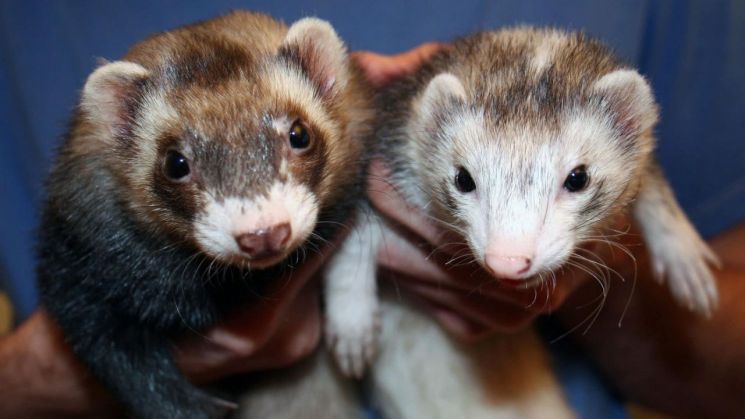
[Asia Economy Reporter Kim Heung-soon] Researchers dedicated to disease research and new drug development go through animal testing stages when studying effects on the human body. The most widely used and familiar animal to the public is the laboratory white mouse. In the development of treatments and vaccines for the novel coronavirus disease (COVID-19), which has attracted global attention, the mustelid 'ferret' takes precedence. Researchers from South Korea, China, and many other countries have been extensively using ferrets in experiments with COVID-19 treatment candidate substances. Why mustelids?
According to the U.S. science media 'Undark' on the 3rd, research has proven that ferrets are susceptible to the same respiratory infections affecting humans, including the COVID-19 virus.
Professor Allison Kelvin of Dalhousie University in Canada explained, "Ferrets have relatively large lungs compared to their body size and five lung lobes (parts that form the lungs), and they have receptors in their airways where viruses can bind, making them similar to humans." She added, "They cough and sneeze, transmitting respiratory diseases to other ferrets, making them suitable animals for respiratory virus-related research."
Earlier, the Chinese Center for Disease Control and Prevention (CDC) analyzed the degree of virus infection in livestock such as ferrets, dogs, cats, chickens, and ducks, and published in the international journal 'Science' last April that ferrets are suitable animals for verifying the efficacy of COVID-19 vaccines or treatments.
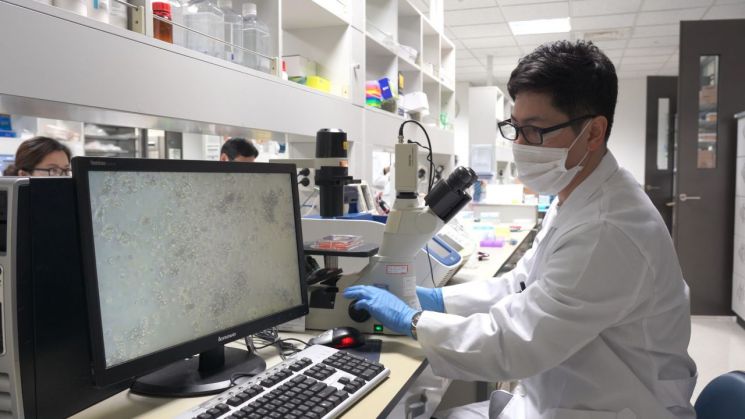
The history of humanity using ferrets in animal experiments spans nearly 90 years. According to the international medical journal 'The Lancet,' a research report dated July 8, 1933, first reported that ferrets could contract influenza and transmit it to other ferrets. Ferrets infected with the influenza epidemic that year showed symptoms such as fever, loss of appetite, and lethargy after an incubation period.
Researcher Kim Yong-gwan of the Biosafety Research Team at the National Institute of Environmental Research under the Ministry of Environment said, "Ferrets are still widely used in influenza-related research." Ferrets are also considered suitable animals for research and development experiments on treatments for Ebola, Severe Acute Respiratory Syndrome (SARS), as well as studies on lung cancer, heart disease, and spinal cord injuries.
Domestic pharmaceutical bio company Celltrion has also embarked on developing COVID-19 antibody treatments as a national project under the Korea Disease Control and Prevention Agency. In April, they selected neutralizing antibodies and developed cell lines, and recently confirmed the effect of reducing the virus in animal experiments using ferrets.
Kwon Jun-wook, Deputy Director of the Central Disease Control Headquarters, said, "The antibody treatment is undergoing primate experiments, and we are negotiating to conduct clinical trials abroad in European countries around July."
© The Asia Business Daily(www.asiae.co.kr). All rights reserved.


















