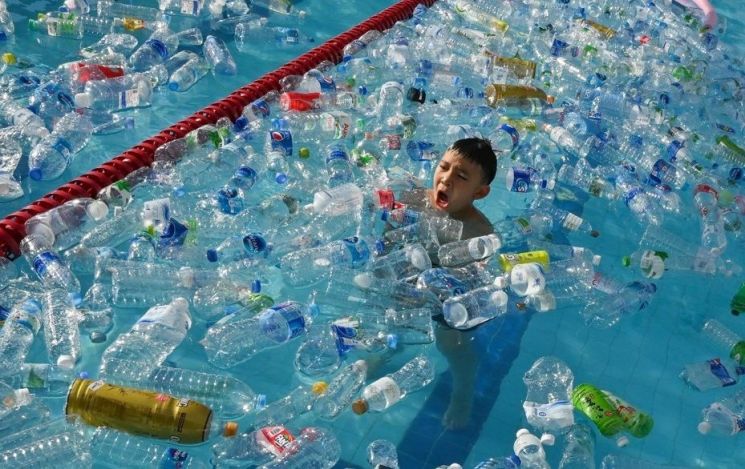
[Asia Economy Reporter Hwang Junho] A domestic research team has discovered bacteria that decompose plastic inside insects. This is expected to strengthen research on naturally decomposing the more than 8 million tons of plastic waste generated annually.
The Daegu Gyeongbuk Institute of Science and Technology (DGIST) announced on the 3rd that Professor Kim Daehwan's research team in the School of Basic Sciences discovered bacteria that biodegrade polystyrene inside the larvae of the American superworm, and their research results were featured in the American Chemical Society's "Weekly Press Pick."
 Superworm ingesting plastic (left) Plastic-degrading bacteria (center) Candidate plastic-degrading enzyme (right)
The research team, mainly composed of undergraduates Kim Hongrae, Lee Hyunmin, Yoo Heechul, and Jeon Eunbin, discovered plastic-degrading bacteria while studying superworms.
The team cultured the intestinal fluid of superworms in a medium with no nutrients other than plastic to select candidates for plastic-degrading bacteria. They then observed bacterial growth and chemical changes on the plastic, successfully identifying the plastic-degrading bacteria "Pseudomonas."
This bacterium decomposed polystyrene, a plastic that is difficult to break down. The research team identified that one of the enzymes in Pseudomonas, a serine hydrolase, is related to the biodegradation of polystyrene. They further confirmed that when treated with various concentrations of an enzyme inhibitor, higher inhibitor concentrations suppressed bacterial growth and plastic degradation.
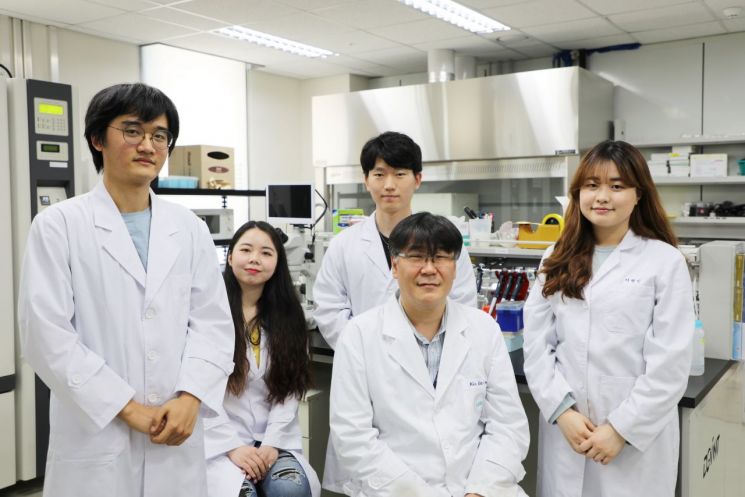 Professor Daehwan Kim of the DGIST School of Basic Sciences (center front) and undergraduate students (from left, Heecheol Yoo, Eunbin Jeon, Hongrae Kim, Hyunmin Lee)
Professor Kim Daehwan said, "If we continue to discover and improve plastic-degrading enzymes, we may ultimately solve the plastic problem. Since worldwide research on plastic biodegradation is still in its early stages, this study could serve as a catalyst for achieving related research outcomes."
Meanwhile, although plastic has been developed for 150 years and has made human life more convenient, over 8 million tons of plastic waste are discharged into the oceans annually worldwide, threatening ecosystems.
© The Asia Business Daily(www.asiae.co.kr). All rights reserved.
![User Who Sold Erroneously Deposited Bitcoins to Repay Debt and Fund Entertainment... What Did the Supreme Court Decide in 2021? [Legal Issue Check]](https://cwcontent.asiae.co.kr/asiaresize/183/2026020910431234020_1770601391.png)


















