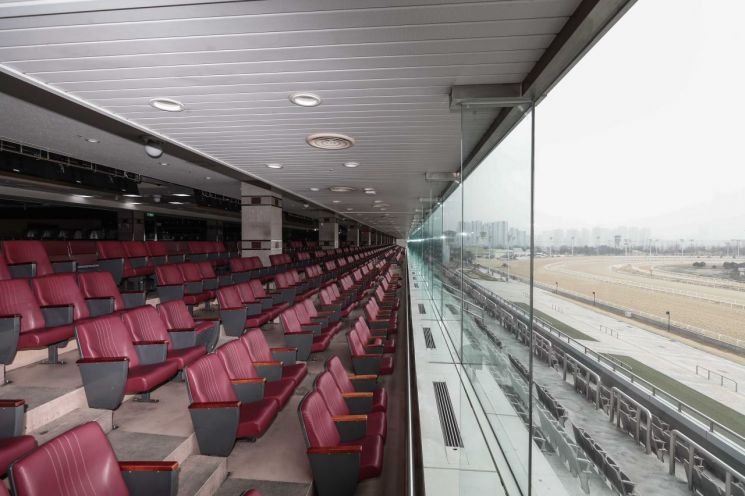
[Sejong=Asia Economy Reporters Kim Hyun-jung and Moon Chae-seok] Due to the COVID-19 pandemic, all horse racing venues operated by the Korea Racing Authority (KRA) nationwide have been undergoing an unprecedented long-term closure. With the number of confirmed COVID-19 cases rising again following infections in Itaewon, it has become difficult to predict when these venues will reopen.
Recently, the Korea Racing Authority announced that it has extended the temporary suspension of operations at all its venues, including Seoul Race Park, until the 4th of this month to prevent the spread of COVID-19. The KRA stated that it will exercise caution in resuming horse racing until the government's COVID-19 prevention guideline of 'social distancing in daily life' is socially established and the daily quarantine system stabilizes. Previously, the KRA decided on an emergency temporary closure on February 23 and has since extended the closure nine times in total.
The KRA is operating an Emergency Management Committee to respond to the COVID-19 situation. According to the KRA's horse industry survey (February 2019), the economic output scale of the horse industry amounts to 3.4125 trillion won, with related employment reaching 25,000 people. The horse racing industry accounts for nearly 90% of the total output scale of the horse industry. The Emergency Management Committee is establishing countermeasures to address the management crisis caused by the decline in horse racing sales and is preparing all support measures for partner companies, lessors, and related workers to revive the entire horse industry, including horse racing.
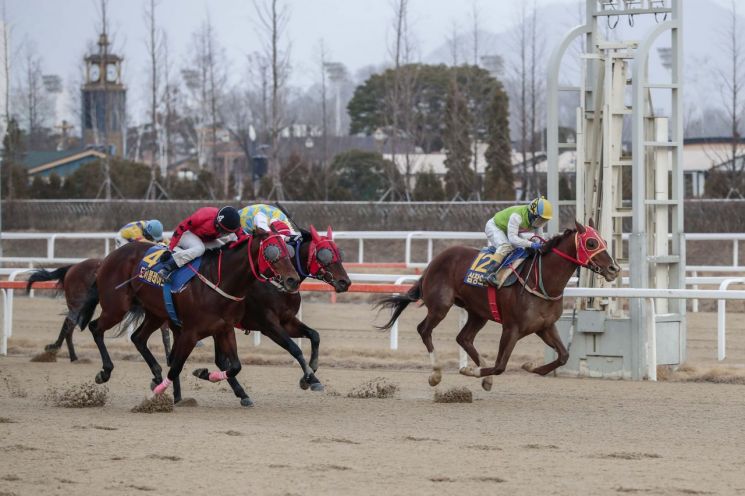
The unprecedented long-term closure is causing difficulties not only for the KRA’s management but also for jockeys, trainers, and grooms whose main income comes from horse racing prize money. In particular, there are about 1,110 horse racing stakeholders who rely primarily on horse racing prize money. When horse racing is held normally, approximately 20 billion won in prize money is generated monthly, but with the suspension of racing, they now face immediate income concerns. About 5,000 workers who work on race days are also currently on leave and relying on leave allowances. Security and sanitation workers have seen a sharp decline in work and are working in shifts. In this case, they receive about 30% less monthly salary compared to months when horse racing was operating normally. A Korea Racing Authority official said, "We conduct daily disinfection and facility inspections at all venues in preparation for the resumption of horse racing," adding, "We will prioritize customers' health and safety when deciding the reopening schedule, and even when horse racing resumes, we will operate on a minimal scale with only pre-booked customers to ensure sufficient social distancing within the park."
Gangwon Land, which operates a casino for domestic customers, is facing a similar situation. Gangwon Land will remain closed until 6 a.m. on the 4th. Currently, 80% of casino employees are on leave, and the surrounding shops serving visitors are also struggling to operate. A Gangwon Land official explained, "We have been focusing on disinfection by installing air sterilizers and planned to open with protective barriers against droplets, but ultimately had to extend the closure," adding, "Apart from the losses, Gangwon Land has a significant impact on the local economy, so the contraction of the regional economy is the biggest concern."
© The Asia Business Daily(www.asiae.co.kr). All rights reserved.


















