Nominal Gross National Income 481.3973 Trillion Won... 2.0% Decrease Compared to Previous Quarter
[Asia Economy Reporters Joo Sang-don and Jang Se-hee] Nominal Gross National Income (GNI) in the first quarter of this year fell by the largest margin since the 1998 foreign exchange crisis. This is due to decreased corporate earnings and reduced consumption caused by the COVID-19 pandemic. The real Gross Domestic Product (GDP) growth rate for the first quarter recorded -1.3%, which is 0.1 percentage points higher than the preliminary estimate.
According to the provisional statistics on 'National Income for the First Quarter of 2020' released by the Bank of Korea on the 2nd, nominal GNI for the first quarter of this year was 481.3973 trillion won, a 2.0% decrease compared to the previous quarter.
This is the largest decline since the second quarter of 1998 (-3.6%). GNI represents the total income earned by all citizens domestically and abroad, including wages, interest, and dividends, adjusted for price levels to reflect the total income earned by the nation. Last year, the per capita GNI was provisionally estimated at $32,115 (approximately 37.43 million won).
Nominal GDP, which reflects price levels, decreased by 1.6% compared to the previous quarter, marking the lowest level since the fourth quarter of 2008 (-2.2%). The GDP deflator (nominal GDP/real GDP), which shows the overall inflation rate, was -0.6%, marking the fifth consecutive quarter of negative figures, the longest period on record. The decline is the largest in 10 years since the financial crisis in 2009 (-10.4%).
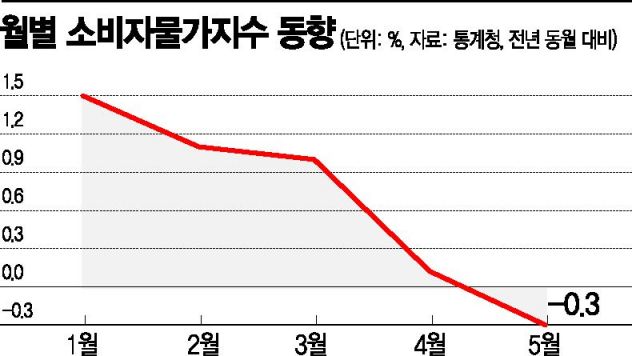
The consumer price inflation rate turned negative again after eight months. This is the result of a combination of factors including weakened consumption due to the COVID-19 crisis, falling international oil prices, and free high school education. Recording the second negative inflation rate in history has increased concerns about deflation. Nominal GDP growth for the first quarter of this year, adjusted for price levels, recorded the lowest growth rate in 11 years.
According to the 'May Consumer Price Trends' released by Statistics Korea on the same day, the consumer price index last month was 104.71 (2015=100), down 0.3% compared to a year earlier. This is the first time consumer prices have recorded a negative rate since September last year (-0.4%).
© The Asia Business Daily(www.asiae.co.kr). All rights reserved.
!["The Woman Who Threw Herself into the Water Clutching a Stolen Dior Bag"...A Grotesque Success Story That Shakes the Korean Psyche [Slate]](https://cwcontent.asiae.co.kr/asiaresize/183/2026021902243444107_1771435474.jpg)
















