Speed Race in the Pharmaceutical Bio Industry… Celltrion and GC Green Cross Enter Clinical Trials in the Second Half
Antibody Therapeutics Draw Attention for Development Speed and Preventive Effects
Plasma Therapy Also Expected by Health Authorities and Medical Community
Limitations Faced by Current Treatments like Remdesivir
High Possibility of Re-outbreak Spurs Active Domestic and International Cooperation
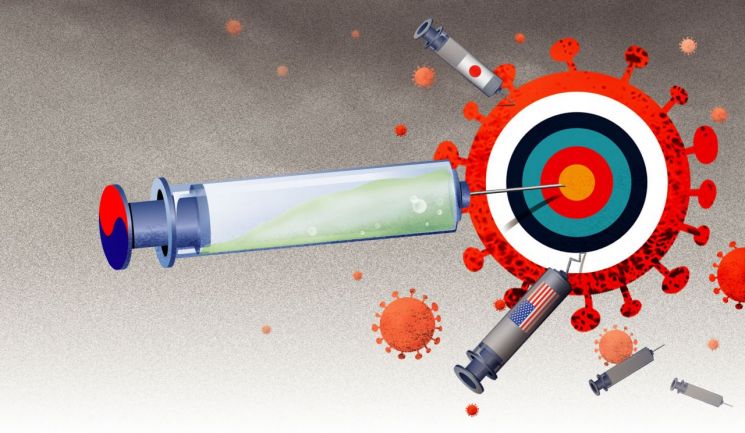
[Asia Economy Reporter Choi Dae-yeol] Amid fierce global competition to develop treatments for the novel coronavirus infection (COVID-19), South Korea's pharmaceutical bio industry is accelerating its efforts. Initially, it seemed that the U.S. pharmaceutical company Gilead's remdesivir would take the lead after receiving approval for use as a treatment, but it revealed limitations in failing to reduce the fatality rate. In this context, Celltrion and GC Green Cross have decided to begin clinical trials in the second half of the year, raising expectations for 'K-Bio.' As COVID-19 patient numbers continue to spread worldwide and the possibility of a re-outbreak after this fall is high, not only are companies and research institutions working diligently, but international cooperation is also active.
◆Focus on Celltrion and GC Green Cross Therapeutics = According to the pharmaceutical bio industry on the 2nd, antibody therapeutics have recently attracted attention. This is because they have a relatively fast development speed and are expected to have preventive effects as well as treating patients. The Ministry of Food and Drug Safety recently revised the 'Considerations for COVID-19 Therapeutic Development' guidelines to include clinical trials that can confirm infection prevention effects as an evaluation item. Future therapeutic developments will design clinical trials to verify whether the treatment has preventive effects before and after virus exposure and whether symptoms are less severe when preventive administration is given. Antibody therapeutics are medicines that utilize the principles of the human immune response and have recently grown in market share in the overall pharmaceutical market. The U.S. pharmaceutical company Eli Lilly began clinical trials for antibody therapeutics targeting COVID-19 patients starting from the 1st (local time).
Celltrion's development of a COVID-19 antibody therapeutic, conducted as a national project, is drawing attention domestically and internationally because animal experiments conducted so far have confirmed both treatment and preventive effects. Jang Sin-jae, CEO of Celltrion, said at the Bio Korea 2020 briefing held online last month, "Antibody therapeutics not only immediately neutralize the virus in infected patients but also, when administered to healthy individuals, can block incoming viruses from outside for about 2 to 3 weeks, which is the antibody's half-life."
The company developed cell lines by selecting neutralizing antibodies in April and recently confirmed a reduction in the virus in animal experiments using ferrets, a type of weasel. The company expects to mass-produce clinical materials this month and supply antibody therapeutics necessary for human clinical trials by next month.
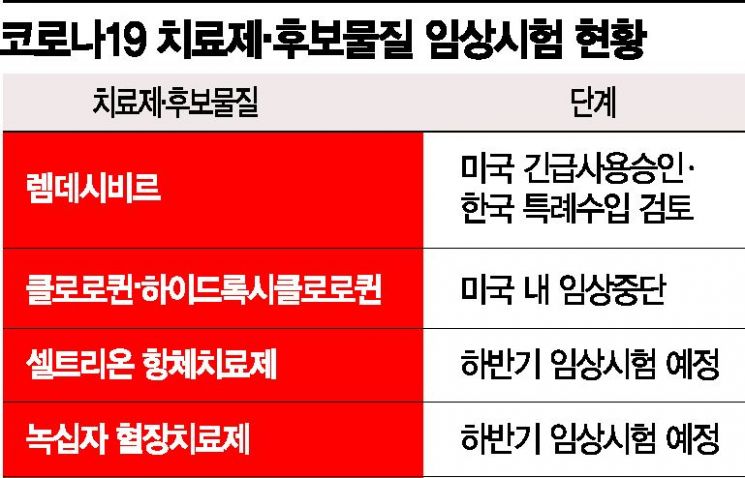
◆Limitations Revealed in Treatments like Remdesivir = GC Green Cross is also moving quickly, aiming to supply plasma therapy, developed based on the blood of recovered COVID-19 patients, as early as this year. Since plasma therapy is known to have some effect, it is a field expected by health authorities and the medical community. The company aims to begin clinical trials on humans next month. The government is also accelerating efforts by supporting easier procurement of blood from recovered patients, which is the basic raw material for plasma therapy.
On the other hand, remdesivir, originally developed as an Ebola treatment but abandoned due to ineffectiveness, gained attention after being found to have some effect against COVID-19. It is the only existing treatment confirmed to be effective against COVID-19 in clinical trials, leading to emergency approval in South Korea following the U.S. However, it showed limitations as a treatment by failing to reduce the fatality rate in clinical trials. Both chloroquine, praised by President Trump, and Avigan, expected by Prime Minister Abe, were withdrawn from the market early due to severe side effects.
© The Asia Business Daily(www.asiae.co.kr). All rights reserved.


















