Government Announces Economic Policy Directions for Second Half of 2020... Focus on Employment Retention
Review of Additional Designation of Special Employment Support Sectors and Extension of Shipbuilding Industry Designation
550,000 Direct Jobs to be Created... 48,000 Public Officials and Others to be Hired
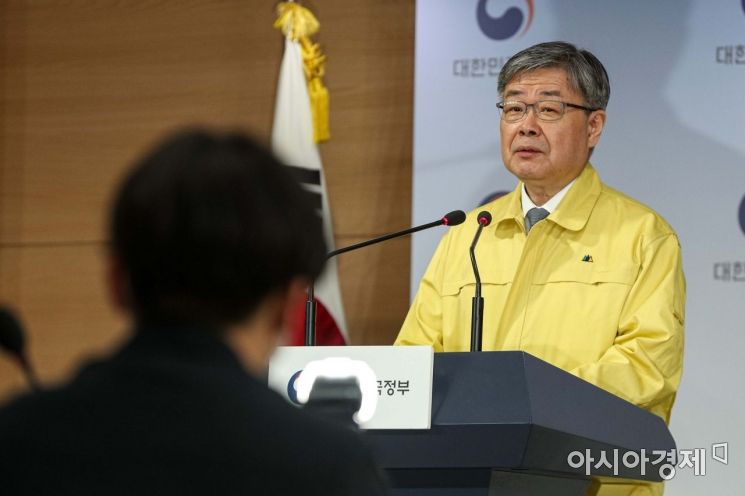
[Asia Economy Reporter Kim Bo-kyung] The government has decided to partially support wage reductions for six months for companies that maintain employment and to defer tax audits. A 'Rapid Support Program for Unpaid Leave' will also be implemented, providing up to 1.5 million KRW to unpaid leave workers.
On the 1st, the government announced the 'Second Half of 2020 Economic Policy Direction' containing these measures. The announcement reflects a strong commitment to fully focus on job retention in response to the employment shock caused by the novel coronavirus disease (COVID-19).
First, companies that sign employment retention agreements between labor and management will receive partial wage support and a three-year deferral of tax audits as incentives. Additionally, preferential treatment such as bonus points will be given when participating in government-funded projects.
The program targets companies where labor unions accept unavoidable wage reductions and management guarantees employment stability for a certain period through an agreement.
However, if the employment retention agreement is not properly implemented or specific tax evasion suspicions are confirmed, the tax audit deferral will be canceled.
The Rapid Support Program for Unpaid Leave, which relaxes eligibility requirements and provides up to 1.5 million KRW, will also be implemented starting this month. If unpaid leave is taken for 30 days or more, support of 500,000 KRW per month for up to three months, totaling a maximum of 1.5 million KRW, can be received. The unpaid leave must be reported seven days before implementation after labor-management agreement.
For special employment support industries such as duty-free shops, the requirement to implement 'paid employment retention measures (paid leave)' before entering unpaid leave is temporarily exempted. For general industries, paid employment retention measures must be implemented for one month to qualify for unpaid leave support.
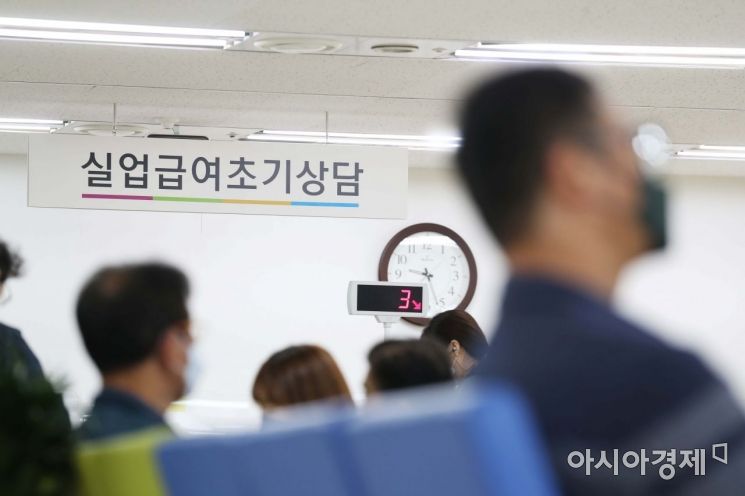 On the 13th, citizens are waiting to receive consultations for unemployment benefits applications and employment support at the Seoul Employment Welfare Plus Center in Jung-gu, Seoul. Photo by Mun Ho-nam munonam@
Furthermore, the government is pushing to extend the designation of the shipbuilding industry as a special employment support sector, which is set to expire at the end of this month, until the end of December. They are also considering adding other industries affected by COVID-19, such as the film industry, as special employment support sectors.
For workplaces unable to pay leave allowances due to lack of funds, an employment retention fund loan program will be implemented. Upon submission of an employment retention plan and confirmation that the funds are for wage payments, leave allowances will be prepaid through loans and later repaid with employment retention subsidies.
Special-type workers (teukgo), freelancers, and small self-employed individuals who fall into the blind spots of employment insurance will receive an 'Emergency Employment Stability Subsidy' of up to 1.5 million KRW. This applies only if income or sales have decreased due to COVID-19. Applications began on this day, with the first payment of 1 million KRW made; after the third supplementary budget passes, a second payment of 2 million KRW is planned for next month.
The government will also expand direct job creation projects funded by the budget. It will swiftly create 945,000 direct jobs for vulnerable groups planned for this year and resume job projects suspended due to COVID-19 with thorough quarantine measures, focusing on non-face-to-face work.
Separately, using the third supplementary budget, 550,000 new jobs will be created: 100,000 non-face-to-face and digital jobs in the public sector, 300,000 jobs for vulnerable groups, and 150,000 youth jobs in the private sector.
The government also plans to expedite the hiring process for 23,000 national public officials and 25,000 public institution employees this year. Recruitment exams will be conducted by the end of this month in compliance with the Central Disease Control Headquarters' test management guidelines, with interviews and other procedures to enable work starting from the third quarter.
Support for reemployment of the unemployed will be strengthened. The number of people supported with the National Tomorrow Learning Card for training unemployed and unpaid leave workers will be increased by 120,000, and the Employment Success Package support will be expanded by 110,000. Considering the rising trend in job-seeker benefit applications, the third supplementary budget will be used to increase the budget by 3.4 trillion KRW to support an additional 490,000 people.
© The Asia Business Daily(www.asiae.co.kr). All rights reserved.


















