Court Grants Injunction Prohibiting Father Who Refused Surgery for 3-Year-Old Child with Rare Disease from Interfering with Medical Treatment
Reverses First Instance Dismissal Citing 'Existence of Other Relief Procedures'
[Asia Economy Reporter Choi Seok-jin] What decision should medical staff make when the parents of a 3-year-old child, whose life is at risk without surgery, refuse the operation citing financial difficulties? Typically, the convention is to have the parents sign a waiver stating they will not raise issues later and to withhold treatment.
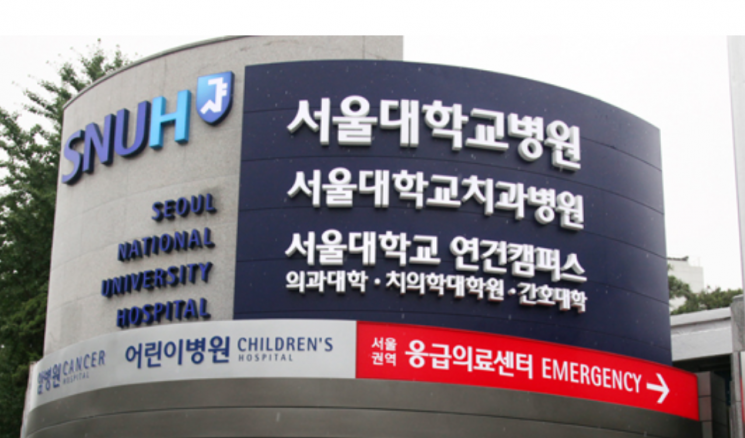
Hospitals are also reluctant to provide treatment because they cannot later claim surgery costs. However, the medical team at the National Seoul National University Hospital made a different judgment. They filed a lawsuit with the court asking to be allowed to proceed without obstruction to treatment, won the case, and will soon be able to perform the surgery. The court ruled in favor of the hospital, stating that "the right to life is a higher concept than parental authority."
On March 7, 3-year-old boy A, who was suffering from pneumonia, was transferred to Seoul National University Hospital in an emergency as his symptoms worsened. A was diagnosed with a rare disease called "CASK-related epileptic encephalopathy (hereafter CASK)," which causes neurological abnormalities such as intellectual disability and epileptic seizures.
The problem arose when medical staff attempted to remove the tracheal tube in A’s neck. A had difficulty with secretion discharge and spontaneous breathing, and the removal attempts failed twice. As a result, A had to remain intubated for about two months.
According to the court and others, pediatric intubation carries risks such as bronchitis caused by the tube and hypoxic brain damage, so a tracheostomy must be performed within three weeks. Moreover, since A, who had CASK, was unable to clear secretions on his own, his life was in danger without the tracheostomy.
However, conflict began when A’s father, Mr. B, refused to allow the tracheostomy. Mr. B, who had been working almost nonstop even on weekends, said that after divorce, if he gained parental authority, he had no one to care for the child and was considering placing him in a facility. Even if he raised the child himself, he said he could not afford the additional caregiver costs after surgery. A’s mother, who was in the process of divorcing Mr. B, also refused to consent to the surgery, stating she would not exercise parental authority because she planned to transfer it to Mr. B.
In response, Seoul National University Hospital decided not to give up on the surgery and sought a court ruling. This was an unusual step compared to the usual practice where hospitals avoid surgery without consent from the patient or legal guardian by obtaining a waiver that absolves the hospital of responsibility for any risks.
However, the litigation process was not smooth. The hospital’s provisional injunction request was dismissed in the first trial, on the grounds that other relief procedures were available.
According to Article 922-2 of the Civil Act, when a guardian unjustifiably refuses consent and there is a risk of harm to the child’s life, body, or property, the prosecutor or local government head can request the family court to make a decision substituting for the guardian’s consent. The hospital’s intention was to first persuade the prosecutor or the Mayor of Seoul to request the family court to make such a decision substituting for Mr. B’s consent, then proceed with surgery after the family court’s ruling.
The hospital decided to appeal, and the Seoul High Court’s 25-1 Civil Division (Presiding Judges Park Hyung-nam, Yoon Joon, Kim Yong-seok) made a different judgment.
First, the court ruled that the hospital’s provisional injunction request was not seeking a “judgment substituting for the guardian’s consent,” as the first trial court had stated. The court explained, “The hospital intends to fulfill its medical duty to protect patient A’s right to life even without the guardian’s consent, and requests to exclude the guardian’s obstruction opposing the treatment. This differs in purpose from what Article 922-2 of the Civil Act stipulates.”
The court further stated, “Of course, the prosecutor or local government head could request a judgment substituting for the guardian’s consent, but since the judgments of medical institutions and prosecutors may not always align, and the procedure inevitably takes considerable time, it is not necessary to prevent medical institutions from undertaking the risk of treatment without the guardian’s consent.”
The court also emphasized, “If urgent medical treatment must be performed on a child lacking capacity or legal competence, but the guardian unreasonably abuses parental authority to refuse it, essential medical treatment must be carried out despite such refusal, out of respect for human life. This is a natural consequence of the right to life being a higher concept than parental authority.”
Attorney Shin Hyun-ho of Law Office Haewool, representing Seoul National University Hospital in the lawsuit, said, “The first trial’s dismissal of the provisional injunction on the grounds that there is a parental consent procedure under family law was an approach that did not consider the vulnerable in society. Just as delayed justice is not justice, substantive relief must be provided promptly by any means necessary to save lives.”
Following the court’s provisional injunction approval, Seoul National University Hospital plans to perform the tracheostomy surgery on boy A on the 2nd.
© The Asia Business Daily(www.asiae.co.kr). All rights reserved.

















