KMA Forecasts Up to 32°C This Week
Higher Temperatures Make Mask Wearing Difficult
Concerns Rise Over Air Conditioner Airborne Droplet Transmission
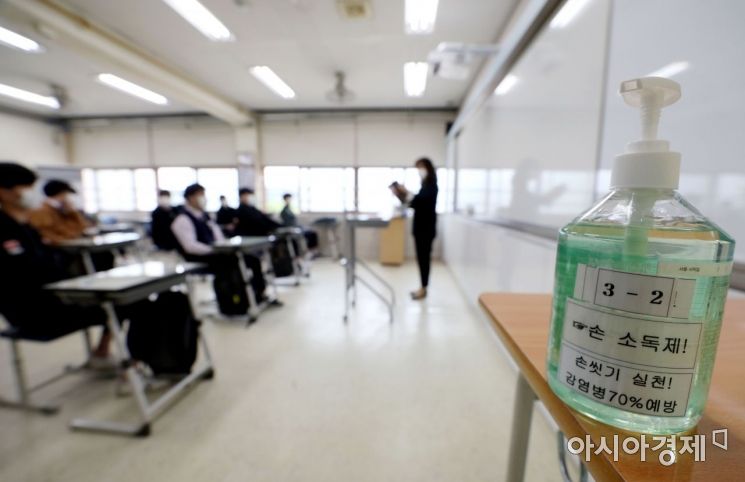
[Asia Economy Reporter Hyunju Lee] The heatwave has arrived along with June. Some areas are expected to see daytime high temperatures exceeding 32 degrees Celsius this week, with many regions surpassing 30 degrees. As air conditioner usage increases, concerns about the spread of the novel coronavirus infection (COVID-19) are also rising.
According to the Korea Meteorological Administration on the 1st, the daytime high temperature is expected to range from 21 to 29 degrees Celsius. Seoul will be 24 degrees, Incheon 21 degrees, Daejeon and Gwangju 27 degrees, and Daegu 29 degrees. Starting tomorrow (the 2nd), some areas, mainly inland Gyeongsang Province, are forecasted to rise above 30 degrees. After the rain stops in the central region, northern Jeonbuk, and northern Gyeongbuk from the afternoon to night of the 2nd, the central region is also expected to exceed 30 degrees from the day after tomorrow (the 3rd), with the heat continuing through the weekend. On the day after tomorrow, Gyeongju, Gimcheon, and Seongju in Gyeongbuk will reach 32 degrees, and Daegu and Gumi will rise to 31 degrees. On the 30th of last month, Seoul recorded a daytime high of 30 degrees, the highest temperature so far this year. This is 2 to 3 degrees higher than the average year.
As the weather gets hotter, wearing masks becomes difficult, and in places where air conditioners are running, the air containing droplets in enclosed spaces circulates, increasing the risk of COVID-19 infection. Especially in school classrooms, where students have prolonged contact and maintaining a 2-meter distance is difficult, extra caution is required. The Ministry of Education has issued guidelines to use air conditioners with windows closed in classrooms but to ventilate during breaks. However, since each school autonomously sets its air conditioner operation standards, confusion is expected. In elementary schools, where students spend less time, air conditioners are planned to be used as little as possible, whereas high schools take the position that this is not feasible.
© The Asia Business Daily(www.asiae.co.kr). All rights reserved.

















