Sharp Remarks from Secretary Pompeo Following Trump
South Korean Government Tries to Refrain from Mention but Faces Challenges Maintaining 'Cautious Stance'
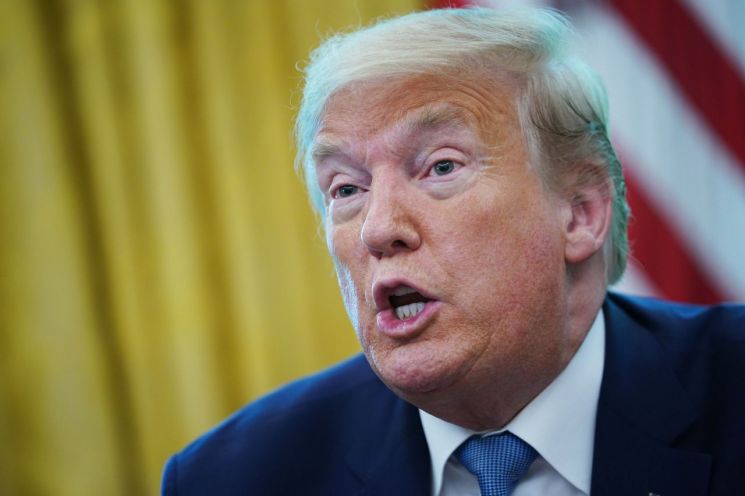
[Asia Economy Reporter Lim Cheol-young] As the United States embarks on an all-out effort to build an 'anti-China bloc,' the South Korean government's concerns are expected to deepen further. Following President Donald Trump, Secretary of State Mike Pompeo has consecutively raised the level of criticism against China, pressuring active participation from countries including South Korea, Australia, and India. The South Korean government is closely monitoring changes in the international order caused by the escalating US-China confrontation and is refraining from direct remarks as much as possible, but it is not an easy situation to maintain a cautious stance consistently.
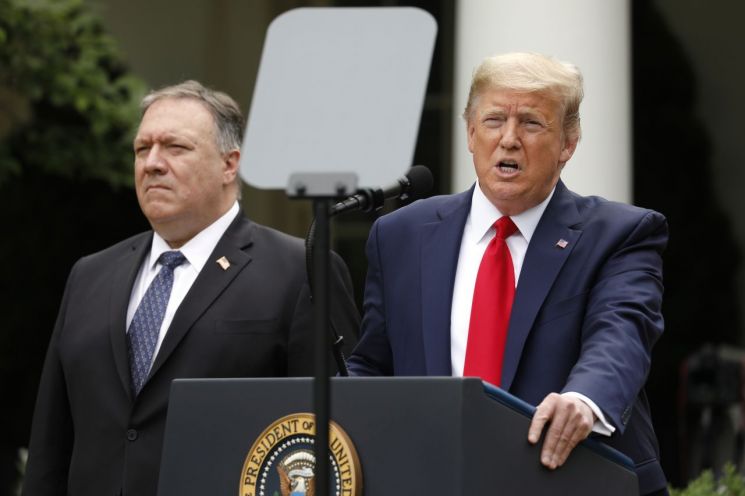
On the 31st of last month (local time), Secretary Pompeo made sharp remarks directly targeting China in an interview with Fox News, increasing pressure on neighboring countries including South Korea to join the effort. President Trump, the day before, mentioned the possibility of expanding the Group of Seven (G7) to a Group of Ten (G10) or Group of Eleven (G11), expressing hope for participation from countries such as South Korea, India, Australia, and Russia. Within a day, Secretary Pompeo also stepped forward, emphasizing the threat of China's military buildup and referring to a 'Western-led next century,' reiterating the 'good partnership' with allies including South Korea. Both President Trump and Secretary Pompeo commonly cited South Korea, India, and Australia. This is interpreted as preparation for a long-term phase of the 'new Cold War.' As the US-China hegemonic competition intensifies, it is regarded as the US's mid- to long-term attempt to 'reshape' the global order to isolate China.
Among the allies mentioned by Secretary Pompeo, South Korea, Australia, and India were the countries listed by President Trump when he spoke of expanding the G7. Considering Japan, which is already part of the G7, these are also key allies in the Indo-Pacific strategy led by the United States to counter China. This suggests that the US-led anti-China bloc will proceed simultaneously in economic and military fields.
South Korea has been invited to the G7 before. During the 2008 US-originated financial crisis, South Korea attended the Group of Eight (G8) summit, which included Russia, as an observer along with Australia, invited by Japan, the chair country at the time. However, the US, which leads the G7, has never publicly expressed intentions to expand or formally considered South Korea's membership. Under pressure from the US's promotion of the Economic Prosperity Network (EPN), this situation is inevitably awkward for the South Korean government.
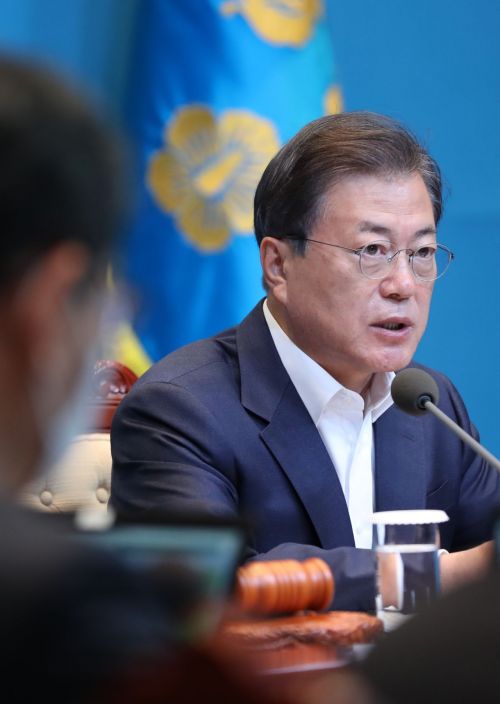
In response to the US's successive pressure moves, the South Korean government is refraining from making statements and is carefully monitoring the situation. Since exports to China account for over 25%, actively complying with US-centered demands carries significant economic risks. The government finds it difficult to welcome President Trump's remarks on expanding the G7 prematurely, as it is uncertain whether this will lead to substantive changes. In diplomatic circles, it is assessed that "(this US invitation) is indeed unusual, but as it is a declarative message amid US-China conflict, it is necessary to observe for the time being."
The Blue House also acknowledged that President Trump invited South Korea to the G7 meeting but refrained from commenting on specific details. A senior Blue House official said, "This is an issue to be discussed with the US side going forward." When asked whether President Trump had previously requested South Korea to participate in a new system replacing the G7, the official explained, "There was no prior notification."
Meanwhile, Japan's Yomiuri Shimbun reported on the 1st that President Trump's invitation of four countries?South Korea, Australia, India, and Russia?with the intention of encircling China is unlikely to gain easy consensus within the G7. Citing remarks from a senior official of Japan's Ministry of Foreign Affairs, Yomiuri reported that there is a view that "Japan's significance as the only Asian G7 member is fading." It is analyzed that Japan's interests are entangled in the US's overt China containment moves, which may lead to cautious attitudes toward expansion within the G7.
© The Asia Business Daily(www.asiae.co.kr). All rights reserved.
![Clutching a Stolen Dior Bag, Saying "I Hate Being Poor but Real"... The Grotesque Con of a "Human Knockoff" [Slate]](https://cwcontent.asiae.co.kr/asiaresize/183/2026021902243444107_1771435474.jpg)













