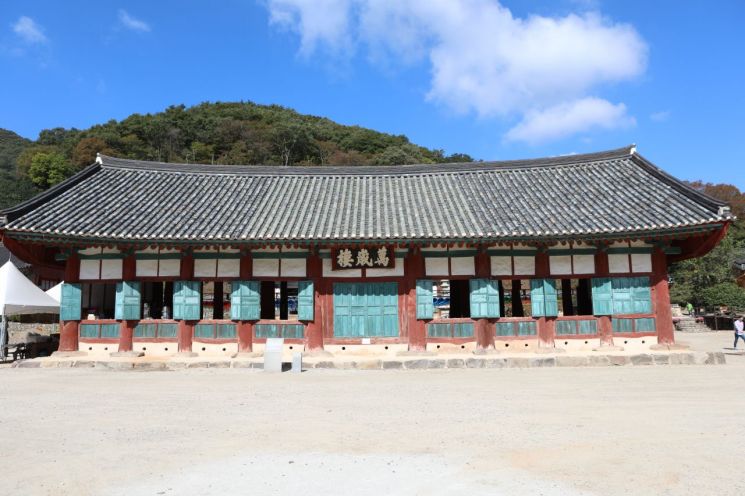
The Manse-Ru (萬歲樓) of Seonunsa Temple in Gochang, a large temple from the late Joseon period, has been designated as a treasure.
On the 1st, the Cultural Heritage Administration announced that Manse-Ru of Seonunsa Temple in Gochang, Jeonbuk, which is Jeonbuk Tangible Cultural Property No. 53, has been designated as Nationally Designated Cultural Heritage Treasure No. 2065. It was regarded as a case where the pavilion building of a Buddhist temple in the late Joseon period was appropriately modified in structure to suit the flow of the era and its function. It was evaluated as having excellent historical, architectural, and academic value by infusing originality with materials that were difficult to obtain.
According to the records "Dae-yang-ru Heating (1686)" and "Manse-Ru Reconstruction Record (1760)," Manse-Ru was rebuilt in 1752 after Dae-yang-ru, built in 1620, was destroyed by fire. Unusually for a temple pavilion, it has nine bays on the front (two bays on the side). Normally, pavilions are built with three bays. Five bays are also considered large.
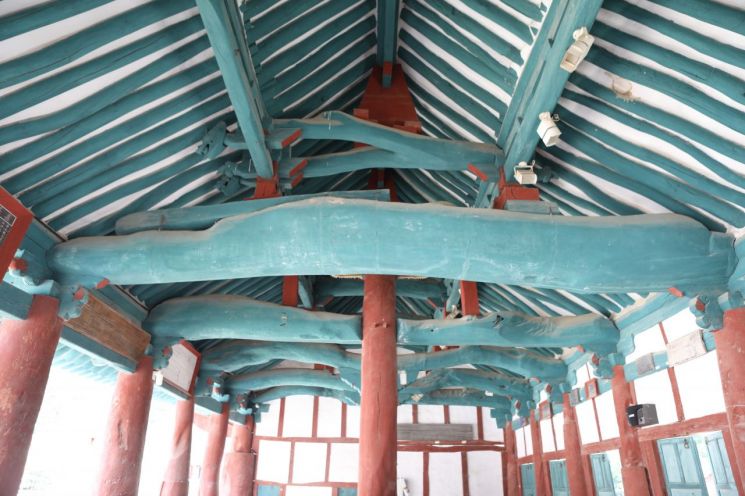
A representative feature is the large beam. The large beam refers to a big beam spanning between columns to support the roof's load. The middle three bays of Manse-Ru have large beams placed on the front and rear outer columns. For the three bays on each side, tall columns were erected in the center, and matched beams (beams installed on both sides centered on the middle column) were used. The Cultural Heritage Administration explained, "By using two methods to hang the beams, structural safety was ensured while emphasizing the central space of the pavilion."
The Jong-bo (the final beam installed above the large beam) on the tall central column in the middle bay used a natural material split into two at one end. Intentionally using wood naturally split into two creates an appearance as if the beams are dancing at the top of the building.
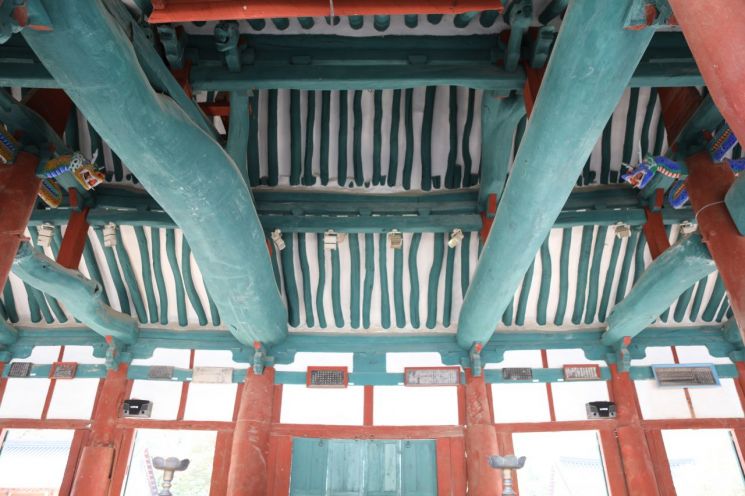
Manse-Ru is a single-story building of the Ik-gong (翼工) style. Ik-gong refers to bracket arms carved in the shape of an ox tongue that support beams by meeting the Chang-bang (a member connecting the tops of columns horizontally) at right angles. Originally built as a multi-story pavilion structure, it was rebuilt as the current single-story building. The Cultural Heritage Administration stated, "It shows the trend of spatial changes in late Joseon temples aiming to decorate pavilions as extended spaces of the Buddha hall." They also said, "We will actively maintain surrounding facilities so that it can be systematically preserved and utilized."
© The Asia Business Daily(www.asiae.co.kr). All rights reserved.



















