Cluster Infection at Bucheon Logistics Center with Over 97% Non-Regular Workers
Weak Quarantine Management as Workers Attend Work or Have Second Jobs Despite Symptoms
Experts Say "Life Quarantine Rules Are a Distant Story for Non-Regular Workers"
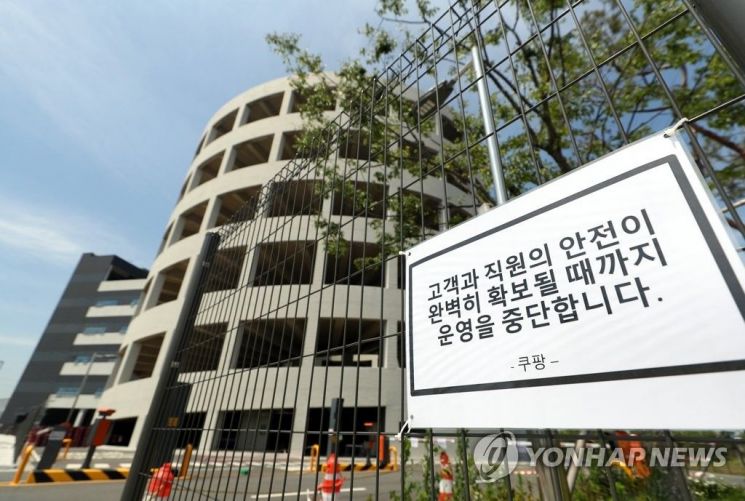 On the afternoon of the 27th of last month, when a cluster of COVID-19 cases occurred at the Coupang logistics center in Bucheon, Gyeonggi Province, a notice informing the suspension of operations was posted on the fence of the Coupang Bucheon logistics center in Ojeong-dong, Bucheon-si, Gyeonggi-do. / Photo by Yonhap News
[Asia Economy reporters Seunggon Han and intern reporter Juhyung Lim] As the spread of the novel coronavirus infection (COVID-19) originating from the Coupang logistics center in Bucheon, Gyeonggi Province continues, concerns are being raised that irregular workers, who make up the majority of employees at logistics platform companies like Coupang, may be pushed into a "blind spot" in quarantine measures.
Due to unstable employment conditions, it is difficult for them to take time off even when sick, and many work multiple jobs across various regional workplaces, making infection control challenging.
Experts have suggested securing a social safety net for irregular workers to help them comply with quarantine rules.
According to the Central Disease Control Headquarters, as of the 31st of last month, the cumulative number of confirmed COVID-19 cases linked to the Bucheon Coupang fresh logistics center reached 108. The number exceeded 100 within six days after the first confirmed case on the 23rd, and sporadic infections have continued since then.
Given this situation, claims have been made that workplace quarantine rules such as "take 3-4 days off if sick" have not been properly followed, especially among irregular workers who make up the majority of the workforce.
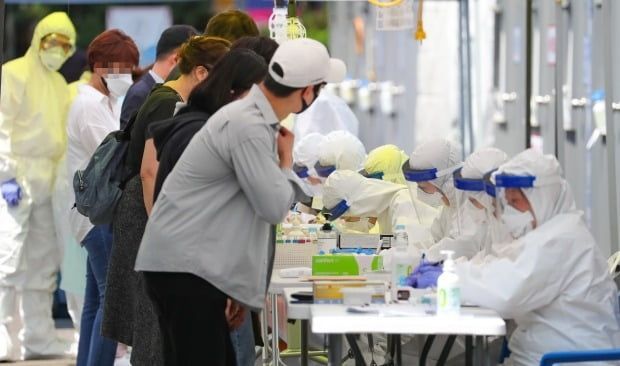 As concerns over the spread of COVID-19 in Incheon and Bucheon, Gyeonggi Province grow, citizens visiting the screening clinic at Gyeyang-gu Public Health Center in Incheon on the afternoon of the 28th of last month are receiving medical examinations. / Photo by Yonhap News
According to Bucheon City, there are a total of 3,673 employees working at the logistics center, of whom 98 are regular employees, 984 are contract workers, and 2,591 are daily workers. Irregular workers account for more than 97% of the total workforce.
Among them, some were found not to have followed basic quarantine rules such as taking 3-4 days off despite having suspicious symptoms like fever and cough. According to health authorities, the first confirmed case at the logistics center experienced chills and muscle pain on the 13th of last month but only underwent a COVID-19 test nine days later on the 22nd and was confirmed positive on the 24th.
In the case of daily workers, some worked multiple jobs by moving between various workplaces. For example, daily worker A, who was confirmed positive, worked part-time at the Bucheon logistics center from 5 p.m. on the 23rd to 3 a.m. the next day as a side job, then went to work at the Bucheon Ubase call center on the 25th. After leaving work that afternoon, he developed suspicious symptoms and tested positive at a screening clinic on the 26th.
As confirmed cases increased, Park Neunghoo, the first deputy head of the Central Disaster and Safety Countermeasures Headquarters (Minister of Health and Welfare), emphasized at a meeting held at the Government Sejong Complex on the 28th of last month that "workplace quarantine rules such as 'take time off if sick' do not seem to have been properly followed," and stressed the need for strengthened management of high-risk facilities and adherence to daily quarantine rules to minimize cluster infections.
However, some argue that due to the unstable employment and insufficient income sources characteristic of irregular workers, it is practically impossible to comply with quarantine rules like "take time off if sick."
Office worker A (28) said, "Even under normal circumstances, it is difficult to take leave, so taking 3-4 days off just because you are sick is practically impossible," adding, "Contract and daily workers would feel even more pressured."
Another office worker A (31) said, "For those who live day-to-day, not going to work for 3-4 days means a significant disruption to their livelihood," and added, "I agree with the intention behind the quarantine rules, but I think it is realistically impossible."
In fact, in an online survey conducted by the Central Disaster and Safety Countermeasures Headquarters from April 12 to 26 targeting 8,447 people, 54% responded that "taking 3-4 days off at home when sick," one of the five basic rules, was the most difficult to practice.
In an urgent survey on leave usage among office workers conducted by the civic group "Workplace Bullying 119" on April 14 with 3,780 respondents, 35.3% said they would go to work even if they had a fever or were sick.
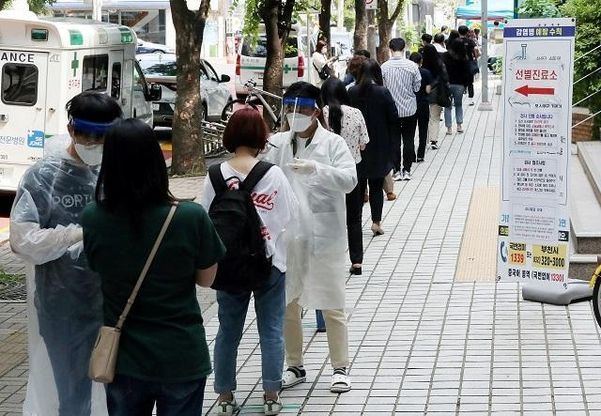 On the afternoon of the 28th of last month, when COVID-19 cases related to the Coupang logistics center in Bucheon, Gyeonggi-do were rapidly increasing, citizens lined up waiting for tests at the Bucheon City Health Center screening clinic in Jung-dong, Bucheon-si, Gyeonggi-do. / Photo by Yonhap News
Experts advise that to prevent cluster infections among vulnerable groups such as irregular workers, it is first necessary to properly secure a social safety net.
Oh Jin-ho, an operating committee member of "Workplace Bullying 119," said in an interview with YTN that "in logistics centers, the number of employees is adjusted daily depending on the assigned workload, so irregular workers have to endure such instability," adding, "Therefore, the daily quarantine rule of 'take 3-4 days off if sick' was like a distant story for irregular workers."
He continued, "At times like this, it is as important for the government to step up as it is for companies to fulfill their responsibilities," emphasizing, "Among the 36 OECD member countries, 34 have introduced a sickness benefit system where the state takes responsibility for paying workers who take sick leave, but Korea still lacks such a system."
© The Asia Business Daily(www.asiae.co.kr). All rights reserved.



















