[Asia Economy Reporter Choi Sunghye] Pulmuone has reached a ‘turning point’ in its Chinese food business by posting its first quarterly profit in China after 10 years of expansion.
On the 1st, Pulmuone announced that its Chinese subsidiary Pumeituo Food recorded an operating profit of 700 million KRW and an operating margin of 6.6% in the first quarter, successfully turning to a quarterly profit.
Sales grew 34% compared to the same period last year. As contactless food purchases increased in China due to COVID-19, e-commerce and O2O (online to offline) sales grew 173% year-on-year, leading overall growth. Among individual items, the main products pasta and tofu grew by 180% and 61%, respectively.
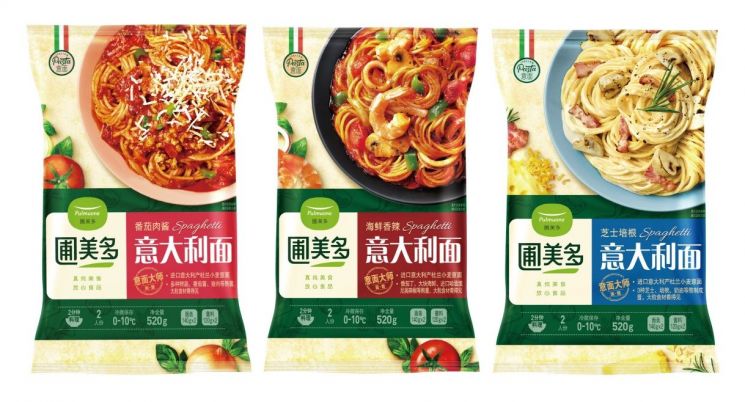
Pulmuone’s entry into the home meal replacement (HMR) market began with pasta. The existing ‘dried pasta’ sold in China required at least 8 minutes of boiling followed by stir-frying with sauce, which was considered time-consuming and inconvenient. Pulmuone’s convenient pasta can be fully prepared in just 2 minutes using a microwave. This convenience was a significant advantage for Chinese consumers.
Du Jinwoo, CEO of Pumeituo Food, said, “Due to the surge in demand for convenience foods in China amid COVID-19, pasta sales have also increased significantly, strengthening the ‘Pulmuone’ brand value in the Chinese market. Demand for pasta continues to grow mainly among Chinese millennials, so pasta is expected to sustain high growth in the 1.4 billion Chinese market.”
Recently, Pulmuone started selling the frozen HMR ‘Pulmuone Mozzarella Hot Dog,’ which was a hit in Korea, and it has received a positive response. In March, the mozzarella hot dog was featured on the mobile home shopping broadcast of ‘Hema Xiansheng,’ one of China’s leading O2O distributors. After the broadcast, the daily average sales of mozzarella hot dogs increased by about 300% over two days.
Tofu, Pulmuone’s core competency, is also growing rapidly at about 60% annually, and this year the company officially entered the Chinese ‘processed tofu’ market, expecting continuous growth.
Pulmuone, the only company in China with a nationwide tofu supply chain, completed processed tofu production facilities at its Beijing tofu factory in November last year. The processed tofu line manufactures new processed tofu products favored by Chinese consumers, such as fermented tofu, white fermented tofu, and fragrant fermented tofu, expanding the Chinese processed tofu market.
Pulmuone cited thorough ‘market analysis’ and swift ‘crisis management’ as the keys to settling in the Chinese market. When Pulmuone entered China in 2010, it carefully analyzed the Chinese food distribution structure and predicted that new distribution channels such as e-commerce and O2O would lead the Chinese food distribution industry. Although offline distribution was still dominant in China’s food distribution 10 years ago, Pulmuone boldly focused on e-commerce and new distribution channels.
This strategy, ahead of competitors, has shone even more during the prolonged global COVID-19 pandemic. While offline-based distributors are facing crises, with some global famous department stores filing for bankruptcy, China’s food distribution is rapidly shifting to e-commerce and new distribution channels such as ‘Tmall’ and ‘Hema Xiansheng,’ Alibaba-affiliated platforms known as China’s Amazon. Pulmuone strategically supplied tofu from the early stages to Tmall and Hema Xiansheng and is expanding its HMR product line, including refrigerated pasta, frozen hot dogs, and frozen dumplings.
Also, when Korean companies entering China struggled due to the THAAD backlash in 2017, Pulmuone overcame the crisis by prominently promoting Western menu items like pasta. Pulmuone bore the cost and discarded all existing Korean-language packaging, quickly replacing all products with new packaging composed only of Chinese and English.
Swift crisis management translated into results. Since 2017, Pulmuone pasta has grown annually by about 70%, leading Pulmuone’s Chinese food business. In the first quarter of this year, Pulmuone pasta grew about 180% compared to the same quarter last year. Pasta was the biggest contributor to Pulmuone’s Chinese food business turning to a quarterly profit.
CEO Du said, “Just as China’s e-commerce market exploded after SARS, the Chinese food distribution market is undergoing another major transformation due to COVID-19. HMR will expand its lineup centered on refrigerated pasta to include frozen hot dogs and frozen dumplings, and tofu will introduce new processed tofu products, capturing both growth and profits in the Chinese food market.”
© The Asia Business Daily(www.asiae.co.kr). All rights reserved.

















