QR Code Electronic Entry Log Mandatory for High-Risk Facilities... Multi-Use Facilities Voluntary
Starting Tomorrow, Pilot Operation at 19 Facilities in Seoul, Incheon, and Daejeon, Nationwide Expansion on the 10th
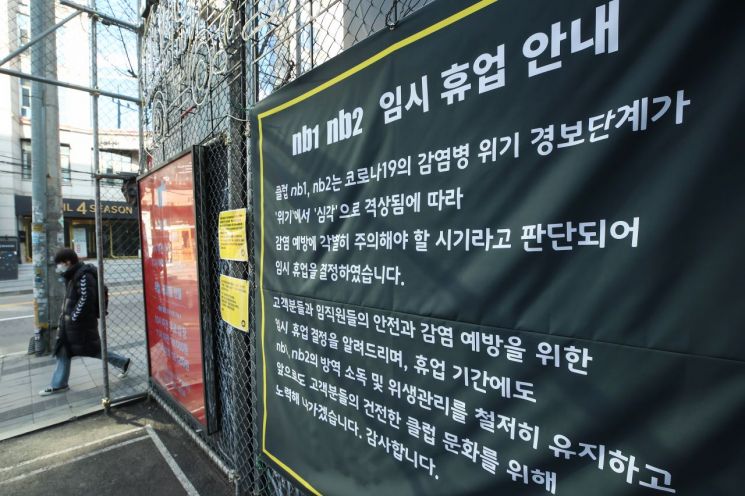
[Asia Economy Reporter Yoo Byung-don] The government has designated eight industries with high density and enclosed spaces, such as hunting pubs and karaoke rooms, as high-risk facilities to prevent the spread of the novel coronavirus infection (COVID-19), and recommended refraining from operating these facilities starting from 6 p.m. on the 2nd of next month.
Additionally, to accurately identify visitors, the government will mandate the introduction of an electronic entry log system using QR codes at high-risk facilities, while also reviewing and deciding on the voluntary adoption of such systems at multi-use facilities like libraries and cinemas.
The Central Disaster and Safety Countermeasures Headquarters (CDSCH) announced on the 31st that it evaluated the risk level of facilities based on six risk indicators including enclosure, density, and crowding, and selected eight industries as high-risk facilities.
The high-risk facilities include ▲hunting pubs ▲emotional pubs ▲entertainment pubs (clubs, room salons, etc.) ▲danran pubs ▲colatecs ▲karaoke rooms ▲indoor group exercise facilities (intense group exercises such as Zumba, Tae Bo, spinning) ▲indoor standing concert halls (venues where all or part of the audience area is standing).
If operation of these facilities is unavoidable, business owners and users must strictly follow quarantine rules such as disinfecting the facilities and wearing masks. Violations may result in fines up to 3 million KRW and measures such as closure orders, which effectively mean suspension of business.
This recommendation to refrain from operation will remain in effect until a separate lifting order is issued.
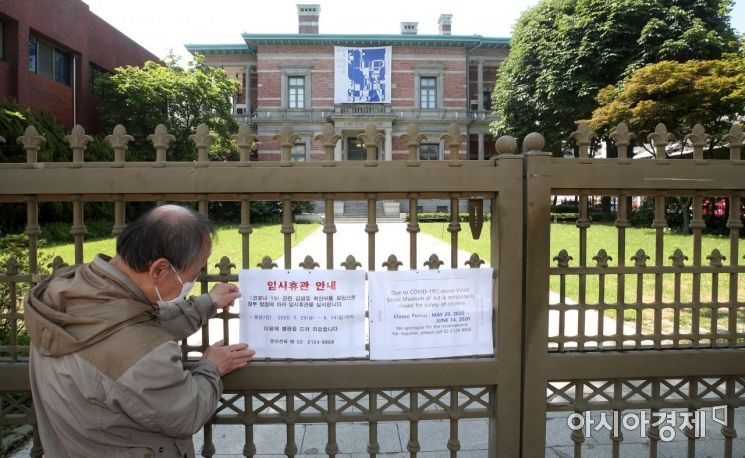 Due to the spread of the novel coronavirus infection (COVID-19) originating from a logistics center, the operation of public and multi-use facilities in the metropolitan area has been temporarily suspended. On the 29th, officials from the Nam Seoul Municipal Museum in Gwanak-gu, Seoul, are posting a temporary closure notice at the entrance. Photo by Kim Hyun-min kimhyun81@
However, if the facilities meet all risk reduction requirements such as ventilation, limiting the number of users, and maintaining a 1-meter distance between tables, local governments may downgrade these facilities to medium-risk facilities.
If local governments decide to lower the risk level to medium or recognize the need to lift gathering restrictions, the obligation to comply with quarantine measures for those facilities will be lifted.
The government also decided to mandate the introduction of an electronic entry log system using QR codes starting from the 10th of next month for these high-risk facilities and for facilities where local governments have independently imposed administrative measures such as gathering bans.
Prior to this, the government will conduct a pilot operation of the QR code electronic entry log system for one week from the 1st to the 7th of next month at 19 high-risk facilities such as clubs and karaoke rooms in Seoul, Incheon, and Daejeon, as well as multi-use facilities like cathedrals, churches, libraries, and cinemas.
Multi-use facilities are included in the pilot to review the possibility of voluntary adoption in the future.
The electronic entry log system will only be applied when the infectious disease crisis alert level is at 'Severe' or 'Warning'. Personal information and visit records entered into the electronic entry log are stored in a distributed manner and combined only when epidemiological investigation is necessary to identify individuals. The data is automatically destroyed after four weeks.
Park Neung-hoo, the first deputy head of the CDSCH (Minister of Health and Welfare), stated, "In addition to the eight high-risk facilities, we plan to proactively identify facilities and workplaces with high infection risk through cooperation with related ministries and respond preemptively."
© The Asia Business Daily(www.asiae.co.kr). All rights reserved.
![Clutching a Stolen Dior Bag, Saying "I Hate Being Poor but Real"... The Grotesque Con of a "Human Knockoff" [Slate]](https://cwcontent.asiae.co.kr/asiaresize/183/2026021902243444107_1771435474.jpg)

















